







































How does heavy tree cover over a Montgomery lot affect the roof?
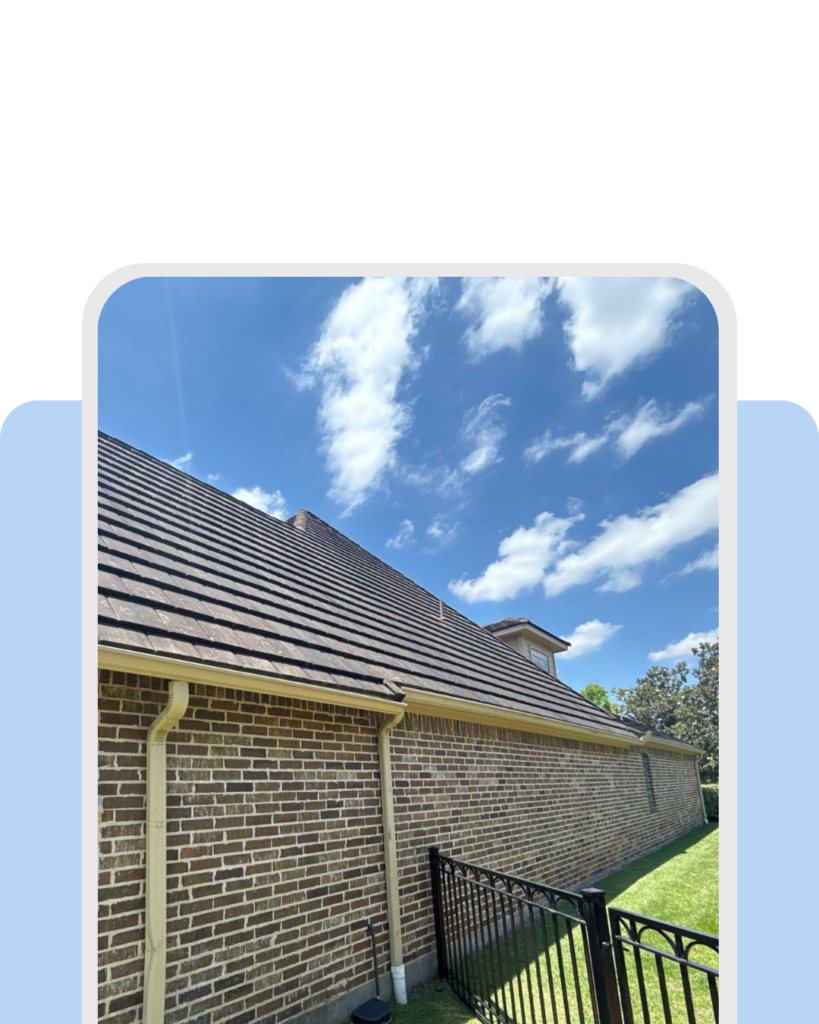
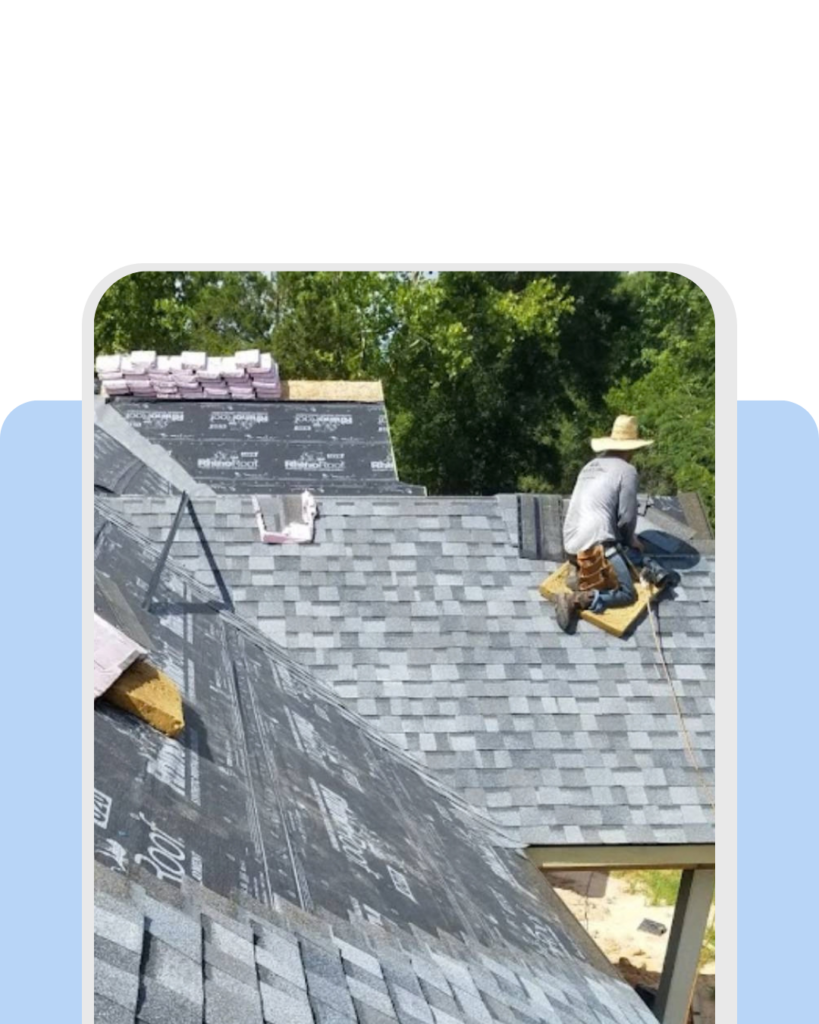
Overhanging limbs drop needles and leaves that pack into valleys and gutters, hold moisture against the surface, and feed algae growth on slopes that stay shaded. Trimming branches back off the roof plane and clearing debris on a set maintenance schedule does more for a wooded lot than any product choice, a point echoed in NRCA maintenance guidance.
Which roofing materials hold up best on Montgomery properties?
Impact-rated architectural shingles, standing seam metal, and tile all perform well here, and the right pick depends on roof pitch, framing capacity, and how exposed the lot is to wind. Whatever the covering, it has to sit on a sound deck and follow the model codes published by the International Code Council — compare options during a roof replacement quote.
Does a metal roof make sense for a Montgomery home or outbuilding?
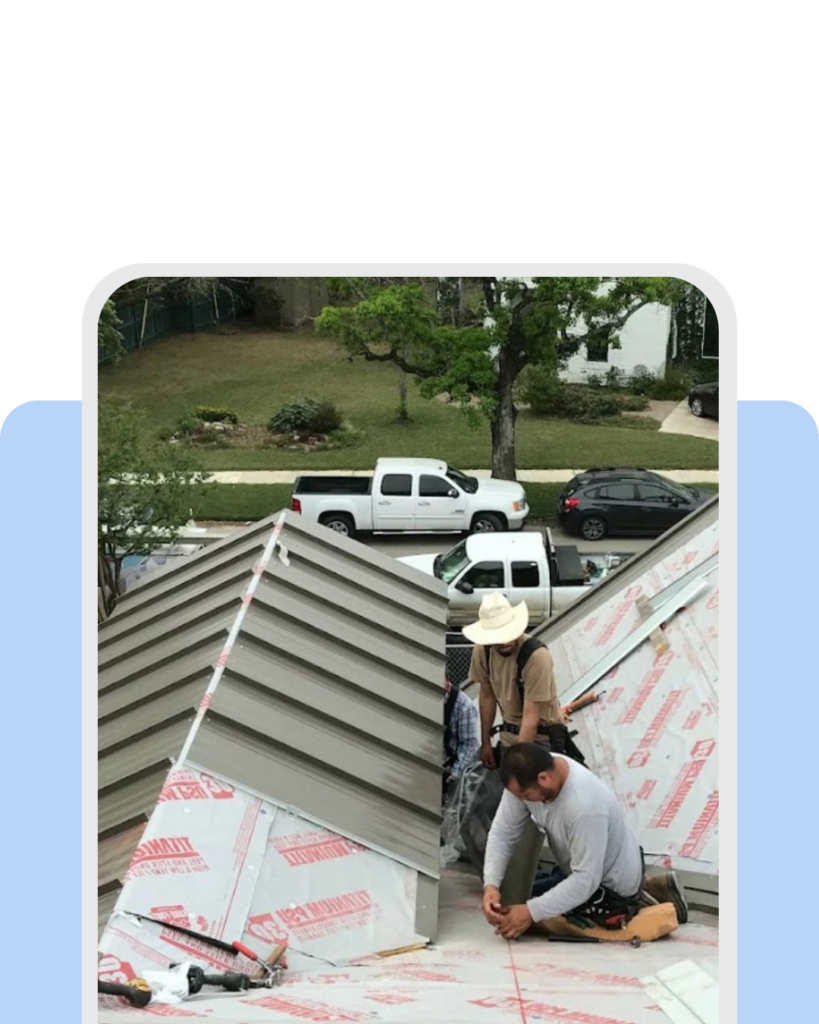
Metal sheds debris instead of trapping it, carries high wind ratings, and in a light finish reflects a real share of summer heat rather than passing it into the structure, as the Department of Energy explains. It costs more up front than asphalt, so panel systems earn their price on long roof runs, shops, and homes you plan to keep.
How soon should storm damage be inspected in Montgomery?
Have the roof looked at within a few days of any hail or sustained wind, because a creased tab or lifted ridge cap can leak weeks later while looking fine from the ground. Photograph the property before storm season using FEMA’s preparedness checklist, then book a storm damage assessment if anything changes.
Does attic ventilation matter on a Montgomery home?
It does, because trapped heat cooks the shingle from underneath and trapped humidity condenses on the deck through the cooler months. Ventilation works as a balanced pair of soffit intake and ridge exhaust — ENERGY STAR sets out the principle, and a roof inspection checks whether insulation is blocking the intake.
Why does a ceiling stain show up away from the actual leak?
Water enters at a flashing gap or failed penetration, then travels along the deck or down a rafter until it meets a fastener or drywall seam and drops into view. That is why a leak trace follows the path uphill instead of patching the stain, and why the DOE attic guide lists attic staining among the first signs of intrusion.
Do gutters and drainage matter on larger Montgomery lots?
Rain arrives in short heavy bursts here, and a gutter packed with needles overflows at the eave, soaking the fascia and the soffit that feeds attic intake air. Clear them twice a year, run downspouts well away from the foundation, and check them again after the storm events the National Weather Service tracks each season — gutter and siding work covers replacements.