















How long does a commercial roof coatings last?
Most acrylic and silicone commercial roof coatings are rated for 10–15 years before a recoat is needed, depending on substrate condition, ponding water exposure, and UV intensity. Houston’s high UV index and long summer season generally place coatings toward the shorter end of that range without periodic recoat maintenance.
Can a roof coating be applied over an existing TPO or EPDM membrane?
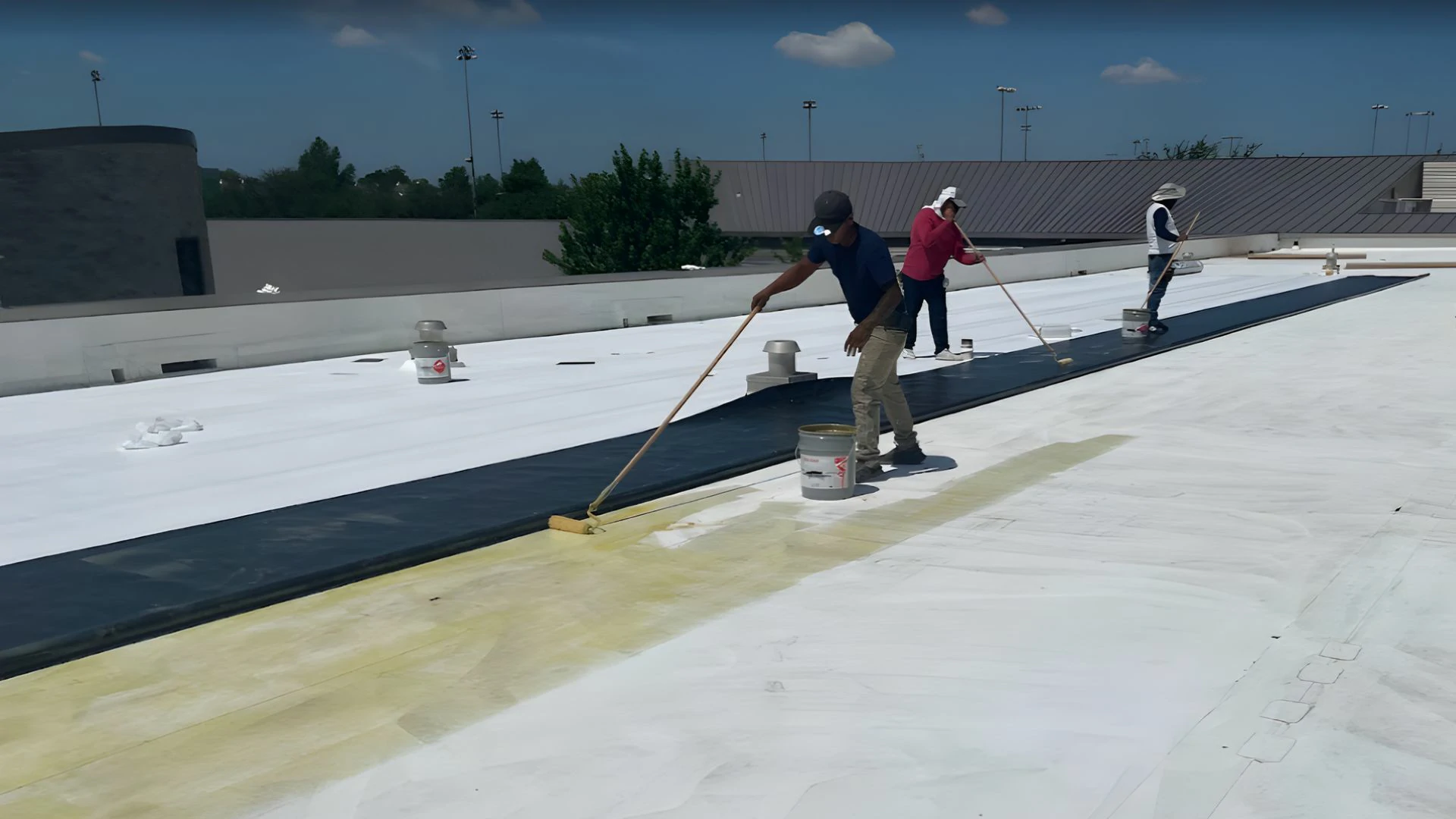
Yes, in most cases, provided the membrane is structurally sound and properly cleaned and primed first. TPO requires a specific TPO-compatible primer for adhesion; skipping this step is the most common cause of coating delamination on single-ply membranes.
Does a roof coating stop existing leaks?
A coating seals seams, pinholes, and surface cracks, but it is not a substitute for repairing active structural leaks, wet insulation, or failed flashing. We inspect and repair those issues first — coating over a wet substrate traps moisture and accelerates deck deterioration.
How much does commercial roof coating cost compared to replacement?
Coating systems typically cost significantly less per square foot than a full tear-off and replacement, since they don’t require removing the existing membrane, insulation, or disposal fees. Exact pricing depends on roof condition, substrate type, and square footage — request a free estimate for a project-specific figure.
What’s the difference between acrylic and silicone roof coatings?
Acrylic coatings offer strong UV reflectivity and lower material cost but can soften under prolonged ponding water. Silicone coatings resist ponding water and moisture better but cost more and attract more surface dirt over time. Roof slope and drainage typically decide which product fits a given building.
How is coating thickness measured, and why does it matter?
Coating performance is measured in dry mil thickness (DFT), not gallons applied. Under-thickness coating is the leading cause of early failure and reduced warranty coverage. We verify mil thickness with a wet-film gauge during application, not just an estimated coverage rate.
Can commercial roof coating be applied during Houston’s rainy season?
Most coatings need a dry surface and a rain-free cure window of roughly 24–48 hours, which narrows scheduling from June through November. We monitor National Weather Service forecasts and typically schedule application windows in early morning hours to avoid afternoon storm activity.
Does a commercial roof coating meet code requirements for a re-roof, or does it count as maintenance?
In most jurisdictions, a fluid-applied coating over an existing membrane is treated as maintenance rather than a full re-roof, meaning it typically does not trigger the same permitting requirements as a tear-off. Requirements vary by municipality — the International Code Council maintains the model codes most local building departments reference.
What roof types are not good candidates for a commercial roof coating?
Roofs with widespread wet insulation, structural sag, or membrane that has lost adhesion across large areas usually need repair or replacement rather than a coating. A coating seals a sound substrate — it can’t correct a roof that has already failed structurally.
How often does a coated roof need to be recoated?
Most commercial coating systems are designed for a recoat cycle of 10–15 years, which is typically far cheaper than a second tear-off and replacement. We recommend a visual inspection every 2–3 years to catch UV wear or ponding issues before a recoat becomes urgent.
Is roof coating covered by insurance after storm damage?
Coating work related to storm or hail damage may be covered depending on your commercial property policy and the extent of documented damage. We photograph and document roof condition before and during the coating process, which supports insurance claim documentation if damage is later identified.
What is an elastomeric roof coating, and how does it work?
An elastomeric roof coating is a flexible, liquid-applied membrane — typically acrylic or silicone-based — that cures into a seamless, waterproof layer over an existing roof. It stretches and contracts with temperature changes without cracking, which matters in Houston where roof surfaces can swing more than 60°F between a summer night and midday sun.
Why does Houston’s humidity actually help silicone coatings?
Unlike acrylic roof coating systems that need dry weather windows to cure properly, silicone cures by reacting with atmospheric moisture. This means Houston’s high-humidity summer nights actually help the membrane set and cure faster.
Can silicone or acrylic coating be applied over metal roofing?
Yes, with proper substrate prep. Elastomeric restoration is commonly used on aging metal roofs to seal fastener penetrations and seams. If the panels themselves are structurally compromised, we will recommend a standing seam metal roof replacement instead.
Will a commercial roof coating hold up during Houston’s hurricane season?
A properly cured, fully bonded elastomeric roof coating adds wind and water resistance to the underlying membrane, but it is not a substitute for structural roof repairs on a compromised deck. Before hurricane season, we recommend a professional roof inspection to ensure the substrate can handle high winds.