

































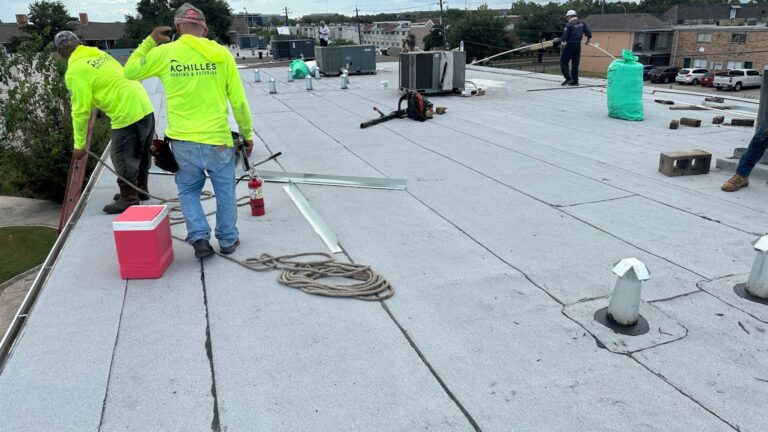
Why does a roof run hotter in dense residential areas?
Buildings sit close together, and the walls, paving, and parking decks around them absorb sun all day and re-radiate it sideways, so a roof takes heat from above and from its neighbors at once. The EPA documents the same effect at neighborhood scale. Sustained surface temperature is what ages shingles and membranes, which a roof inspection can measure against a baseline.
Do low-slope townhome and condo roofs need different care?
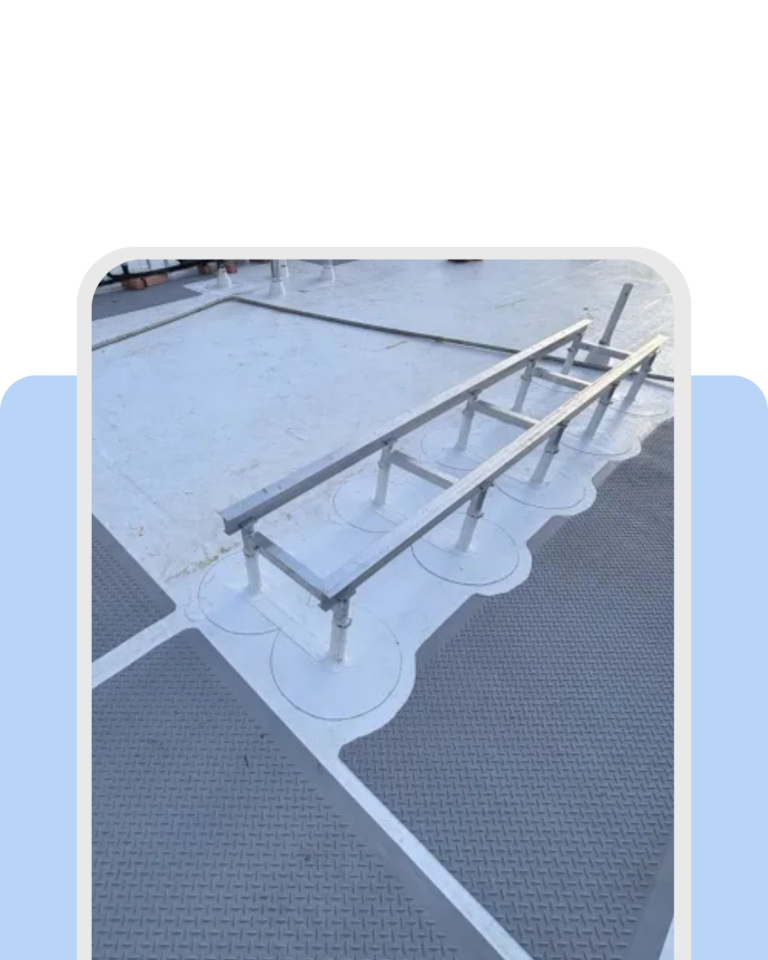
Yes, because they drain differently. A low-slope roof depends on a continuous membrane and a built-in drainage path, so performance rests on slope-to-drain, seam condition, and whether drains stay clear. Water still standing well after rain is the signal to act. See TPO, EPDM, and PVC systems, and the NRCA for low-slope practice.
How does road grime from major corridors affect a roof?
Grit from busy corridors settles on the roof and washes to the low points, forming a sludge in gutters and valleys that holds moisture against the roof edge and slows drains on flat roofs. It also feeds algae on shaded slopes. Clearing those surfaces on a set schedule, which is what a maintenance plan handles, costs far less than a rotted roof edge.
Who is responsible for the roof of a townhome or condominium?
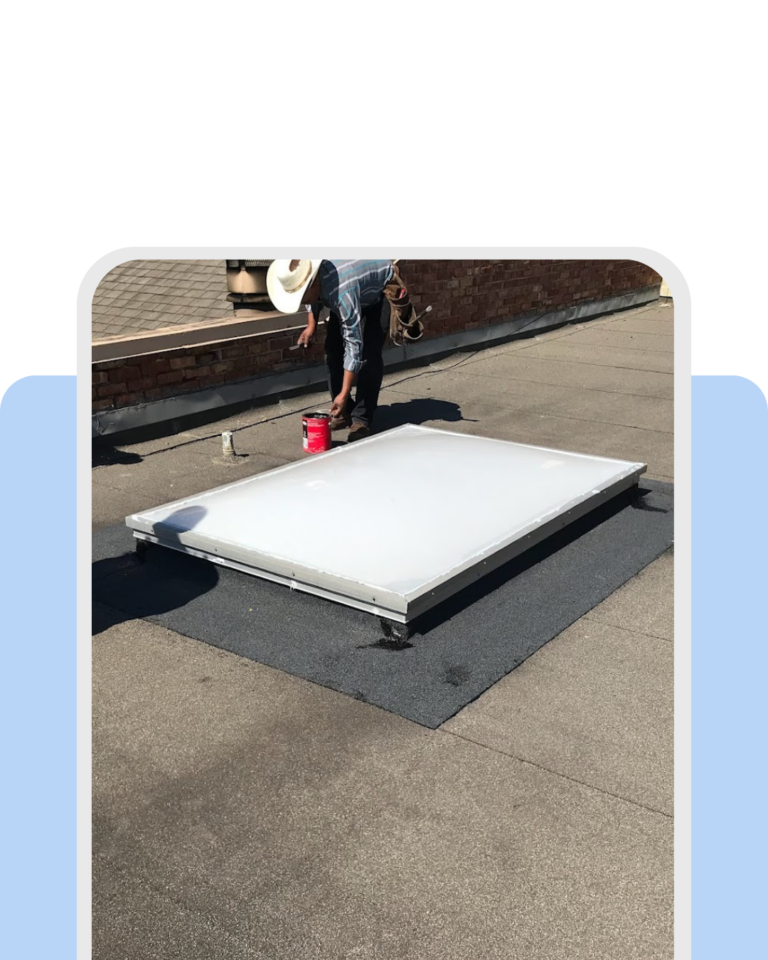
The governing documents decide it, not the building type. Many condominium arrangements treat the roof as a common element; many townhome arrangements leave it entirely with the owner, and some split it by assigning skylights or rooftop equipment to the unit. Read the declaration first, then send it over and we’ll scope the work to match.
How do crews stage materials and debris on a tight street?
Access is planned before the first bundle moves. A narrow street rarely fits a delivery truck, a dumpster, and crew vehicles at once, so loading is staged and debris leaves on a shorter cycle. Buildings with controlled entry need coordination with management ahead of the date — settle that, then lock a slot through online booking.
How often should a roof in Galleria Area be inspected?
Twice a year suits most pitched roofs, once before the hottest and wettest stretch and once after, plus a check following any storm with high wind or hail. Low-slope roofs and those carrying equipment need a tighter cycle, since drains and curbs fail quietly. Examples of what those findings look like sit in our project archive, helping you decide if you just need minor fixes or a complete Roof Replacement.
What should a property owner do before hurricane season?
Do the quiet work while conditions are calm: clear gutters, valleys, drains, and scuppers. Don’t just watch out for damage—schedule a professional Roof Repair for loose flashing and open seams. Secure rooftop items that could go airborne and photograph every slope with the date.
Will a reflective roof lower cooling costs on a property here?
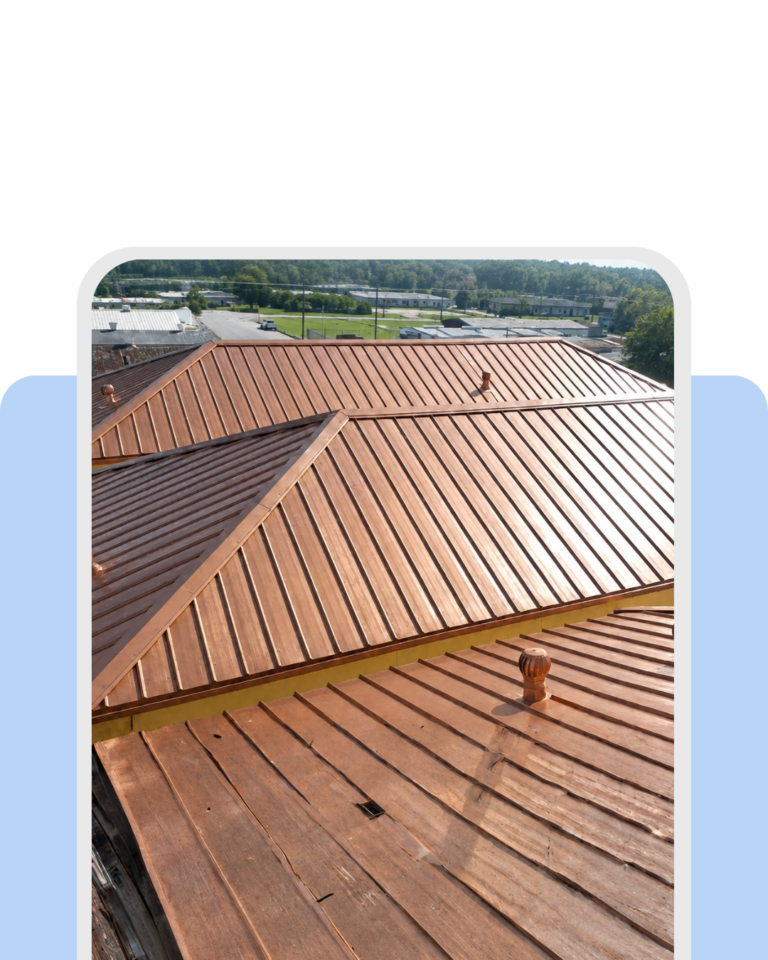
A reflective surface stays cooler in sun and pushes less heat into the space below, though exposed area, insulation, and duct routing all change the result — the Department of Energy explains how it is measured. Gains are largest on flat roofs, where an acrylic coating covers everything at once, or on light-colored aluminum panels.
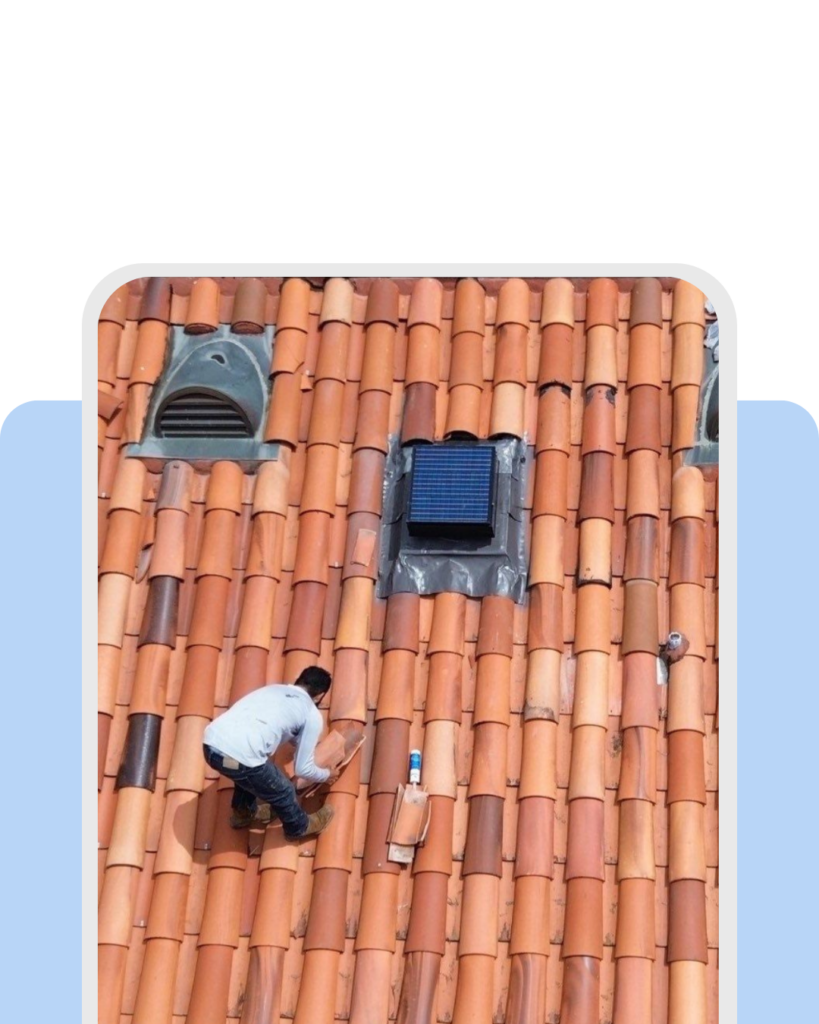
Can a townhome with a shallow attic still be vented properly?
It can, though the path changes. Where ceilings are vaulted, air moves between the deck and the insulation, which needs continuous intake at the eave, a clear channel in each rafter bay, and continuous exhaust at the ridge — ENERGY STAR sets out the principle. The vent systems we install are listed in our FAQ Page.