







































How does the tree cover over Spring homes affect a roof?
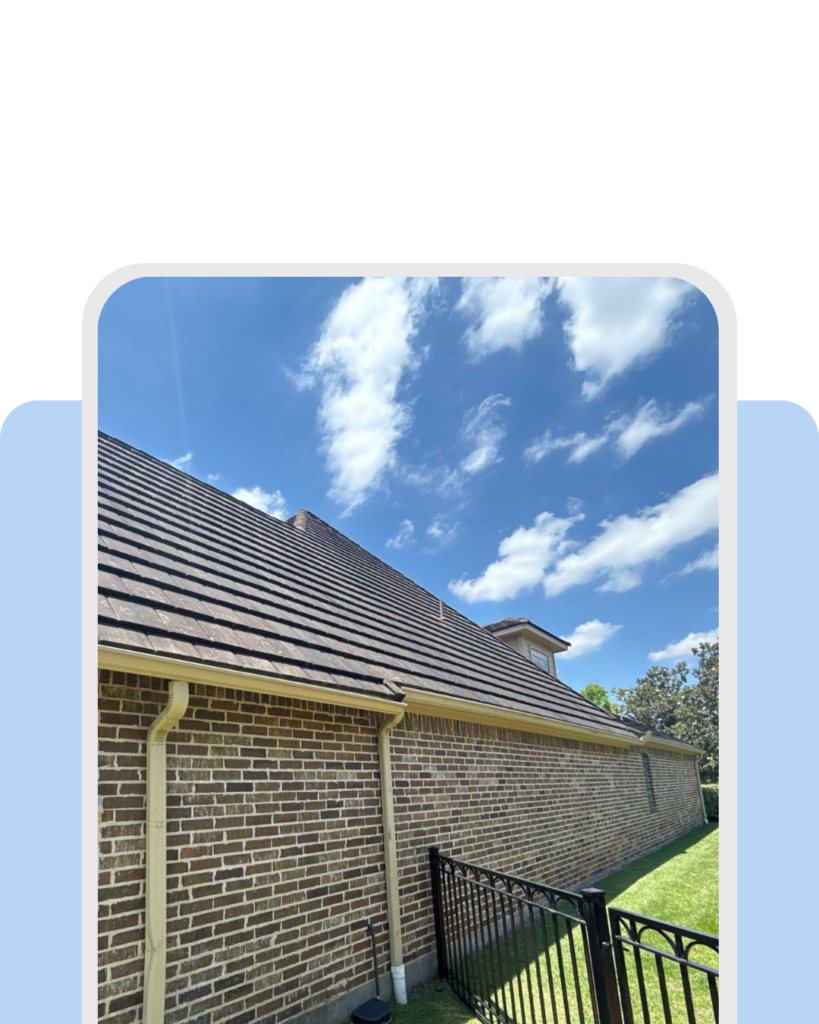
Overhanging pines and hardwoods drop leaves and needles year-round, trapping moisture in gutters and valleys that rot shingles early. Overhanging limbs also scrape away protective granules every time the wind blows.
Are impact-resistant shingles worth the upgrade here?
Class 4 shingles pass the UL 2218 steel-ball test to resist hail cracks—not wind—costing and weighing slightly more.
They’re worth it if hail is common near you and your insurance provider offers a premium discount for impact-resistant roofs.
How often should a roof in Spring be inspected?
Twice a year suits most pitched residential roofs — once before the hot, wet stretch and once after — plus a check following any storm that brought hail or damaging wind. Roofs under heavy canopy warrant the same cycle for a different reason, since debris accumulates quietly between visits.
The purpose is not to find catastrophe. It is to catch the lifted flashing or packed valley that becomes interior damage next season, and a roof inspection leaves you with the written record either way.
How long should an asphalt shingle roof last on a Spring home 77373, 77379, 77388, 77389, 77386?
A roof’s rated lifespan is a maximum limit, not a guarantee—heat and humidity wear shingles down faster. Good attic ventilation is key because airflow keeps shingles cooler from underneath.
Don’t replace your roof based on age alone. Look for red flags like severe granule loss, brittle cracking tabs, or recurring repairs in the same spot.
Does attic ventilation matter through a Spring summer?
Proper attic ventilation matters in two ways: it keeps heat from baking your shingles from below and lowers your home’s cooling costs.
For it to work, you need a balanced system—low intake at the soffits and high exhaust near the ridge. Adding exhaust without enough intake chokes airflow, while insulation packed into soffits is the most common cause of blockages.
What should a Spring homeowner do before hurricane season?
Do the prep work while weather is calm: clear gutters, repair loose flashing or lifted tabs, and trim overhanging tree branches before strong winds hit.
Take clear, dated photos of every roof slope to document its condition before a storm. Also, keep contact info for emergency tarping services handy so you aren’t scrambling if damage happens.