















How long does a commercial waterproofing membrane last in Houston’s climate?
Most fluid-applied and sheet membrane commercial roof waterproofing systems are rated for 10-15 years, though Houston’s UV exposure, humidity, and heavy rainfall can shorten that if the substrate wasn’t properly prepped. Regular inspection after major storms helps catch seam or blister issues before they become leaks.
What’s the difference between a roof coating and full commercial roof waterproofing?
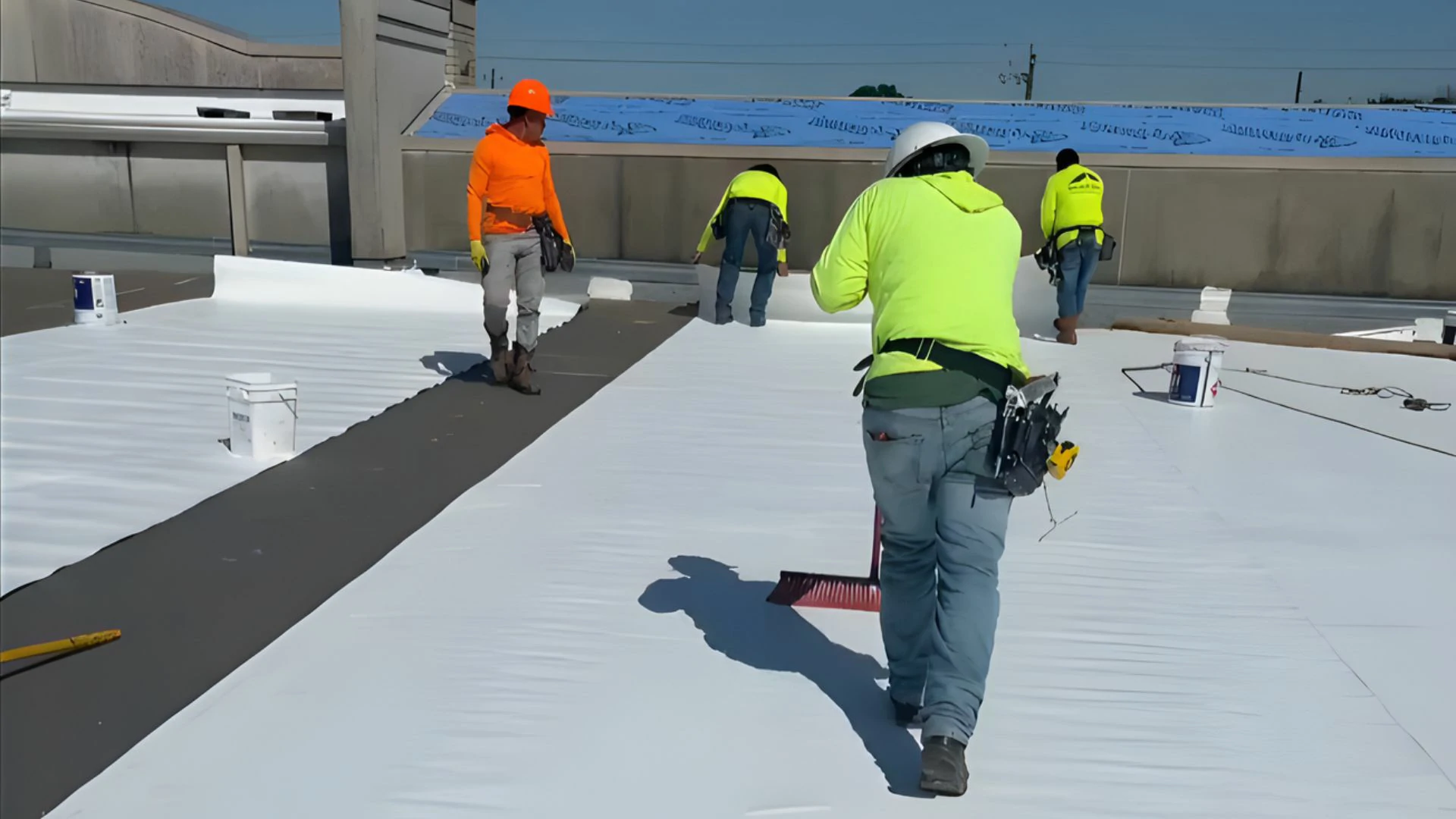
A coating primarily reflects heat and adds a protective top layer, while waterproofing is a full system – primer, reinforced seams, flashing detail work, and a membrane – engineered to block water intrusion, including at ponding areas coatings alone don’t address.
Can waterproofing be applied over an existing TPO or built-up roof?
In many cases yes, provided the existing substrate is dry, structurally sound, and free of trapped moisture. A moisture scan is done first, since sealing over a wet deck or insulation layer will trap water and cause the new system to fail prematurely.
Does commercial roof waterproofing count as a roof replacement for insurance purposes?
No. Waterproofing is typically classified as a maintenance or restoration service, not a full roof system replacement. Documentation of the existing roof condition and the waterproofing scope of work should still be kept on file in case of a future insurance claim.
What weather conditions are required to apply a waterproof membrane?
Most systems require a dry substrate and temperatures within the manufacturer’s application range, along with a forecast window free of rain during cure time. Houston’s humidity and unpredictable afternoon storms mean application scheduling has to account for extended dry windows, particularly in summer.
How often should a commercial waterproofing membrane be inspected?
Twice a year is a reasonable baseline – once in spring and once after hurricane season – plus an inspection after any storm with sustained winds or hail. Seams, flashing terminations, and drains are the areas most likely to show early signs of wear.
Will waterproofing lower energy costs for a Houston commercial building?
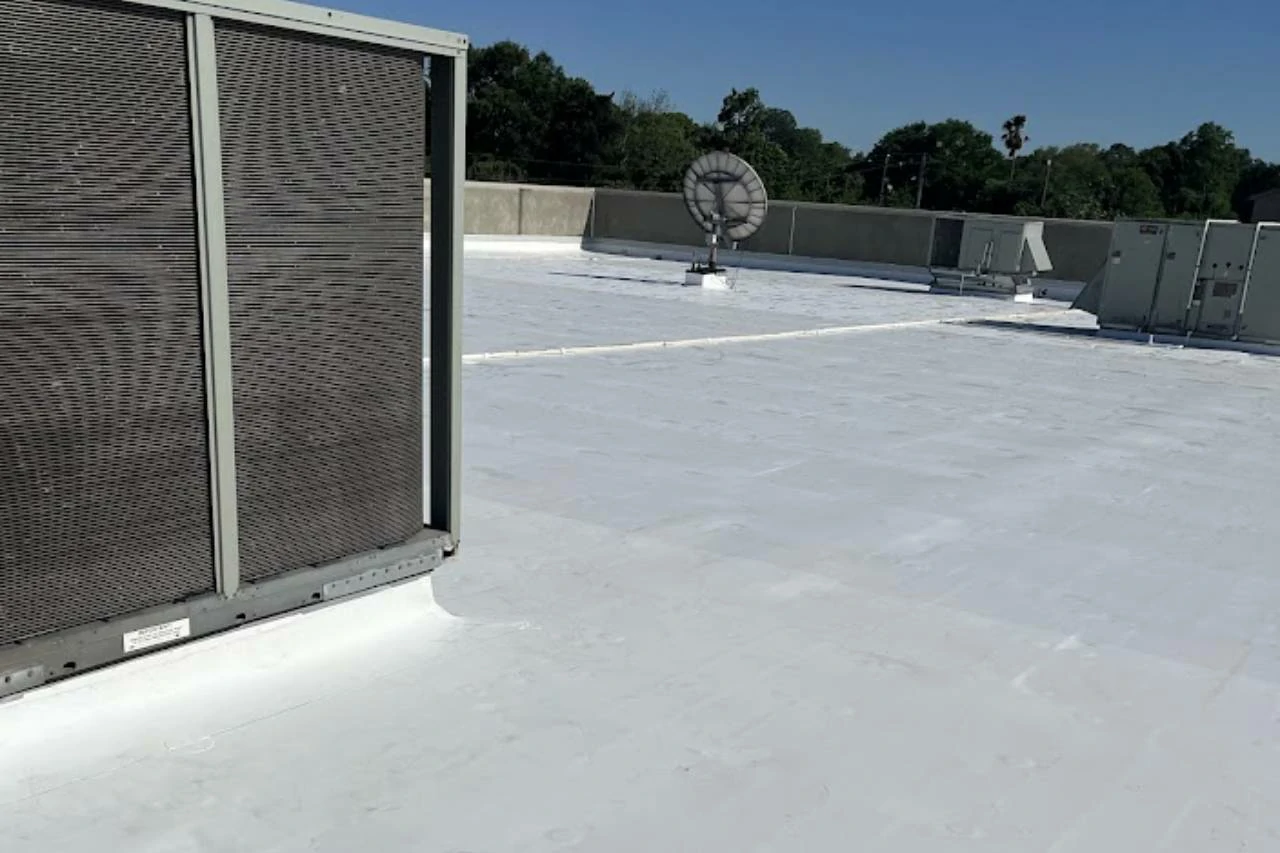
Reflective, light-colored waterproofing membranes can reduce rooftop surface temperatures and, in turn, cooling loads during Houston’s long summer season. The degree of savings depends on the building’s insulation, HVAC efficiency, and roof exposure, so results vary by property.
What causes waterproofing membranes to fail early in Gulf Coast humidity?
The most common causes are trapped moisture beneath the membrane at install, incomplete seam adhesion in high-humidity conditions, and UV degradation at unprotected seams. Improper surface preparation before application is the single biggest factor in early failure.
Is commercial roof waterproofing necessary if the roof isn’t leaking yet?
Visible leaks are usually a late-stage symptom, not the first sign of trouble. Waterproofing before a leak develops protects insulation and structural decking from slow, hidden moisture intrusion that’s far more expensive to repair once it reaches the interior of the building.
Is waterproofing applied differently on metal roofs versus flat membrane roofs?
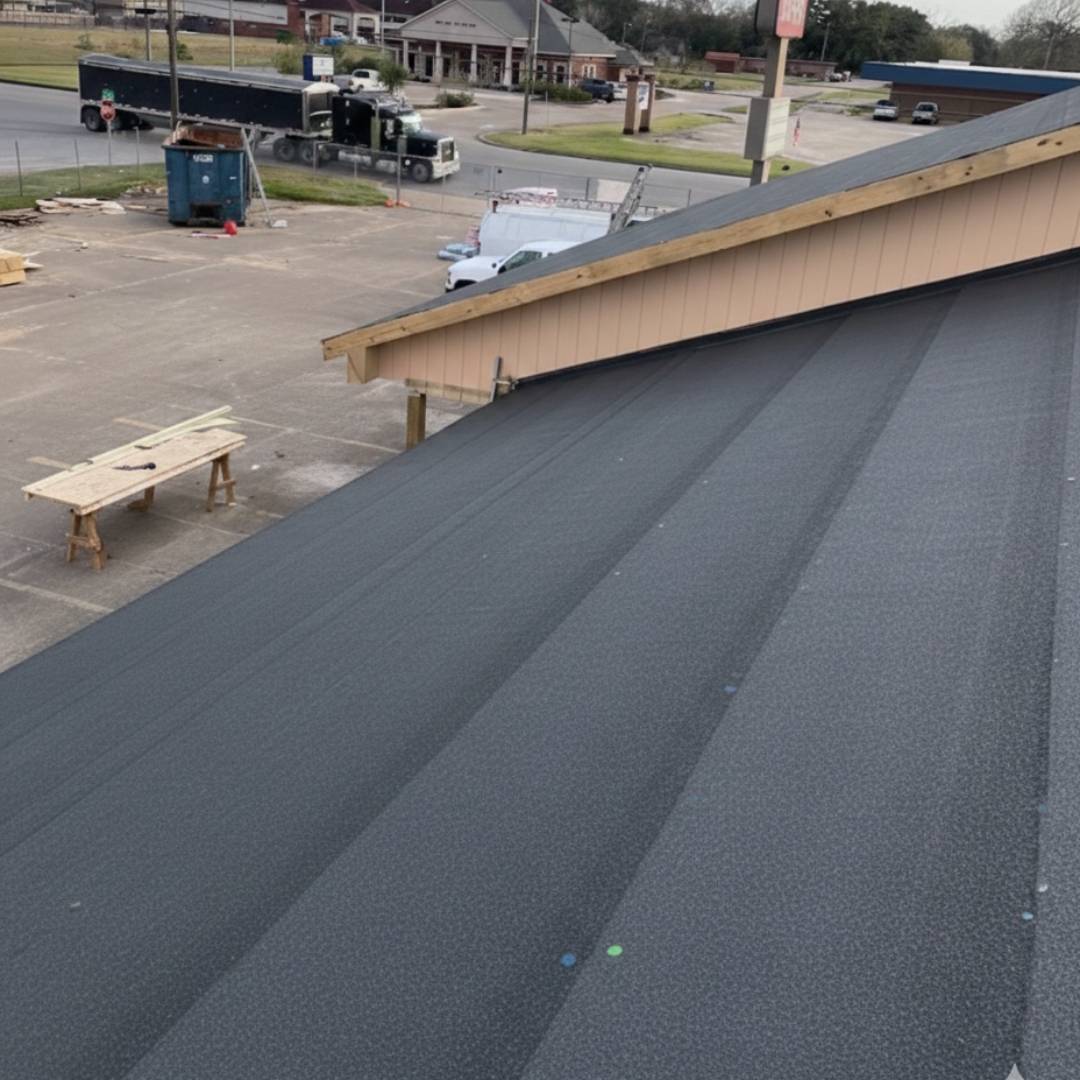
Yes. Metal roof waterproofing typically focuses on seam sealing, fastener heads, and panel laps with a flexible elastomeric coating, while flat membrane roofs require full-surface primer, reinforcement fabric at seams and penetrations, and a continuous membrane application.
What warranty coverage applies to commercial waterproofing work?
Achilles Roofing & Exterior backs commercial waterproofing labor with a 5-year workmanship warranty. Material warranty terms depend on the specific membrane or coating system installed and are provided in writing before work begins.