
















How much does commercial metal roofing cost in Houston?
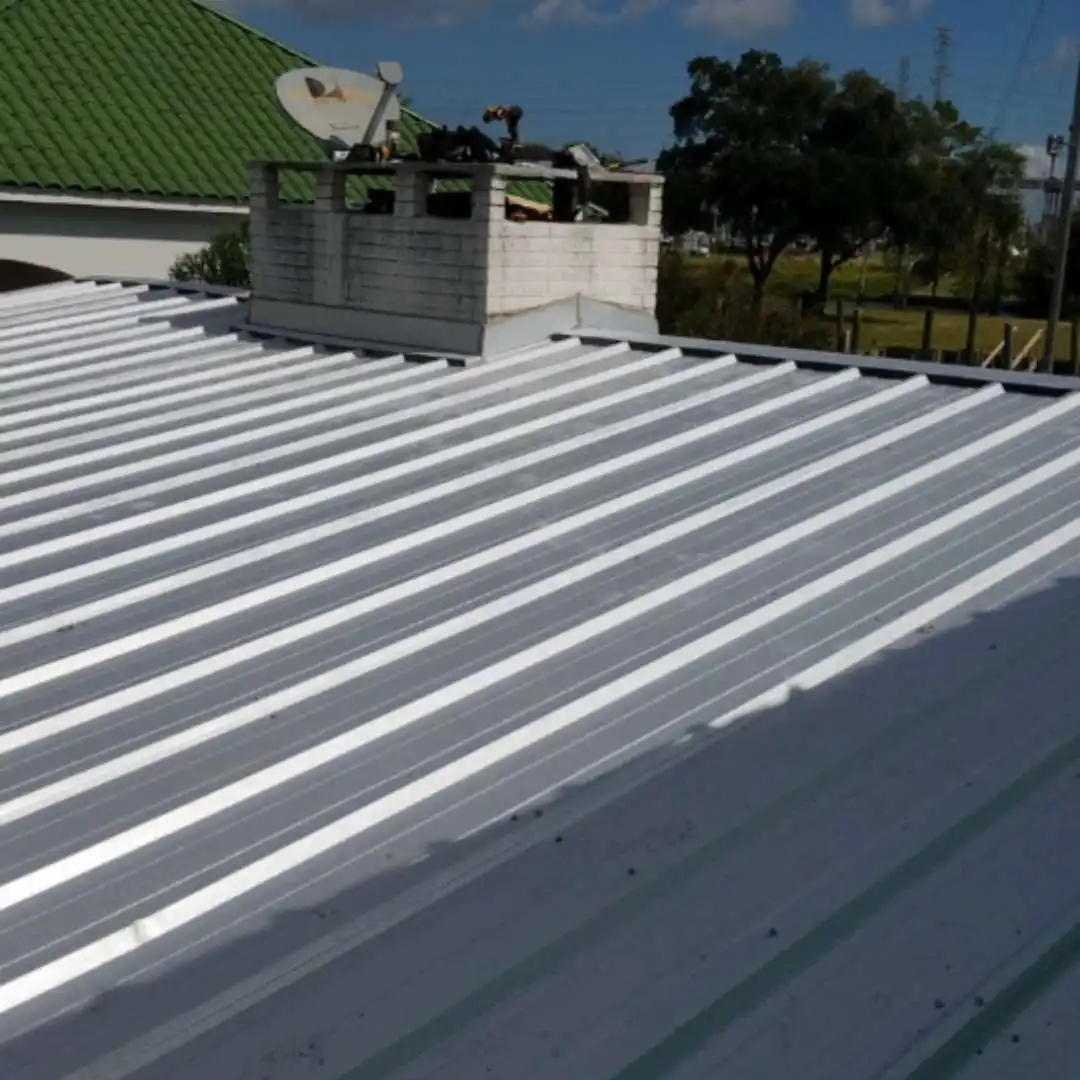
When pricing commercial metal roofing, Houston standing seam projects typically run $9-$14 per square foot installed, while corrugated and R-panel systems run $5.50-$8.50 per square foot. Costs shift based on gauge, panel profile, and how much of the existing roof deck needs repair before installation.
Is standing seam or corrugated metal roofing better for a Houston warehouse?
Standing seam panels use concealed fasteners and raised seams, which resist wind-driven rain better during Houston’s heavy downpours. Corrugated and R-panel systems cost less upfront and work well for warehouses and low-traffic industrial buildings where budget matters more than a fully hidden fastener line.
What wind rating does a commercial metal roof need in Harris County?
Harris County follows International Building Code wind provisions, which generally require commercial roof assemblies to resist sustained winds in the 130-150 mph range depending on building height and exposure category. Buildings closer to the coastline may fall under additional TDI windstorm requirements.
Can commercial metal roofing Houston systems survive a spring hailstorm?
A 24-gauge or heavier standing seam panel with a Class 4 impact rating typically resists denting from hail up to golf-ball size without puncturing. Thinner 26-gauge corrugated panels are more prone to cosmetic denting during severe hail events like those Houston sees each spring.
How long does a commercial metal roof last in Houston’s climate?
Galvalume and aluminum standing seam systems typically last 40-60 years in Houston, though coastal humidity and industrial pollutants can shorten coating life on lower-grade panels. Fastener gaskets and sealant joints usually need inspection or replacement every 10-15 years.
Can commercial metal roofing be installed over an existing built-up or modified bitumen roof?
In many cases yes, using a retrofit framing system that anchors new purlins over the existing membrane, avoiding tear-off costs and disposal fees. This works best when the existing deck is structurally sound and not retaining moisture, which requires a moisture scan before installation begins. See our commercial roof repair page for deck evaluation details.
Does a metal roof make more noise during Houston’s rainstorms?
With solid roof decking, rigid board insulation, and interior ceiling assemblies typical of commercial buildings, metal roofs are not noticeably louder than built-up or membrane roofs during rain. Noise concerns mostly apply to open-frame agricultural buildings without a deck or insulation layer.
What maintenance does a commercial metal roof need in a Gulf Coast climate?
Twice-yearly inspections are recommended in Houston to check fastener backout, sealant cracking at penetrations, and debris buildup at valleys, since UV exposure and humidity accelerate wear on exposed sealant faster than in drier climates. Ask about our acrylic roof coating options for added protection between inspections.
Are commercial metal roofs compatible with rooftop solar in Houston?
Standing seam panels are well suited to solar because clamp-mounted racking attaches to the raised seams without penetrating the panel, preserving the roof’s watertight integrity. This is one reason Houston distribution centers and flat commercial buildings pair standing seam roofs with rooftop solar arrays.
What permits are required for commercial roofing in Houston?
The City of Houston Permitting Center requires a roofing permit for most commercial re-roofs and new installations, with plan review needed for structural changes to the roof deck or framing. Projects follow guidance from the International Code Council as adopted locally.
Will insurance require documentation for a new commercial metal roof in Houston?
Most commercial property insurers request the manufacturer’s wind uplift rating, Class 4 impact certification if applicable, and installation compliance documentation before adjusting windstorm premiums. Keeping copies of the permit, inspection report, and manufacturer warranty on file speeds up both underwriting and future claims. Reference FEMA building science guidance for windstorm resilience standards.
Why do commercial standing seam metal panels oil can on some Houston buildings?
Oil canning is visible waviness caused by thermal expansion stress when a panel is fastened too rigidly or the underlying gauge is too thin for the span. We size panel gauge and clip spacing to Houston’s summer roof-deck heat load specifically to reduce this.
How do you flash rooftop HVAC units on a commercial standing seam metal roof?
We site-fabricate custom curb flashing matched to each unit’s existing footprint rather than using stock boots, since most Houston commercial buildings carry rooftop HVAC equipment installed before the roof itself was last replaced.
Can commercial standing seam metal panels be color-matched to an existing property or brand standard?
Standing seam panels are available in a range of factory finishes, and we source through Mule-Hide and our other authorized supply channels to match an existing color standard across multiple buildings on the same commercial property.
What happens if a standing seam panel is damaged after installation?
Individual panels can typically be removed and replaced without disturbing the surrounding seams, which is one advantage over built-up or membrane systems. Repairs completed within our 5-year workmanship warranty period are covered when the original installation is at fault.