












What types of roofs are best suited for an acrylic roof coating?
Acrylic roof coatings are the perfect solution for worn commercial or flat roofs—such as TPO, EPDM, or built-up roofs—that show signs of surface cracking, chalking, or fading but do not have structural damage and don’t yet need a full tear-off.
Will an acrylic roof coating help lower my summer energy bills?
Yes. Dark or degraded flat roofs absorb heat that transfers directly into your building. A white, reflective acrylic coating bounces a significant share of that solar load back out, protecting against Houston’s intense UV rays and cutting cooling costs.
Can you just apply the coating over my existing roof as it is?
No, preparation is key to the coating’s lifespan. We pressure wash and conduct a moisture-scan on every roof section before application. Coating over a damp or dirty membrane can trap moisture and cause early blistering. Additionally, any active leaks must be repaired first, as coatings are not a substitute for repairing existing damage.
When is the best time of year to apply an acrylic roof coating in Houston?
Acrylic coatings require a dry cure window to set properly. Specifically, they need a minimum 24-hour dry window before and after application. Because of this, it is often best to schedule the application outside of Houston’s peak hurricane-season rainfall between June and October.
Does it matter who installs my roof coating?
Absolutely. Manufacturer certification matters more than price. To get a warranty-backed acrylic coating system, the application must be done by an authorized installer. If an unauthorized contractor applies the coating, it can void the manufacturer’s material warranty. Achilles Roofing & Exterior is a Mule-Hide Authorized Installer and GAF Certified Plus, and we include a 5-year workmanship warranty on our coating applications.
How is the coating actually applied?
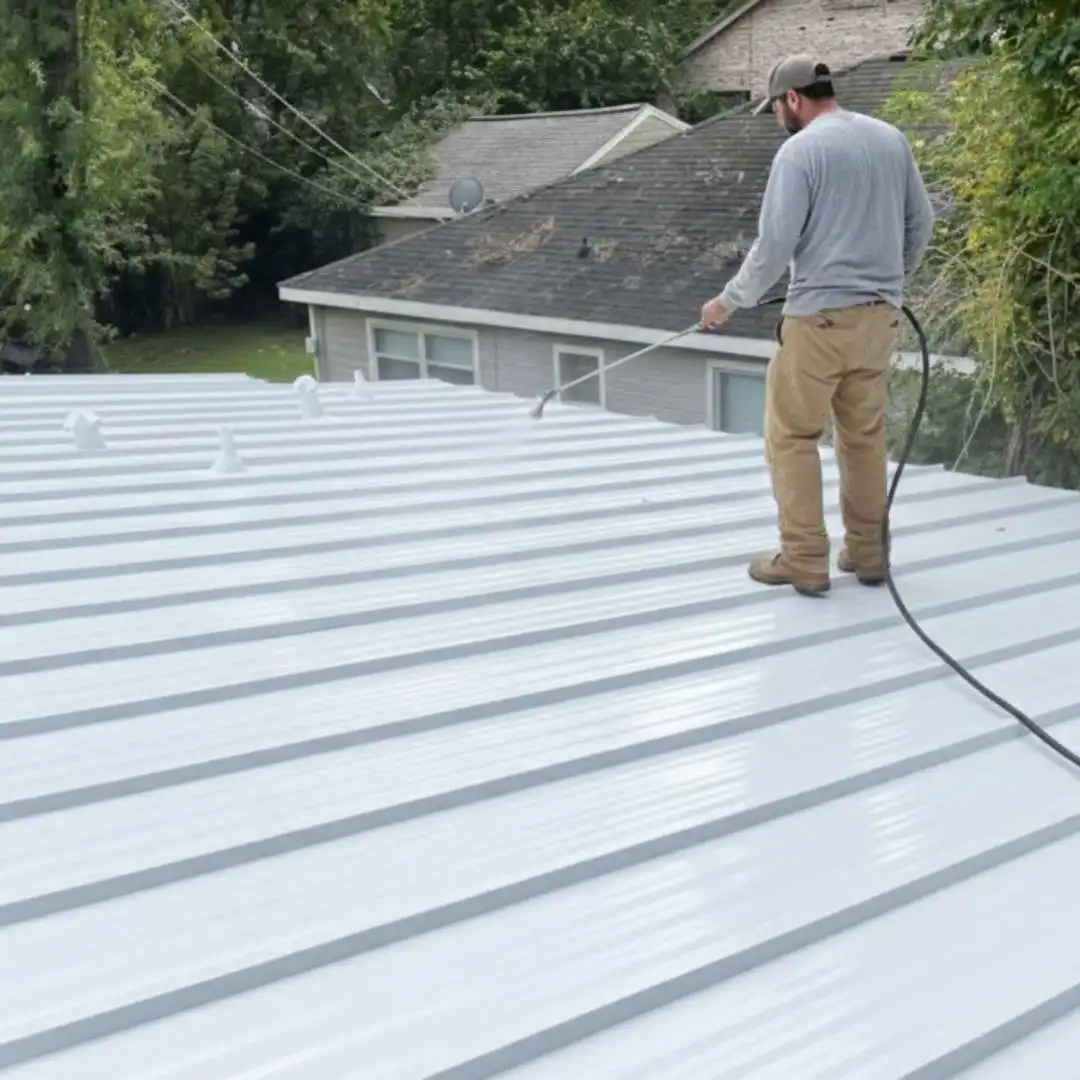
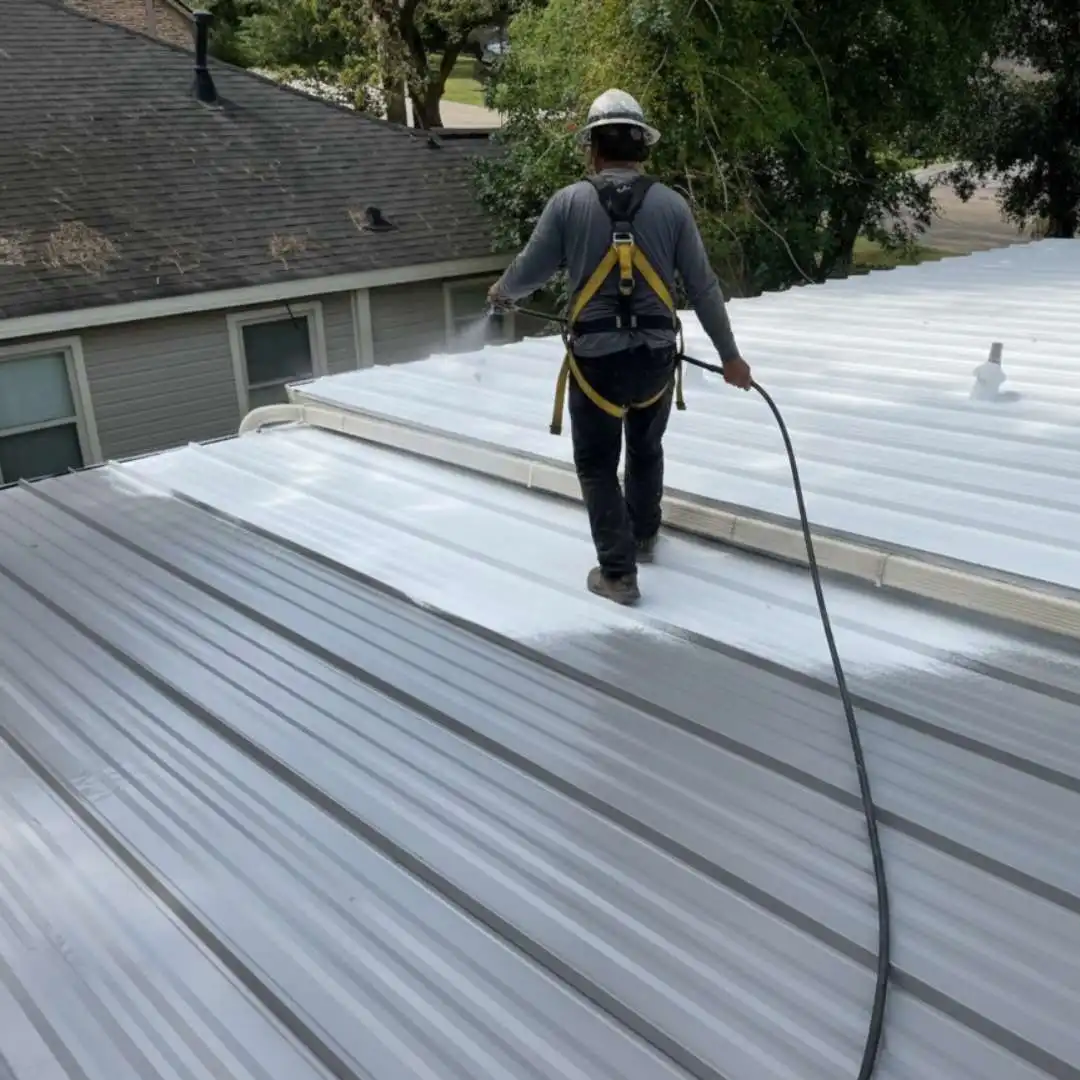
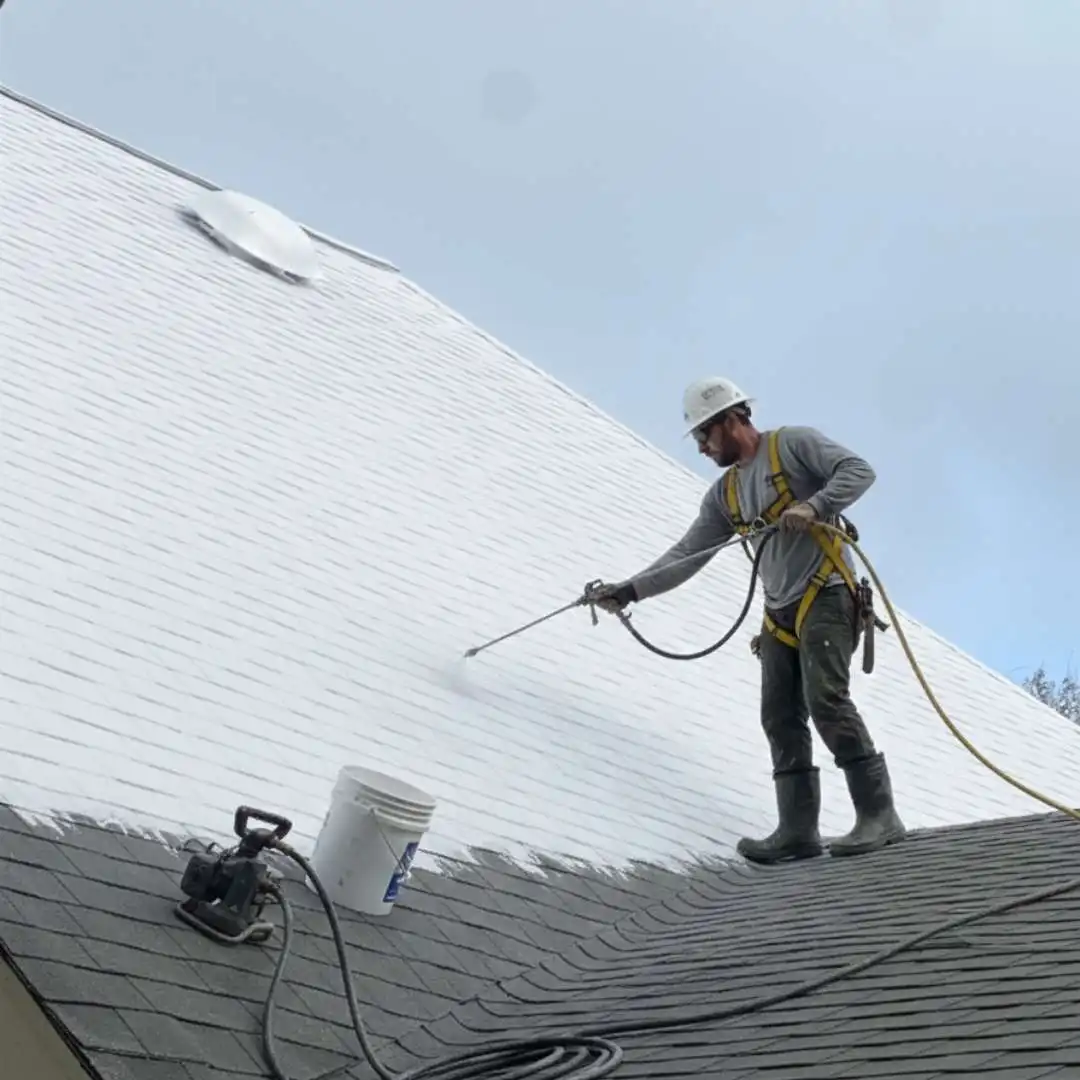
After thorough cleaning and moisture-scanning, we focus on detail work at seams, penetrations, and drains where failures usually start. Then, we apply multiple coating passes to achieve the manufacturer-specified mil thickness, rather than just rolling on a single thin layer.