












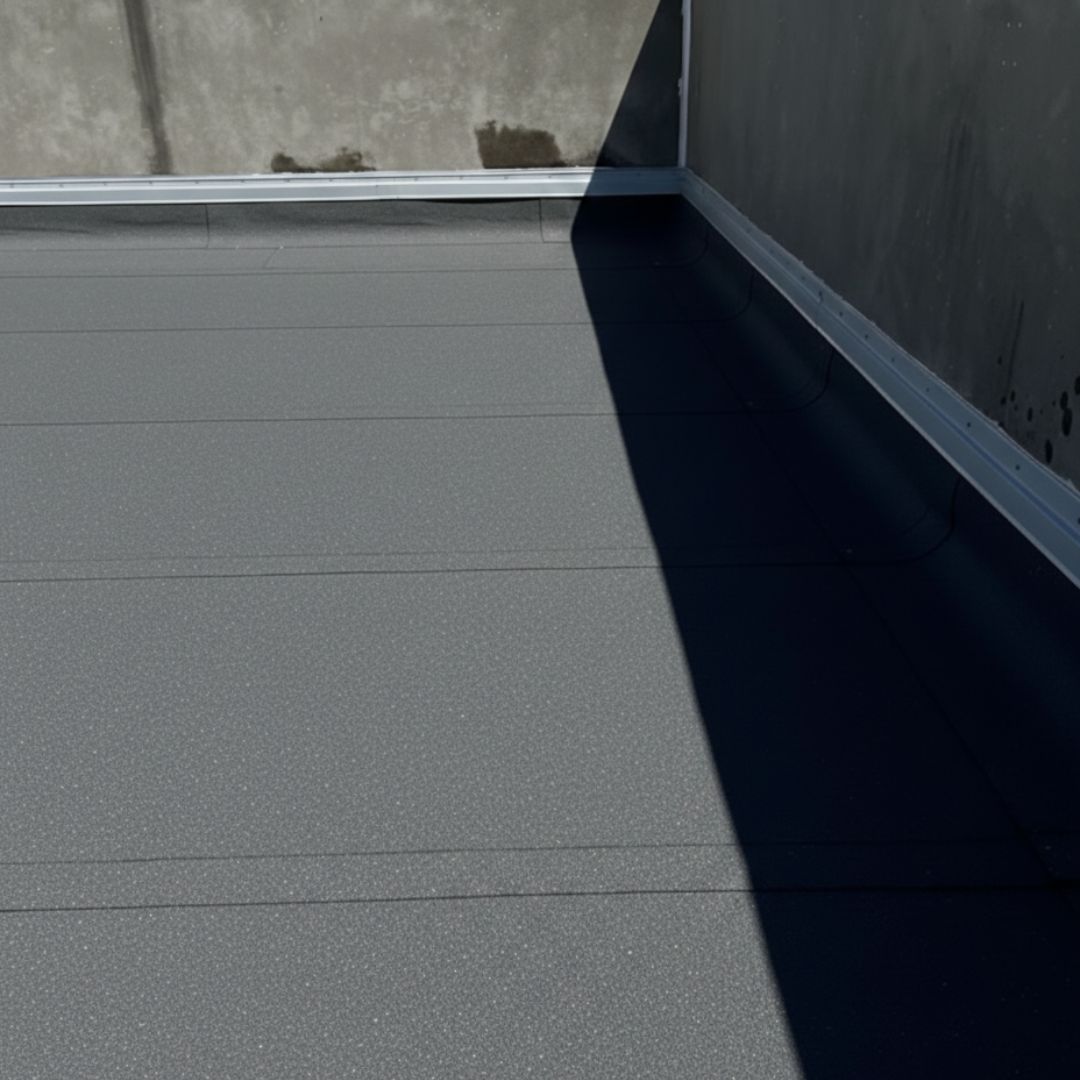
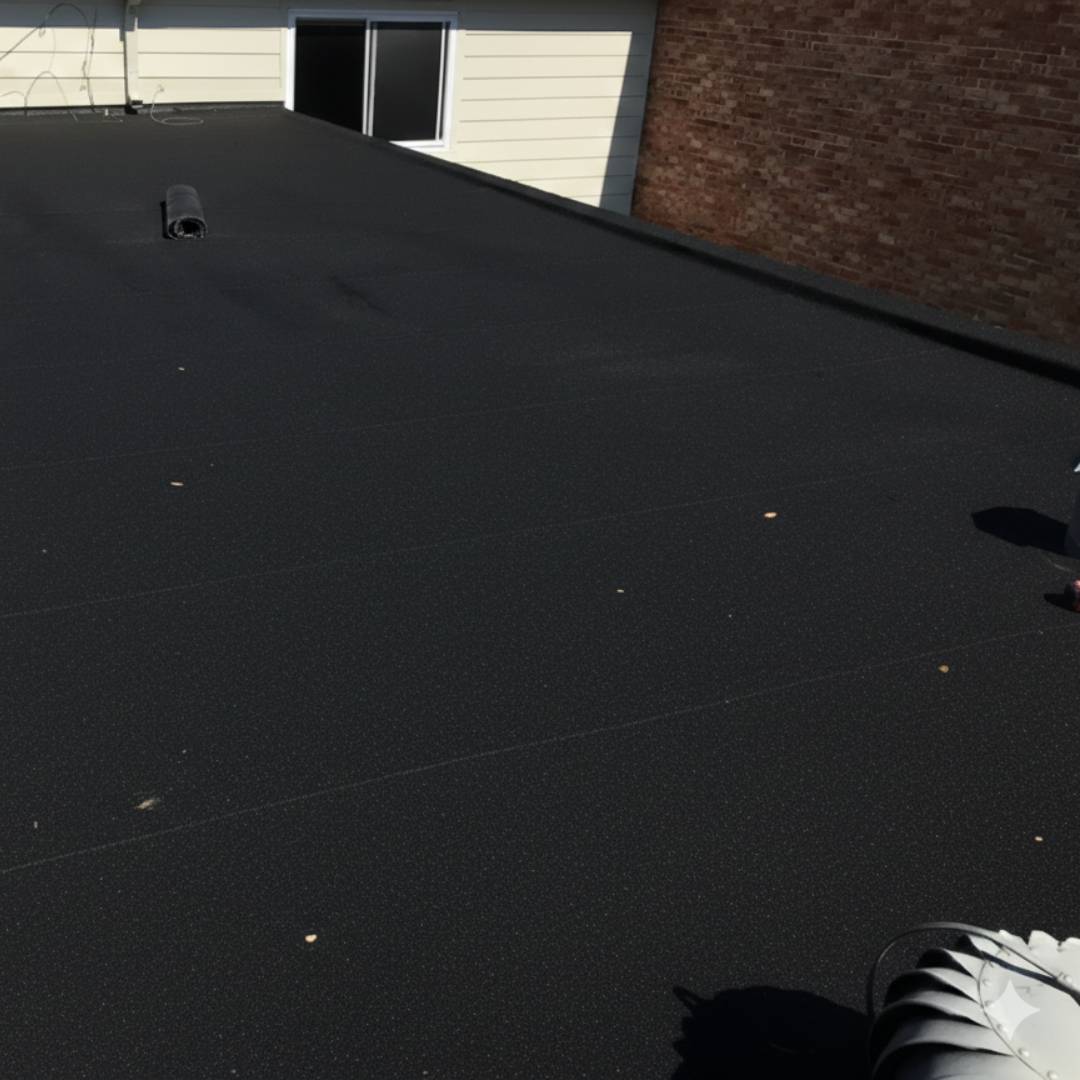
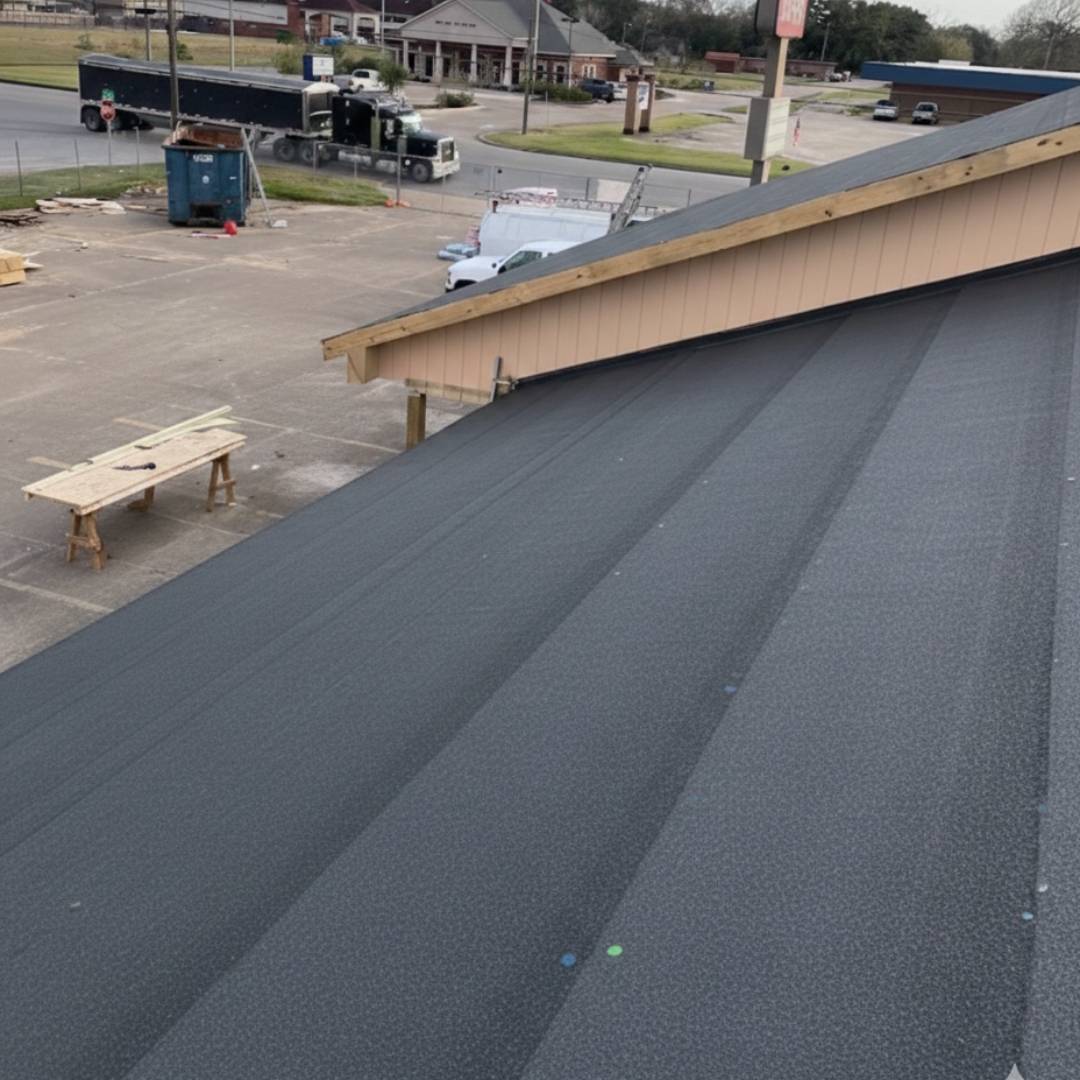
What is a Commercial peel and stick commercial roof membrane?
It’s a self-adhered roofing membrane, typically SBS modified bitumen, with a factory-applied adhesive backing on the underside. Instead of torch-welding or hot mopping the sheet to the deck, installers remove a release film and roll the membrane into place, creating a fully bonded waterproofing layer.
Is peel and stick roofing suitable for flat commercial roofs in Houston?
Yes. Flat and low-slope commercial roofs are the most common application for self-adhered systems. The fully adhered bond performs well against the standing water and heavy seasonal rainfall that flat Houston roofs are exposed to, provided drainage is adequate.
How long does a peel and stick commercial roof last?
A properly installed commercial peel and stick system typically lasts 15 to 20 years, depending on cap sheet thickness, granule coverage, drainage, and UV exposure. Roofs with ponding water or poor flashing detail tend to show membrane wear earlier.
Can peel and stick be installed over an existing roof?
In many cases, yes. Self-adhered systems are frequently used as a retrofit layer over an existing single-ply or built-up roof, provided the substrate is dry, structurally sound, and free of trapped moisture. A moisture scan is recommended before installing over an existing deck.
Does peel and stick roofing require an open flame or hot asphalt to install?
No. That’s one of its main advantages over torch-down or built-up roofing. The membrane bonds through pressure-sensitive adhesive, which reduces fire risk during installation and allows work near HVAC units, gas lines, and occupied tenant spaces.
How does peel and stick roofing perform in high wind?
Fully adhered membranes generally resist wind uplift better than mechanically fastened systems, since there are no fasteners for wind to work loose over time. Proper edge and parapet detailing still plays a major role in overall wind performance during tropical storm-force events.
What causes seams to lift on a peel and stick roof?
Lifted seams on a commercial peel and stick roof usually result from incomplete adhesive contact during installation, substrate contamination, or long-term UV and heat exposure softening the adhesive at the lap. Regular inspection of seam edges, especially after Houston’s hottest months, helps catch this early.
How often should a commercial peel and stick roof be inspected?
We recommend two inspections per year, in spring before hurricane season and in fall after summer heat exposure, plus an inspection after any major wind or hail event. Regular inspection catches lifted seams and drain issues before they become active leaks.
What’s the difference between peel and stick and torch-down roofing?
Both use modified bitumen membranes, but torch-down systems are heat-welded to the substrate with an open flame, while peel and stick systems bond through factory-applied adhesive. Peel and stick eliminates fire risk during installation but requires more careful substrate preparation for a reliable bond.
Does ponding water damage a peel and stick roof?
Extended ponding, water that remains more than 48 hours after rainfall, accelerates commercial peel and stick membrane aging and can stress the adhesive bond at seams over time. Correcting low spots in the roof slope or adding additional drainage is often more effective than repeated membrane repairs.
Can peel and stick roofing be repaired instead of replaced?
Localized issues like a lifted seam, a punctured cap sheet, or a failed flashing detail can typically be repaired without replacing the full roof. Widespread blistering, granule loss, or membrane brittleness across large sections usually signals it’s time to plan for full replacement.
What warranty coverage is available on commercial peel and stick roofing?
Warranty terms depend on the manufacturer, cap sheet specification, and installation method used. Ask your roofing contractor for the specific manufacturer warranty documentation and workmanship warranty terms in writing before work begins.