














Weather Resistance · Seamless Waterproofing
Commercial EPDM Roofing for Houston Facilities
Most Houston commercial flat roofs that show interior water damage have already experienced seam delamination for 12–18 months before a leak appears. Achilles Roofing & Exterior has installed fully adhered EPDM rubber membrane systems across the Houston metro since 2017. Led by Ahmad Faiz — 18 years in commercial and storm roofing — with commercial replacements starting at $20,000 and a 5-year workmanship warranty. Free quote: (832) 888-1666.
The Real Problem
Why Commercial Flat Roofs Fail in Houston
Houston’s commercial buildings face a thermal stress cycle that most roofing systems weren’t designed to handle daily. Daytime roof surface temperatures regularly exceed 160°F in summer, then drop 30–40 degrees overnight. Over three to five years, this constant expansion and contraction fatigues lap seams at penetrations — HVAC curbs, plumbing stacks, and drain collars — before the field membrane shows any visible damage.
The second failure mechanism is vapor drive. Houston’s average relative humidity exceeds 70%, and moisture vapor from building interiors migrates upward through the deck into ISO insulation boards. When vapor barriers are absent or improperly lapped, saturated insulation softens the substrate, creating the soft spots and membrane buckling that property managers often attribute to foot traffic rather than moisture.
At Achilles Roofing & Exterior, we begin every commercial assessment by probing for existing moisture infiltration in the insulation layer — not just the visible membrane surface — before recommending a repair or full replacement.
Key Benefits of Commercial EPDM Roofing
- Weatherproof: Resists extreme heat, cold, and hail.
- Affordable: Low cost and fast installation.
- Flexible: Expands without fatigue or cracking.
- Low Maintenance: Quick and easy to repair.
- Sustainable: Recyclable with a low carbon footprint.
Commercial EPDM Roofing in Greater Houston — What's Different Here
Houston’s commercial roofing environment is defined by three converging stressors no national roofing guide fully addresses: 50+ inches of annual rainfall (often arriving in concentrated tropical bursts), sustained UV exposure from a low-latitude sun angle, and the high humidity that accelerates biological growth and adhesive degradation on poorly maintained systems. Achilles Roofing has served commercial clients across Houston, Katy’s industrial corridors, the Energy Corridor, Sugar Land, Cypress, Spring, and Pearland since 2017. Every commercial installation is permitted through the appropriate Harris County or municipal building department, and our fully adhered EPDM systems meet Texas Department of Insurance windstorm construction standards where applicable.
Hidden Causes Most Contractors Miss
Six Failure Patterns We Find Every Week
Seam Tape Delamination
EPDM seam tape relies on chemical bonding, not mechanical pressure. When ambient temperature drops below 50°F during application — rare but possible in Houston winters — adhesion is permanently compromised. The seam looks intact but fails under the first thermal expansion event.
Lateral Leak Migration
Water entering at a roof penetration doesn't fall straight down. It travels laterally along the bottom of the membrane, often appearing as interior ceiling stains 15–25 feet from the actual breach point. This is why patching the visible wet spot rarely solves the problem.
ISO Insulation Saturation
Houston's vapor drive pushes moisture upward through unprotected roof decks into polyisocyanurate insulation. Wet ISO loses its R-value immediately and permanently — it does not dry out and recover. Saturated sections must be cut out and replaced, not dried in place.
HVAC Curb Flashing Failure
Commercial rooftop HVAC curbs concentrate both foot traffic and thermal stress at their corners. Counter-flashing that isn't mechanically fastened and lap-sealed to the membrane allows the joint to open over time — one of the most common commercial leak sources in Houston's heat cycling environment.
Membrane Billowing (Wind Uplift)
Mechanically attached EPDM systems — where screws and plates hold the membrane to the deck — are vulnerable to progressive delamination in 60+ mph events. Houston's hurricane season gusts cause the membrane to billow, stressing attachment points until the system fails catastrophically rather than at one localized point.
Biological Growth at Drains
Houston's humidity and organic debris load creates ideal conditions for algae and moss growth around interior drains and parapet walls. Biological growth holds moisture against the membrane surface, accelerating UV degradation and eventually creating localized soft spots that invite standing water.
Our Proven Installation Process
Every Layer Serves a Specific Function
EPDM Membrane
High-density synthetic rubber sheet (45–90 mil thickness). Carbon black composition provides inherent UV resistance without requiring surface coatings — a key advantage in Houston's high sun-angle environment.
ISO Insulation Boards
Rigid polyisocyanurate boards provide thermal resistance and create a flat, structurally stable substrate. R-value selection is based on building use and local energy code requirements for Harris County.
Vapor Barrier
Critical in Houston's humid climate. A properly lapped vapor retarder below the insulation prevents interior moisture vapor from migrating upward and saturating ISO boards — the failure mode most often missed during visual inspections.
Seam Tape & Lap Sealant
Specialized butyl-based seam tape chemically fuses membrane sheets. All seams receive a secondary lap sealant bead at the edge — the step most budget contractors skip, and the most common source of early seam failure.
Bonding Adhesive
High-strength contact cement bonds the membrane to the insulation substrate in a fully adhered installation. Full adhesion eliminates the membrane flutter and wind uplift vulnerability of mechanically attached systems.
Termination Bars & Caulk
Metal termination bars mechanically secure the membrane edge at parapet walls and penetrations. All termination edges receive EPDM-compatible sealant — preventing the edge-lift failures that account for a significant share of commercial roof insurance claims.
Our Proven Installation Process
Our Commercial EPDM Installation Process
Our methodology focuses on substrate integrity and chemical bonding rather than speed. Every step is sequenced to prevent the failure modes most common in Houston’s climate — particularly seam adhesion in heat and vapor infiltration at the deck level.
Ahmad Faiz or one of our roofing consultants conducts an on-site assessment. We use a moisture probe to test existing insulation for saturation — not just a visual inspection. Wet ISO sections are mapped before any replacement quote is issued, so you know exactly what you're paying for and why.
Edwardo Cano, our 12-year lead foreman, clears all debris and inspects the roof deck for rot, delamination, or structural compromise. Any deck deficiencies are documented and remediated before insulation is laid — because a new membrane over a compromised deck fails in the same spots as the old one.
Vapor retarder is installed and lapped per manufacturer specs, then ISO insulation boards are mechanically fastened to the deck before the membrane layer begins. Board joints are offset from deck seams to prevent stress concentration — a detail skipped on many budget commercial installs in the Houston area.
Membrane sheets are unrolled and allowed to relax for at least 30 minutes before bonding — preventing future tension wrinkles. Bonding adhesive is applied to both the insulation and membrane surfaces, allowed to flash off properly (ambient temperature and humidity are monitored), then the membrane is rolled into contact. Seams are chemically fused with seam tape plus lap sealant at all edges.
Every HVAC curb, plumbing stack, drain collar, and parapet termination is individually detailed with pre-formed EPDM accessories — not field-cut patches. After completion, every seam is physically probed with a probe roller. We issue your 5-year workmanship warranty only after the seam probe is passed. Permit inspection is scheduled before we demobilize.
Field Observations
What 8 Years of Houston Commercial Roofing Teaches You
These aren’t industry generalizations. They’re patterns we observe repeatedly across Houston commercial properties — and the reason our repair approach differs from contractors who assess from the membrane surface only.
Seam failures typically appear 3–5 years after installation
The EPDM membrane itself rarely fails within the first decade on a properly installed system. What fails is the seam chemistry — particularly on buildings where adhesive was applied in ambient temperatures below 50°F or above 90°F. In Houston, September and October installs are often rushed after hurricane season, and the overnight temperature drops that month can compromise adhesive cure. We monitor temperature and humidity throughout every pour and defer bonding if conditions fall outside the manufacturer’s specified window.
Material Performance
Drain flow rate matters more than drain count
Houston’s tropical rainfall events — 4–6 inches in under two hours during severe convective storms — exceed the design capacity of undersized drains. Ponding water that persists for 48+ hours after rain accelerates membrane fatigue and creates hydrostatic pressure at every low-point seam. During our inspection, we calculate the drainage area per drain against observed drain diameter and verify that the system can handle Houston’s 100-year storm flow rate per square foot of roof.
Drainage / Flood Risk
Building owners misread HVAC condensation as roof leaks
A common service call pattern we see: commercial building managers report ceiling leaks that appear 6–10 feet from exterior walls, directly below rooftop HVAC units. In roughly 30% of these cases, the source is not roof membrane failure but condensate drain overflow from improperly maintained or undersized condensate systems. We assess both the roof and the HVAC penetration flashing before attributing the cause — saving owners the cost of unnecessary membrane replacement.
Houston humidity affects adhesive open time differently by season
EPDM bonding adhesive has a specified “open time” — the window between application and membrane contact during which the adhesive remains workable. In Houston’s summer humidity (85–95% RH on many days), adhesive flash-off takes longer and the optimal contact window narrows. Crews that don’t adjust their pace to ambient conditions bond the membrane too early — before solvent has fully released — creating adhesion that tests fine initially but fails within two thermal cycles. Our crews carry hygrometers and adjust open times in real time.
Weather Operational
Our Repair Process
Why Houston Facility Managers Choose Achilles Roofing
Founded by Ahmad Faiz after 18 years of nationwide storm restoration work. Not a franchise, not a storm chaser — a Houston-based operation built for the Gulf Coast market. RCAT Member #208834.
We physically test ISO insulation for existing moisture saturation before issuing a replacement quote. If 30% of your roof is dry, you don't need a full replacement — we'll tell you that and quote a targeted repair instead.
Every commercial EPDM install is covered for 5 years on labor. Most Houston commercial roofers offer 1–2 years. If a seam fails, we come back — no billable service call, no negotiation.
We don't offer mechanically attached EPDM on commercial buildings. Full adhesion to the ISO substrate eliminates the membrane billowing and progressive delamination that causes catastrophic wind-event failures in Houston's hurricane season.
Commercial EPDM replacement starts at $20,000. Written quote before any work begins — no hidden mobilization fees, no material upcharges after signing. GreenSky commercial financing available. Senior, military, and veteran discounts apply.
Consistently rated 5 stars on Google, Thumbtack, and Yelp. BBB A+ accredited. Neighborhood Faves award winner 2024 and 2025. Customers specifically cite communication and transparency as the reason they return.
Why Houston Homeowners Choose Achilles
Real Proof. No Generic Claims.
These aren’t industry generalizations. They’re patterns we observe repeatedly across Houston commercial properties — and the reason our repair approach differs from contractors who assess from the membrane surface only.
Ahmad Faiz
Project Manager & Roofing Consultant
18 years in roofing, beginning with nationwide storm restoration work — hail, wind, and tornado recovery — before settling in Houston to build a community-focused operation. Ahmad personally leads commercial consultations, conducts moisture assessments on larger facilities, and oversees the warranty process on every commercial project Achilles takes on. Background in boxing and fitness — the same discipline applies to every commercial job site.
18 YRS EXPERIENCE · RCAT #208834 · MALARKEY CERTIFIED
Edwardo Cano
Lead Foreman — Flat Roofing & Shingle Systems
12 years of hands-on roofing experience with specialization in both flat commercial systems and residential shingle work. Originally from Guatemala, Edwardo has completed approximately 5,000 roofing projects across Greater Houston — giving him an encyclopedic knowledge of how Houston’s building stock ages and fails. He leads all on-site structural prep, deck inspection, and EPDM installation crews.
12 YRS · ~5,000 PROJECTS · HOUSTON-WIDE COVERAGE
See Our Work:
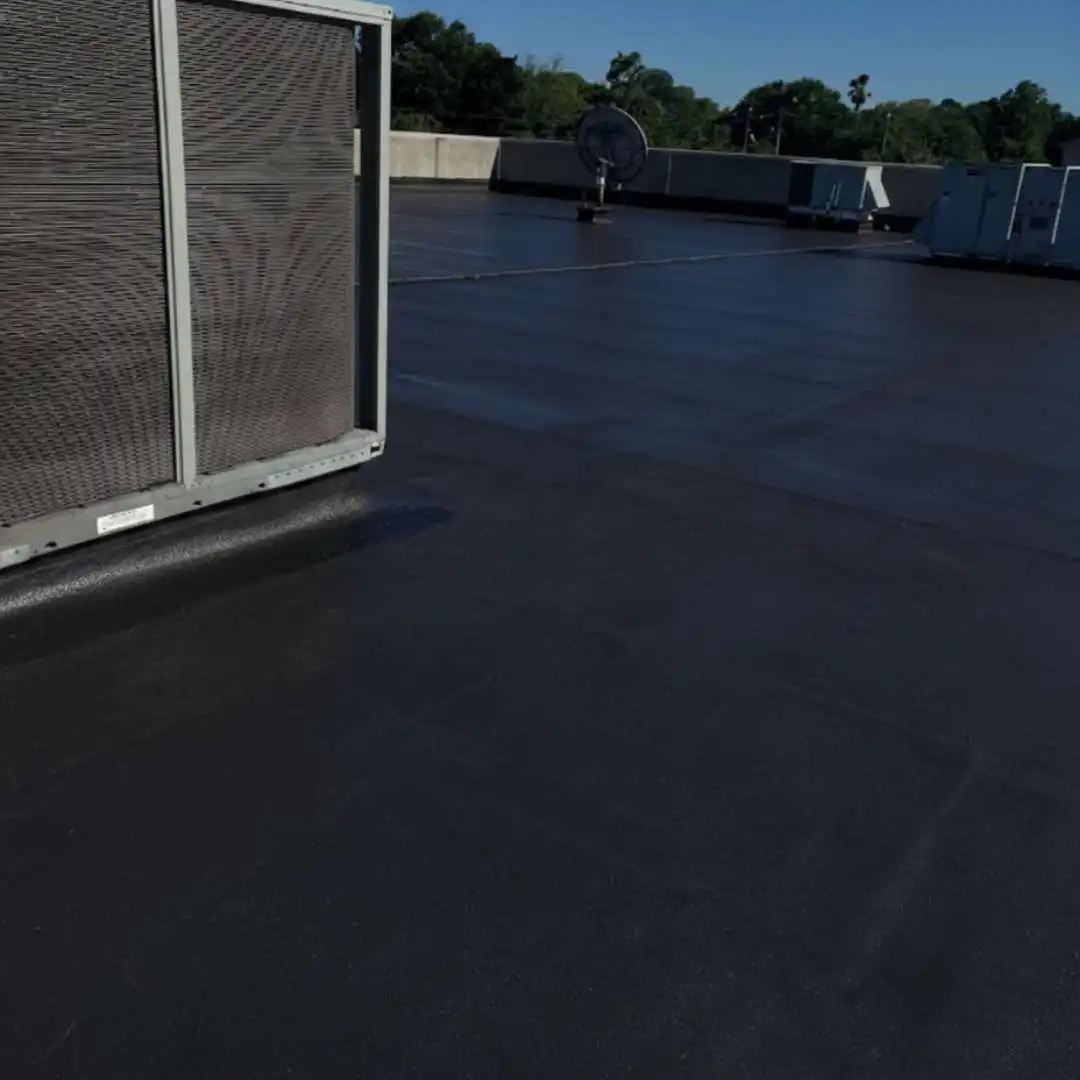
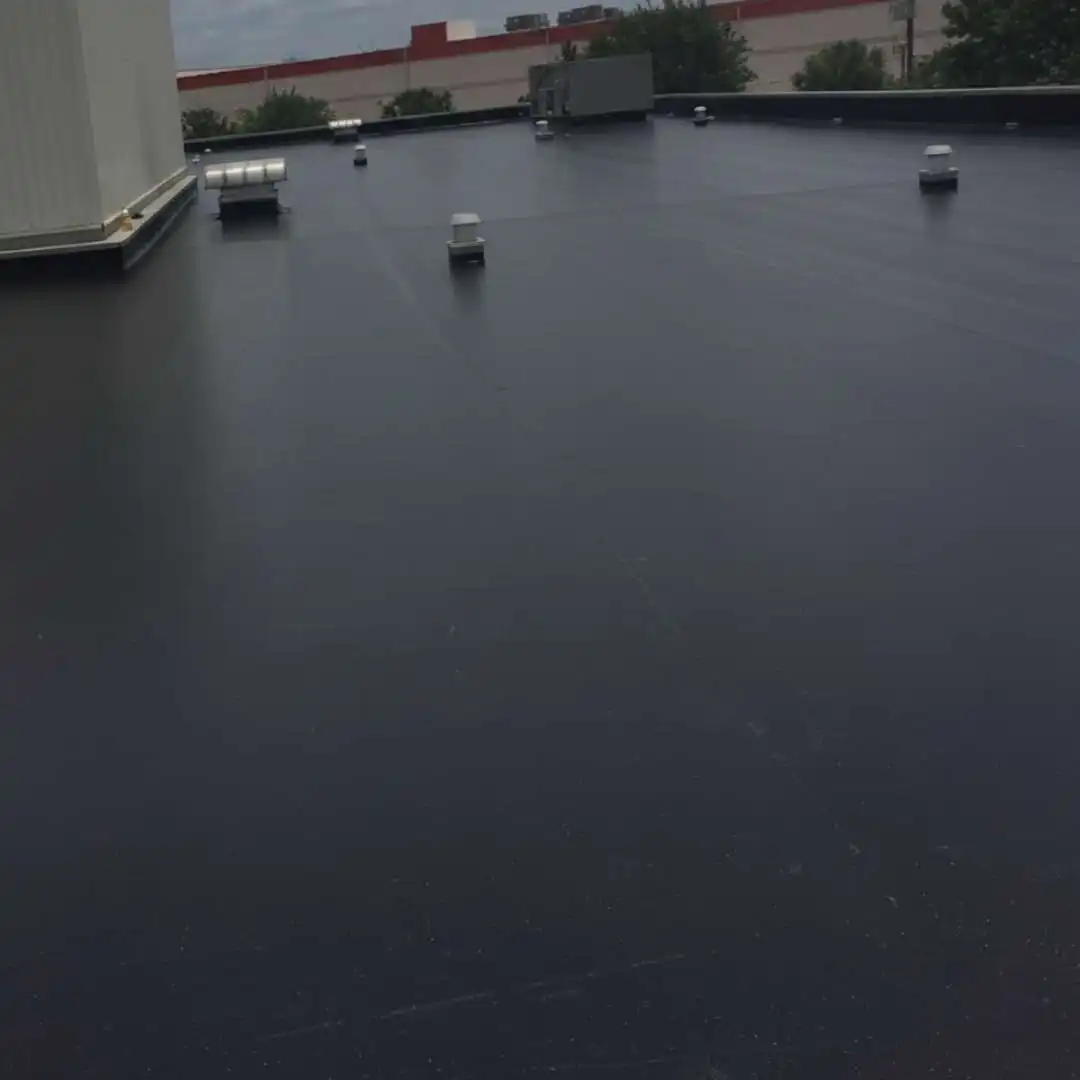
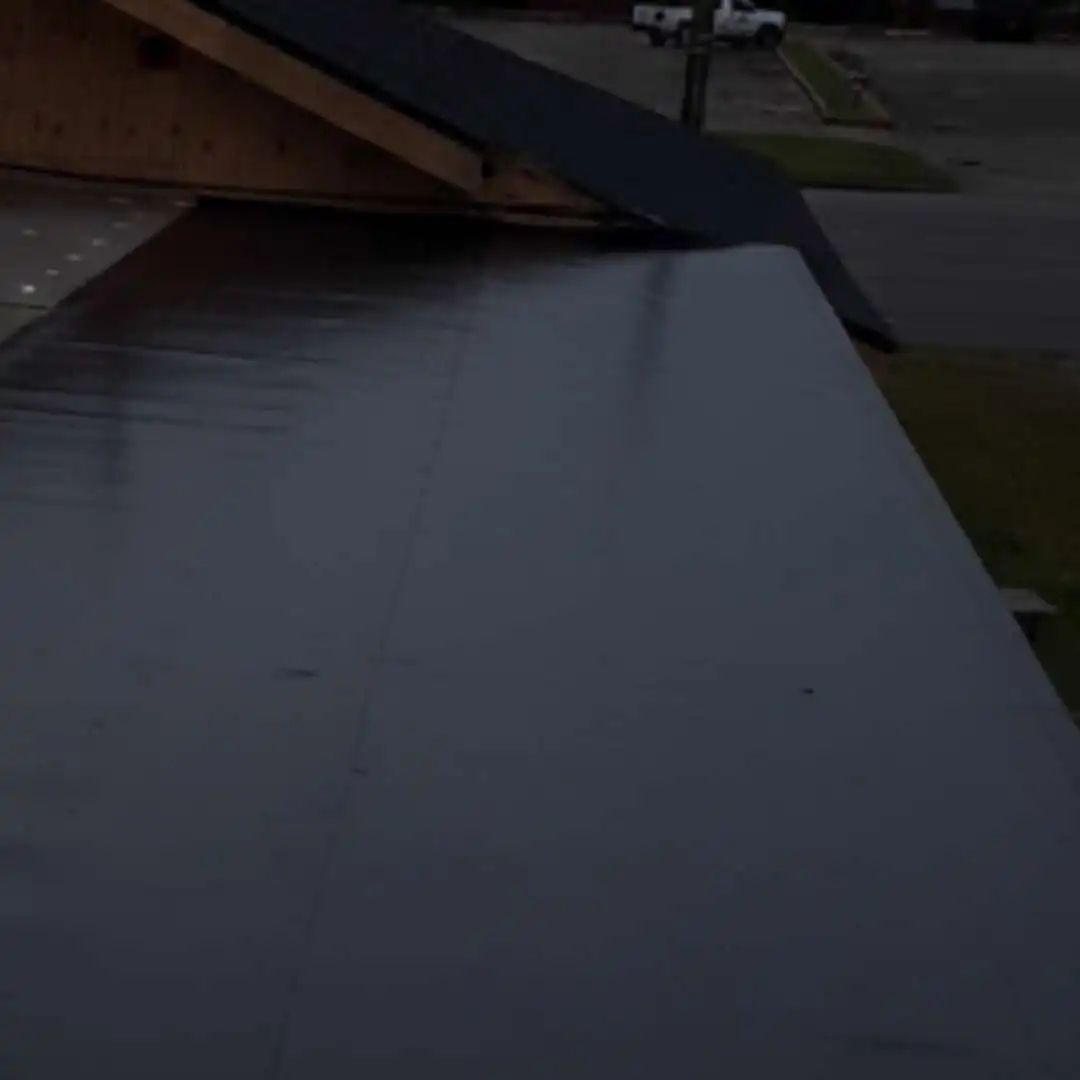
Quality Commercial EPDM Roofing Projects.
Invest in Proven Durability.
Secure Your Facility with Commercial EPDM Roofing
Experience the unmatched resilience and durability of a professionally installed rubber roof. Contact Achilles Roofing & Exterior for a free quote.
I would like to post a positive review for Achilles Roofing & Exteriors team. It is second time we are doing minor work on our house and I'm very satisfied with quality of work, dedication and enormous progress on a transformation they made in both times. I do not foresee any roof repairs on my house in future but if you are looking for someone trustworthy, punctual, caring to do your roof work, I would totally trust them.
Achilles Roofing & Exteriors did an exceptional job with our residential roofing project, providing top-notch roof repair services and professional work done at a reasonable cost. Their experienced roofer team handled the quick roofing service with care and attention to detail, ensuring our new roof exceeded our expectations.
We really needed a new roof and we got 5 different quotes from 5 companies and Achilles gave us the best quote by thousands of dollars! Very professional work and service and very flexible to help meet our busy schedules.I would highly recommend this company to anybody who needs roofing services.
Great price · $2,000–4,000
To cool down my attic, I decided to install a solar attic fan. I got proposals from four different vendors and evaluated them based on customer service, experience, implementation, and price. Achilles Roofing & Exteriors, led by Ahmad Faiz, was the standout choice.
Great price · $10,000–12,000
Ahmad is very professional. The process was very simple. Price was affordable and the quality of work is amazing. Thank you for the new replacement and previous rook repairs.
Quick turnaround on some roof repairs we needed for the sale of our home. Everything was documented on the invoice and with photos. Very professional.
Great job on my Atrium cover. Used them before for my roof. Well done and very reasonable.
Commercial EPDM Roofing FAQs
Why do Houston commercial EPDM roofs fail at the seams rather than the membrane itself?
In Houston’s climate, daytime highs frequently exceed 95°F while nights drop 30–40 degrees, creating constant thermal expansion and contraction. EPDM membrane can handle this cycling, but improperly bonded seam tape cannot. Over 3–5 years, delaminated seam edges allow moisture infiltration that migrates laterally under the membrane — often appearing as interior leaks 10–20 feet from the actual breach. Achilles Roofing uses chemically-fused seam tape with lap sealant at all edges, not mechanical fasteners alone.
Does EPDM roofing hold up in Houston's hurricane-season wind events?
Fully adhered EPDM systems — where the membrane is bonded to ISO insulation with high-strength adhesive — perform significantly better in high-wind events than mechanically attached systems. The bonded system eliminates membrane flutter and billowing that can cause catastrophic delamination in 60+ mph gusts. Achilles Roofing installs fully adhered EPDM systems on all commercial projects in the Houston metro as our standard — not an upgrade.
How does Houston humidity affect the ISO insulation layer under an EPDM roof?
Houston’s average relative humidity exceeds 70%, and vapor drive from building interiors can saturate ISO insulation boards when vapor barriers are improperly installed or missing. Wet ISO loses its R-value rating and softens the substrate — eventually creating soft spots and accelerating membrane fatigue above. During every commercial deck inspection, Achilles technicians probe for existing moisture infiltration before any new membrane is laid. Saturated ISO must be replaced, not dried in place.
How long does EPDM roofing last on a Houston commercial building?
A properly installed fully adhered EPDM system has a rated lifespan of 25–30 years. In Houston’s climate, UV exposure and thermal cycling are the primary aging factors. EPDM’s carbon black composition provides inherent UV resistance without surface coatings — a critical advantage over systems that rely on reflective coatings that degrade in Houston’s UV environment. Achilles backs every installation with a 5-year workmanship warranty and recommends annual drain clearing to maximize system life.
What does commercial EPDM roofing cost in Houston?
Commercial EPDM roofing in Houston starts at $20,000 for a full replacement. Final cost depends on roof size, existing deck and insulation condition, number of penetrations (HVAC curbs, plumbing stacks, drains), and whether saturated ISO sections require replacement. Achilles Roofing provides a detailed written quote — itemized by labor, materials, and permit fees — before any work begins. GreenSky commercial financing is available. Call (832) 888-1666 for a free site assessment.
Is EPDM or TPO better for flat commercial roofs in the Houston area?
Both systems are appropriate for Houston commercial applications, but they suit different buildings. EPDM’s carbon black membrane handles prolonged UV exposure and temperature cycling better than TPO in south-facing Houston installations. TPO’s white membrane offers better solar reflectivity, reducing cooling load for buildings with thin insulation assemblies. For facilities in Katy’s industrial corridors with heavy HVAC penetrations, EPDM’s simpler patch-repair process also reduces long-term maintenance costs. Achilles installs both and recommends based on your specific building, not material margin.


