



















How long does a TPO roof last in Houston’s climate?
A properly installed TPO flat roofing membrane typically lasts 20-25 years in Houston, though intense UV exposure and summer heat can shorten that range if membrane thickness or seam quality is inadequate. Regular inspections after hail or high-wind events help catch seam separation before it shortens the roof’s service life.
What thickness of TPO flat roofing membrane is recommended for Houston commercial buildings?
Most Houston commercial buildings perform best with 60-mil or 80-mil TPO membrane. The added thickness resists punctures from foot traffic and rooftop equipment while holding up better to the thermal cycling that comes with Houston’s swing between summer heat and sudden storm cooling.
Can TPO roofing handle standing water after heavy rain?
TPO membrane itself is water-resistant, but ponding water that sits for more than 48 hours after a Houston downpour can accelerate seam stress and granule loss over time. Proper slope, tapered insulation, and drain placement during installation are what actually prevent long-term ponding damage.
Does TPO roofing require special maintenance in humid climates?
TPO doesn’t require special humidity treatment, but Houston’s Gulf humidity does make debris buildup around drains and HVAC curbs more likely to trap moisture. Twice-yearly inspections that clear drains and check flashing seals prevent the moisture intrusion that humid climates make more common.
What causes TPO roofing seams to fail over time?
Seam failure is usually caused by incomplete heat-welding during installation, foot traffic stress near HVAC units, or repeated thermal expansion and contraction. Houston’s temperature swings between hot afternoons and cooler storm fronts put more cyclical stress on seams than milder climates.
How does TPO compare to EPDM when choosing commercial flat roofing in Houston?
TPO’s white, reflective surface reduces rooftop heat absorption more than EPDM’s black membrane, which matters for Houston’s cooling costs. EPDM can offer strong durability at a lower material cost, but TPO’s heat-welded seams generally outperform EPDM’s adhered seams in high-heat, high-UV conditions.
Can TPO roofing be installed over an existing roof?
In many cases, TPO flat roofing can be installed as a recover system over an existing low-slope roof if the substrate is dry and structurally sound, avoiding tear-off costs. A roof inspection is needed first to confirm there’s no trapped moisture or deck damage underneath the current membrane.
What wind uplift rating do Houston commercial roofs need?
Houston’s building code requirements are tied to the region’s hurricane and high-wind exposure, and most commercial TPO systems here are installed to meet International Code Council (ICC) and FM Approvals wind uplift ratings appropriate for coastal Texas wind zones. Fastening pattern and membrane attachment method both affect the final rating.
How is TPO roofing affected by Houston’s UV exposure?
TPO’s reflective white surface is formulated to resist UV degradation better than darker membranes, but years of direct Houston sun can still cause gradual granule loss and surface chalking. This is primarily cosmetic early on, but unaddressed UV wear can eventually reduce membrane flexibility.
What is the typical installation timeline for a TPO roof replacement?
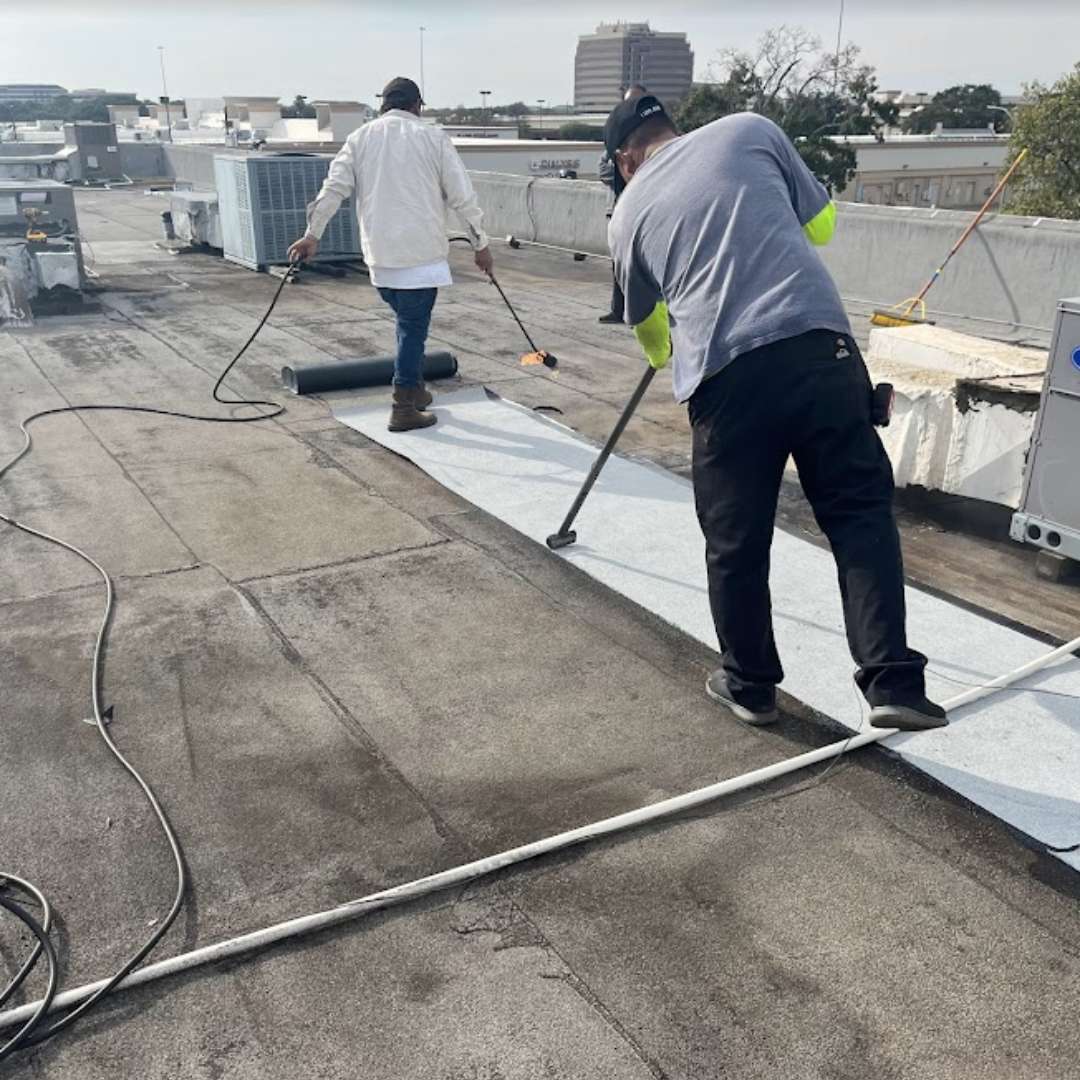
A standard commercial TPO replacement in Houston typically takes several days to two weeks depending on building size, deck condition, and weather delays during hurricane season. Tear-off, deck inspection, insulation, and membrane welding are sequenced to keep the building weather-tight at the end of each work day.
Does TPO roofing help lower cooling costs in Houston?
TPO’s reflective white membrane reflects more solar heat than traditional black roofing, which can meaningfully reduce rooftop surface temperatures during Houston summers, a principle recognized by ENERGY STAR cool-roof guidance. Lower rooftop temperatures ease the load on HVAC systems, though actual energy savings depend on insulation levels and building use.
What documentation is needed for insurance claims after storm damage to a TPO roof?
Insurance claims for Houston storm damage typically require dated photos of the damage, a written inspection report noting cause and extent, and a repair or replacement estimate. Documenting conditions immediately after a hailstorm or high-wind event, before any temporary repairs, strengthens the claim — a step outlined in FEMA storm-recovery guidance.