


















Why does my Houston tile roof leak even though the tiles look fine from the ground?
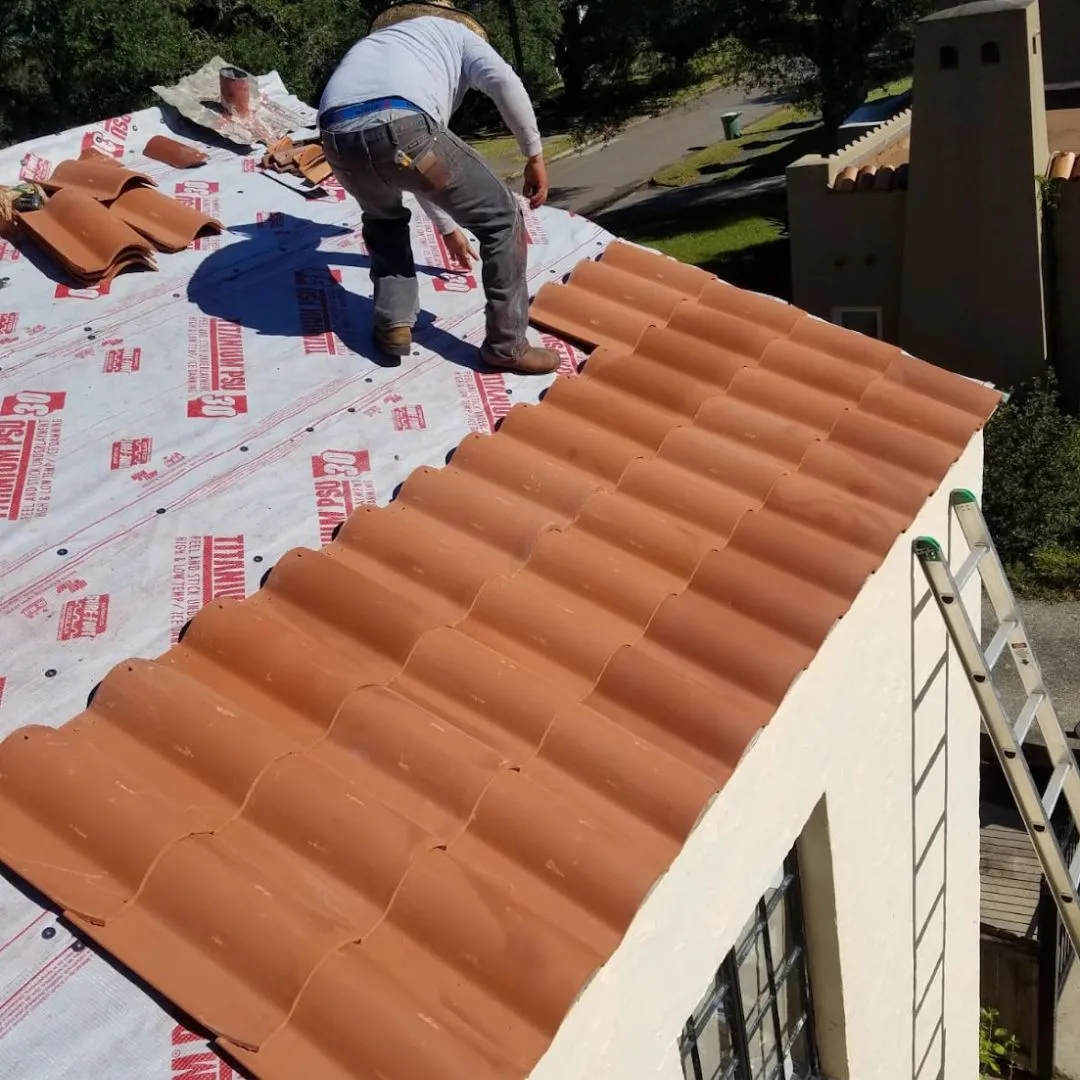
Tiles are decorative armor, not the waterproofing layer. The actual moisture barrier is the underlayment installed beneath the tiles. Houston’s low-latitude UV intensity degrades synthetic underlayment significantly faster than northern markets — functional failure at 14–18 years is common on south- and west-facing sections, often requiring a complete tile roof replacement.
Water entering through cracked ridge mortar, lifted valley flashings, or displaced tiles travels along the failed underlayment before appearing as interior stains, often in a room far from the visible roof damage. The only way to know true underlayment condition is a section-removal inspection — not a ground assessment.
How much does tile roof replacement cost in Houston?
Residential tile roof replacement in Houston starts at $9,000. Final cost depends on tile material (clay, concrete, or slate), roof square footage, underlayment condition, valley flashing complexity, structural deck repairs needed, and ridge mortar/fastening scope. Achilles Roofing provides a written, itemized quote before any tile is removed. GreenSky financing is available, and $150 discounts apply for seniors, military, and veterans. Call (832) 888-1666 for a free site assessment.
Can I just replace the broken tiles on my Houston home without replacing the underlayment?
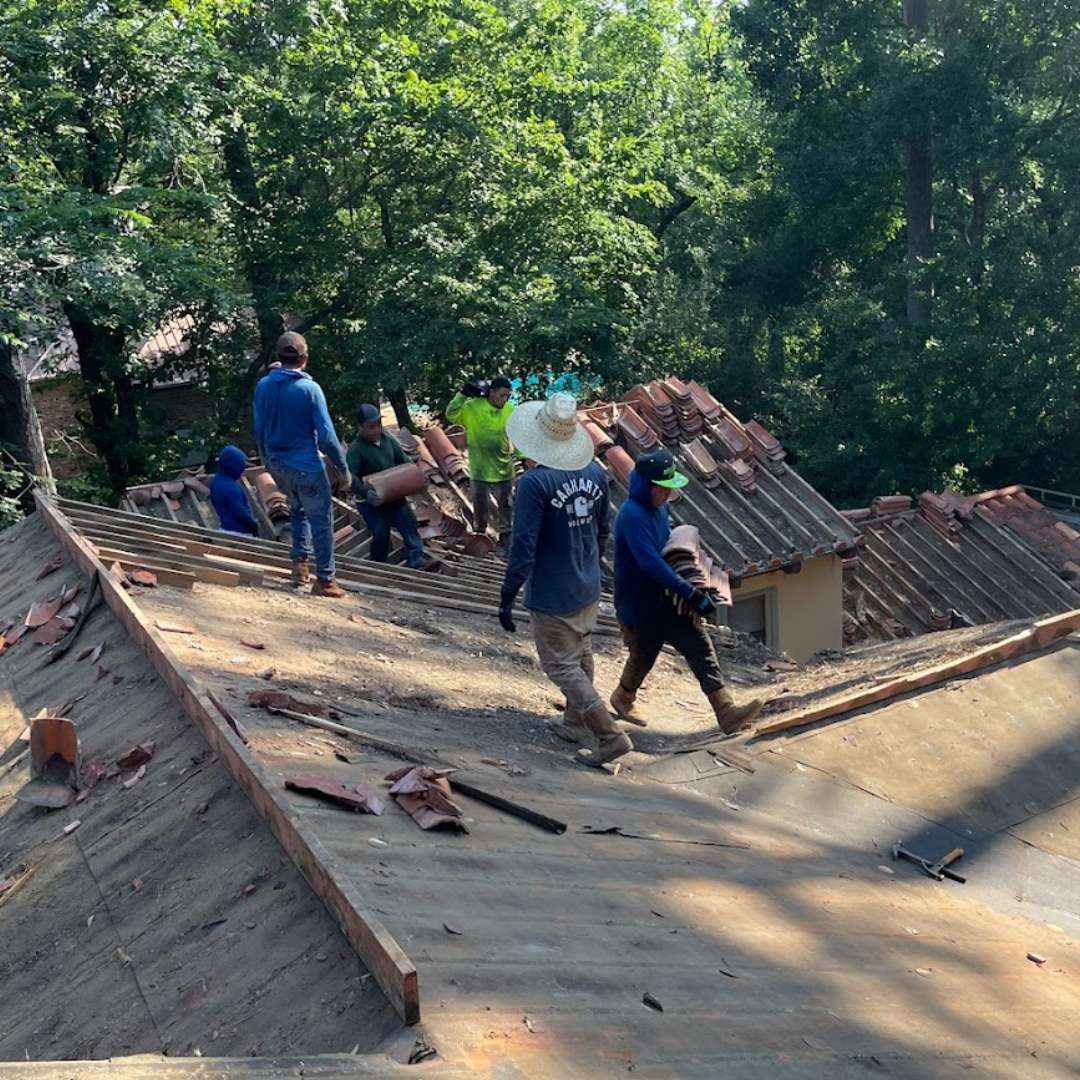
Sometimes — but only if underlayment inspection confirms it’s still functionally sound. Achilles removes tile sections to assess membrane condition before recommending repair vs. full replacement. On Houston homes with tile systems over 15 years old, underlayment rarely passes inspection in south- and west-facing sections. Replacing tiles without addressing failing underlayment typically results in renewed leaks within the first major rainy season — because the water is entering at the membrane level, not the tile level.
Is concrete or clay tile better for Houston’s climate?
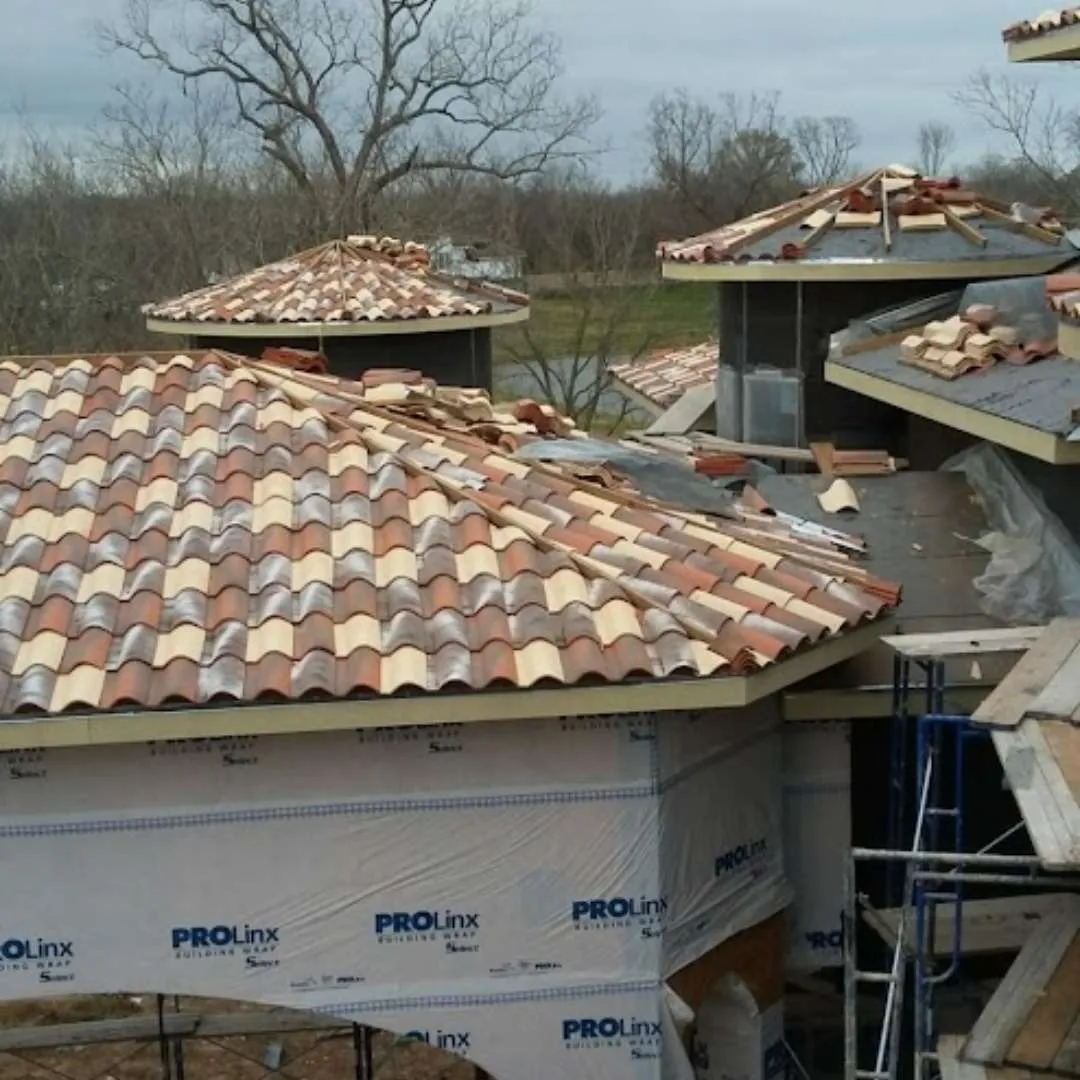
Both perform well in Houston but suit different priorities. Clay tile has inherent UV resistance — color stability for 50+ years without surface treatment, a real advantage at Houston’s latitude. Concrete tile offers more profile and color variety at lower cost and performs well in Houston’s hail season due to greater surface density. For Houston homeowners near the Gulf Coast in high-humidity zones, clay’s natural moisture resistance provides a slight long-term maintenance advantage. Achilles installs both and recommends based on your specific aesthetic, budget, and exposure orientation.
How does Houston hail damage affect tile roofs differently than shingle roofs?
Tile roofs respond to hail differently than shingles in ways that mislead insurance assessors. Concrete tile can sustain micro-fractures from hail impact that aren’t visible from the ground but create moisture infiltration pathways during subsequent heavy rain. Clay tile fractures more cleanly but can be displaced by hail vibration — slightly lifted tiles that look intact lose their weathertight overlap with adjacent tiles. Achilles conducts tile-by-tile hand inspection after significant hail events, not binocular assessment from the eave line. Call (832) 888-1666 after any hail event affecting your Houston tile roof.
Do tile roofs need structural deck reinforcement on Houston homes?
Concrete tile systems weigh 850–1,200 lbs per square (100 sq ft) — roughly 4x the weight of asphalt shingles. Houston homes originally built for shingles and later converted to concrete tile, particularly 1970s-1980s homes in Meyerland, Briargrove, and Westbury, may have rafter spans undersize for long-term tile loading. Achilles performs a structural deck assessment during the initial quote inspection and documents any reinforcement requirements before proceeding — this step cannot be skipped and cannot be quoted remotely without an on-site assessment.