

















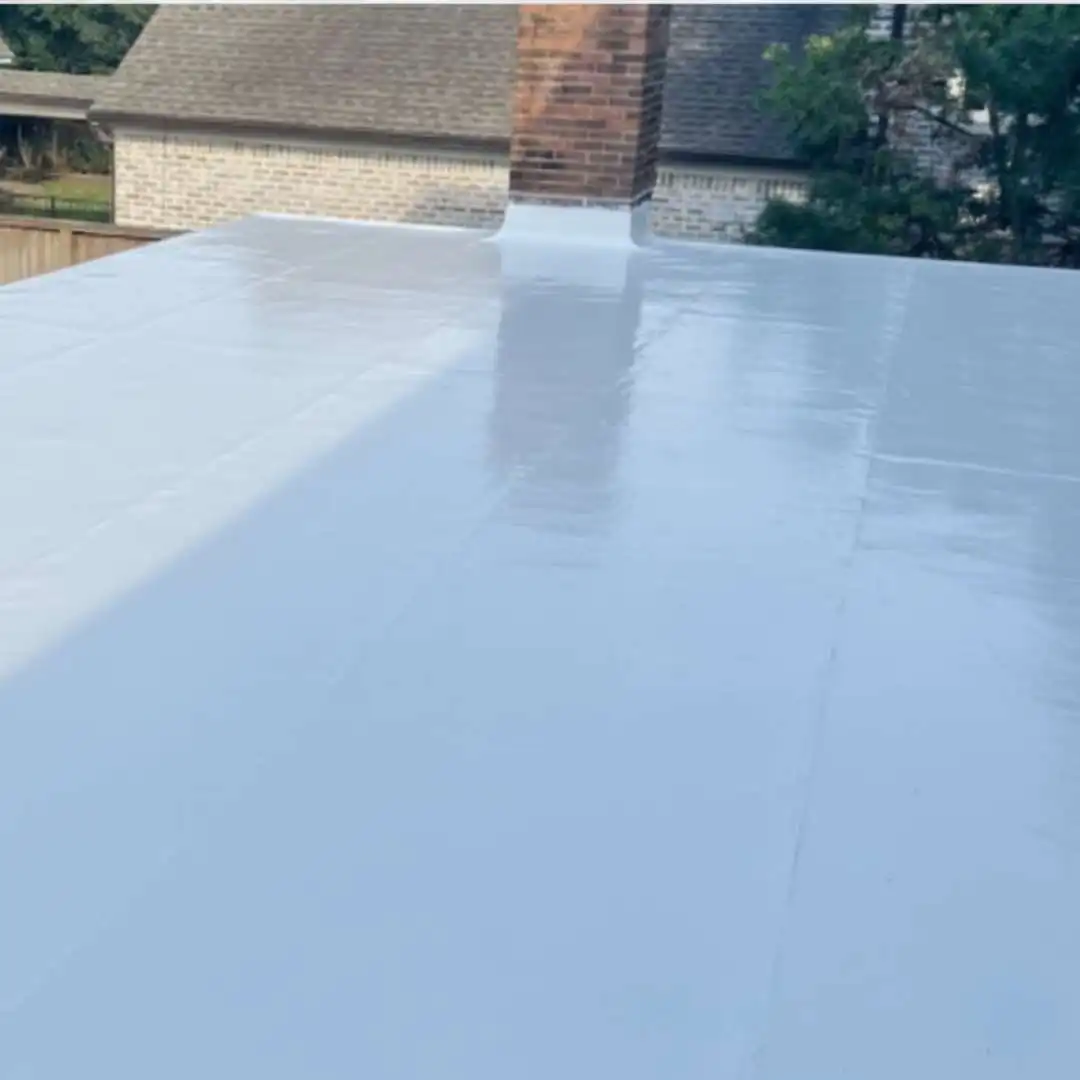
How is silicone roof coating different from acrylic coating?
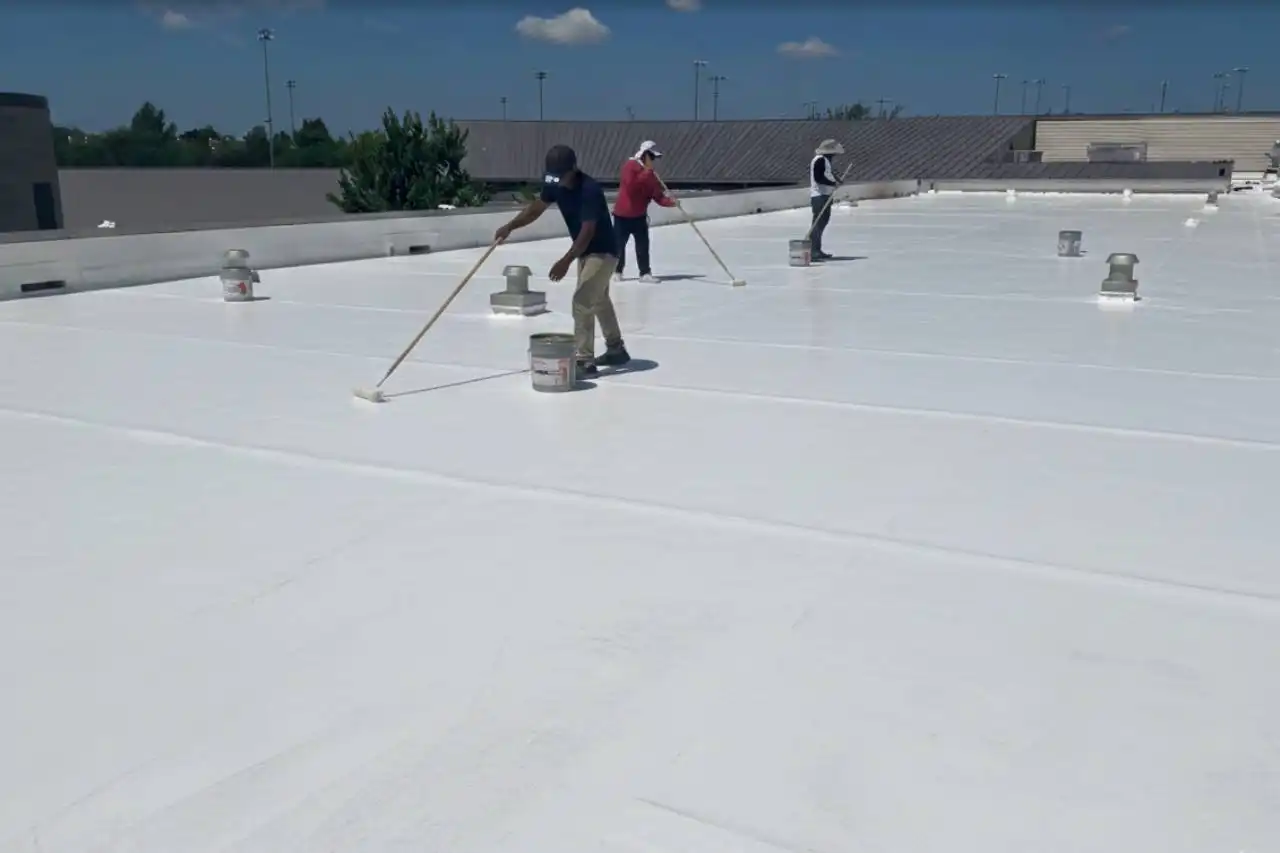
Silicone roof coating cures through a moisture-triggered chemical reaction rather than solvent evaporation, so it tolerates Houston’s humid nights during application and resists softening under standing water — a common failure point for acrylic coatings on flat roofs with poor drainage.
Will silicone coating stop an active roof leak?
Coating is a restoration and protection layer, not a leak-stopping patch. If a roof has an active leak, we address the source — often a failed seam, flashing, or penetration — through emergency repair before applying any coating system.
Can silicone coating be applied over metal roofing?
Yes, with proper substrate prep. Silicone restoration is commonly used on aging metal roofs to seal fastener penetrations and seams; if the panels themselves are structurally compromised, we discuss standing seam metal roofing replacement instead.
How thick does a silicone coating need to be for a Houston roof?
Mil thickness is set by the manufacturer’s warranty specification for the substrate and exposure category, with roofs holding ponding water generally requiring a heavier build than sloped areas. We measure wet-mil thickness during application rather than estimating by eye.
Does silicone roof coating work on a roof that already has ponding water?
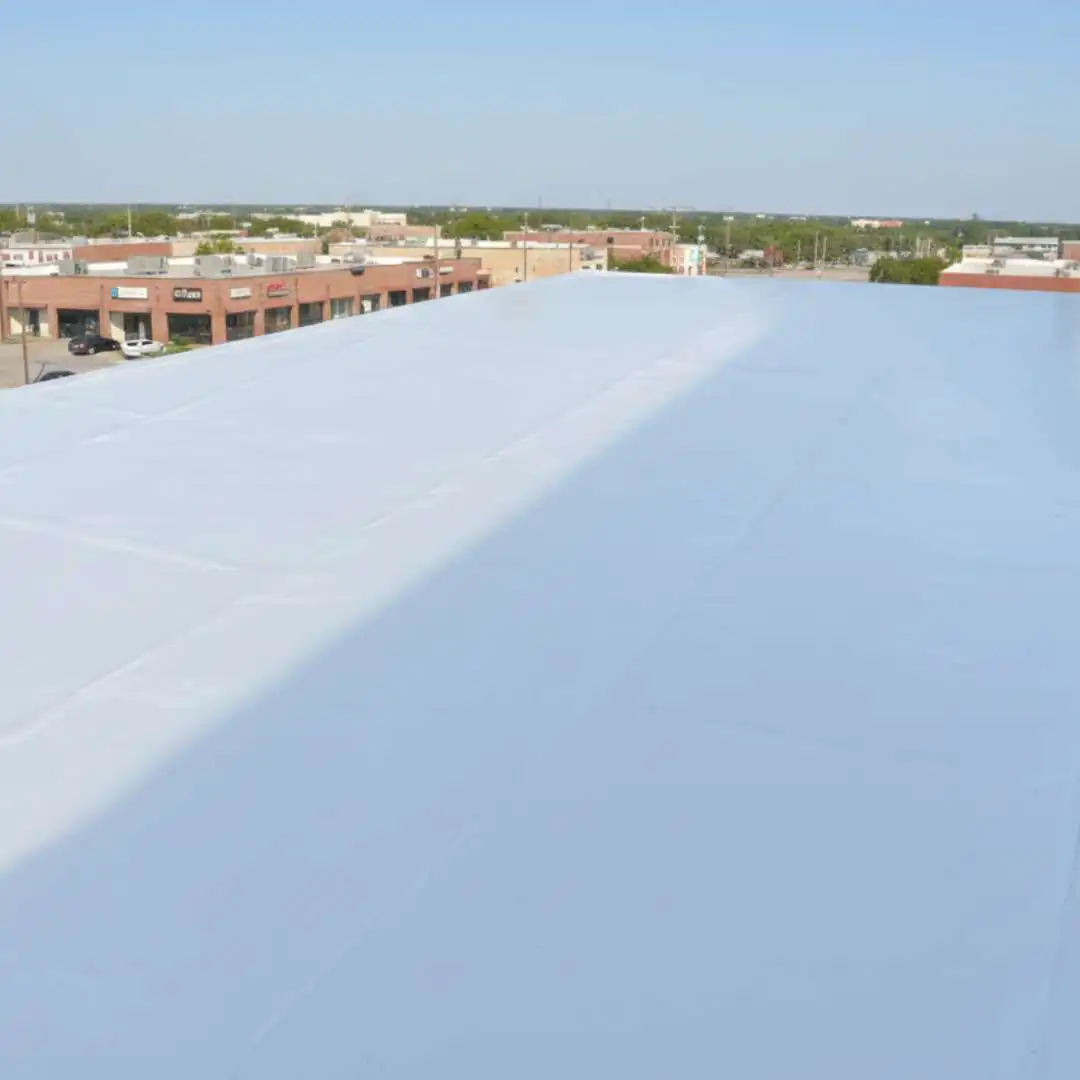
Silicone is one of the few coating chemistries rated for permanent ponding water exposure, which is why it’s frequently specified for Houston’s flat commercial roofs. Persistent ponding beyond what the coating is rated for should still be corrected at the drainage level.
How long does a silicone coating project take to complete?
Timeline depends on roof size, substrate prep needs, and weather windows for cure time between coats. We provide a project-specific schedule after the on-site inspection rather than a generic estimate, since Houston’s rain patterns can shift a coating timeline by days.
Is silicone coating suitable for a residential patio cover or flat-roof addition?
Yes — silicone restoration is used on residential flat-roof sections, patio cover roofing, and additions with the same ponding and UV exposure concerns as commercial buildings, particularly where a low slope limits water runoff.
Does a silicone-coated roof need annual maintenance?
Silicone roof coating systems generally need less frequent maintenance than uncoated membranes, but drains, scuppers, and seams should still be inspected at least annually — especially after hurricane season — since debris buildup can cause new ponding even on a coated roof.
Can silicone coating be recoated once it wears down?
Yes. Silicone recoats over a previously silicone-coated roof, extending service life further, provided the substrate underneath is still sound and moisture-free at the time of recoating.
What roof types in Houston are not good candidates for silicone coating?
Roofs with saturated insulation, structural deck damage, or extensive membrane delamination need repair or replacement rather than a coating, since coating over trapped moisture masks the problem instead of solving it.
Does silicone coating carry a warranty?
Our silicone roof coating work is backed by our workmanship warranty, and manufacturer material warranties from Mule-Hide apply separately based on the specific product and mil thickness installed.
How much does silicone roof coating cost compared to full replacement?
Silicone roof coating is generally a lower-cost restoration option than tear-off and replacement when the underlying membrane and deck are still sound, but exact pricing depends on square footage, substrate condition, and access. We provide a written estimate after an on-site inspection rather than a flat per-square-foot number, and financing through GreenSky is available.