


















How much natural light does a commercial sun tunnel actually add compared to a standard skylight?
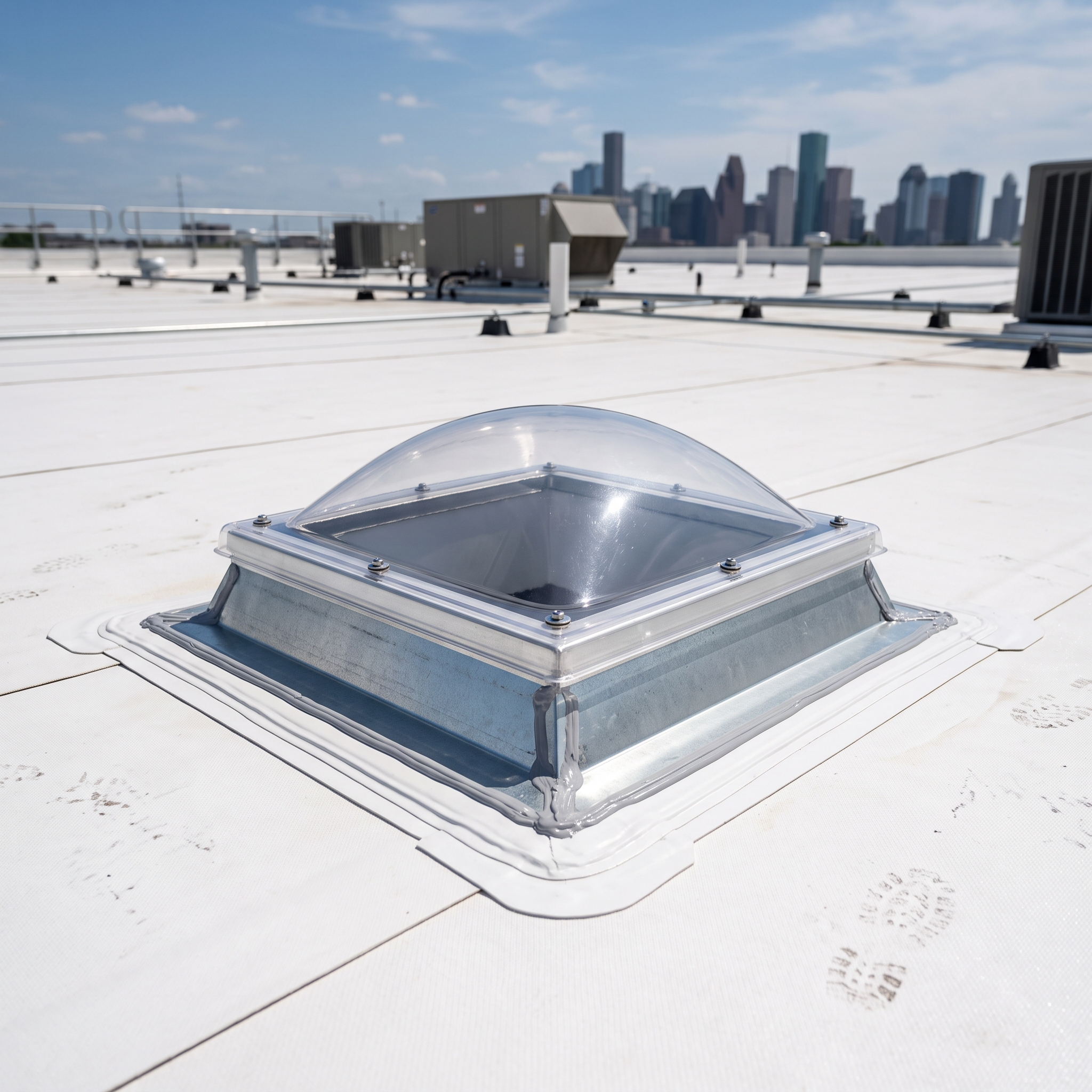
A single 10–14 inch tubular sun tunnel added during a commercial sun tunnel installation typically illuminates a 200–300 square foot interior area on a clear Houston day, comparable to several hundred watts of fixture output during daylight hours. Coverage depends on tube diameter, run length and how many bends the tube makes getting from the roof deck to the ceiling diffuser.
Will a commercial sun tunnel installation void my roof membrane’s warranty?
Only if the penetration isn’t flashed to the membrane manufacturer’s approved detail. We match flashing methods to the membrane already on the roof — TPO to TPO, EPDM to EPDM — and use manufacturer-approved boots so the new penetration doesn’t create a warranty exclusion around it.
Can a commercial sun tunnel installation be done on a completely flat roof, or do they need slope?
Flat and low-slope roofs are the most common application we install on in Houston. Flashing kits designed for low-slope membranes handle standing water differently than steep-slope shingle kits, so the flashing detail — not the tunnel itself — is what changes.
Do sun tunnels make interior spaces hotter during Houston summers?
An uncoated dome can add solar heat gain, but a diffuser lens rated to block infrared transmission limits most of that added heat while still passing visible light. We spec heat-blocking lenses as standard on south- and west-facing commercial installs in the Houston climate.
How long does a commercial sun tunnel installation take?
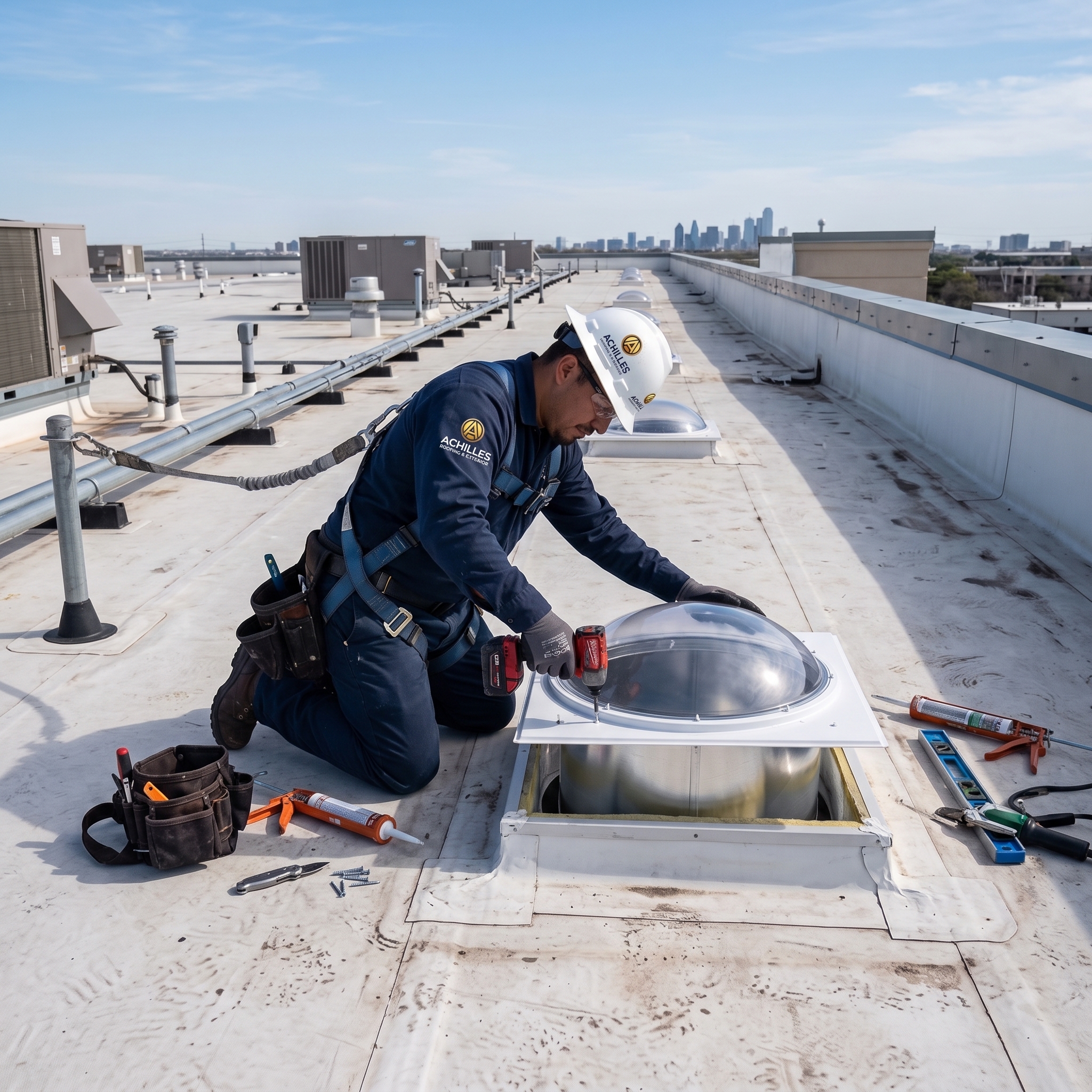
A single-tunnel install on an accessible flat roof typically takes 3–5 hours including flashing and interior diffuser trim-out. Multi-unit commercial installs across a warehouse or retail floor plan are usually scheduled in batches to minimize the number of separate roof openings held open at once.
Does installing a sun tunnel require electrical work or a permit?
A passive sun tunnel has no wiring, so no electrical permit applies. A roof-penetration permit may be required depending on the local jurisdiction’s adoption of the International Building Code; we confirm and pull permits where required before work begins.
How much can a business realistically save on lighting costs with a commercial sun tunnel installation?
Savings scale with how many daytime hours the space currently runs overhead lighting and how many tunnels are installed relative to square footage. The U.S. Department of Energy’s daylighting research is a useful independent benchmark for estimating reductions in daytime lighting load before committing to a tunnel count.
What maintenance does a commercial sun tunnel installation need in a humid, storm-prone climate?
We recommend a dome inspection and wipe-down during routine roof maintenance visits, plus a flashing check after any named tropical storm or significant hail event — the flashing seam is the component most likely to need attention over time, not the dome or tube itself.
Can sun tunnels cause condensation inside the building?
Condensation can form inside a tube if the diffuser isn’t properly sealed against interior humidity, which is common in Houston’s climate. We install a sealed interior diffuser ring specifically to keep conditioned interior air from meeting the cooler tube surface.
How far can a commercial sun tunnel installation travel through the roof deck to reach the ceiling below?
Rigid tube runs perform best up to roughly 10–15 feet; flexible tube can route around obstructions like ductwork or trusses but loses more light per foot of bend. On commercial buildings with deep truss cavities, we survey the roof-to-ceiling distance before quoting the run.
What’s the expected lifespan of a commercial sun tunnel dome given Houston’s UV exposure?
Impact-rated polycarbonate domes rated for UV exposure commonly hold up for a decade or more before yellowing affects light transmission enough to warrant replacement. Flashing and seals are usually the first component needing attention, well before the dome itself needs replacing.
Is a sun tunnel rated for Houston’s hurricane-season wind and hail?
We install flashing kits and domes rated for the wind-uplift and impact requirements applicable to Houston’s coastal wind zone under the locally adopted building code. Confirming the specific product rating against your roof’s wind-zone classification is part of our pre-installation assessment.