

















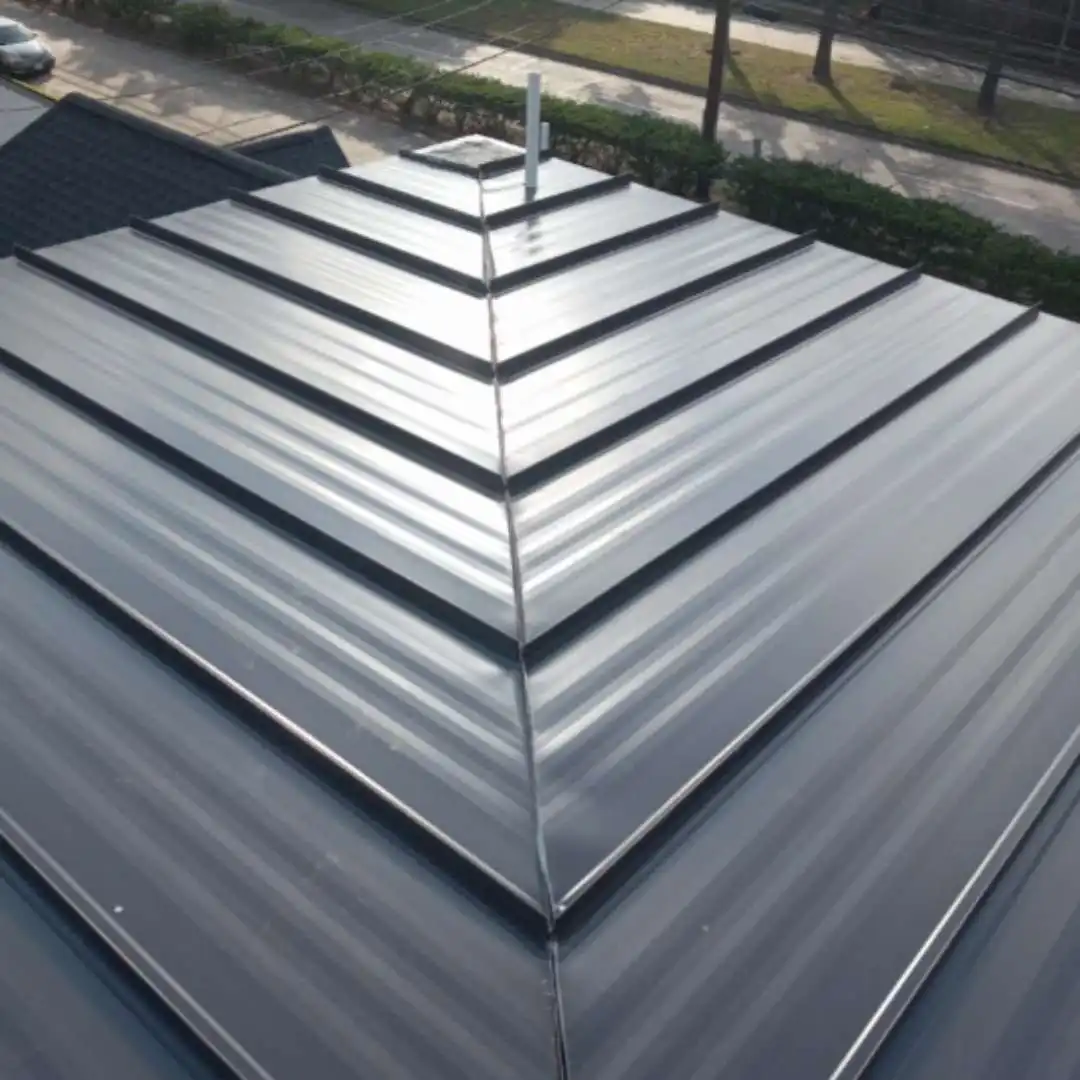
What’s the difference between snap-lock and mechanically seamed standing seam panels?
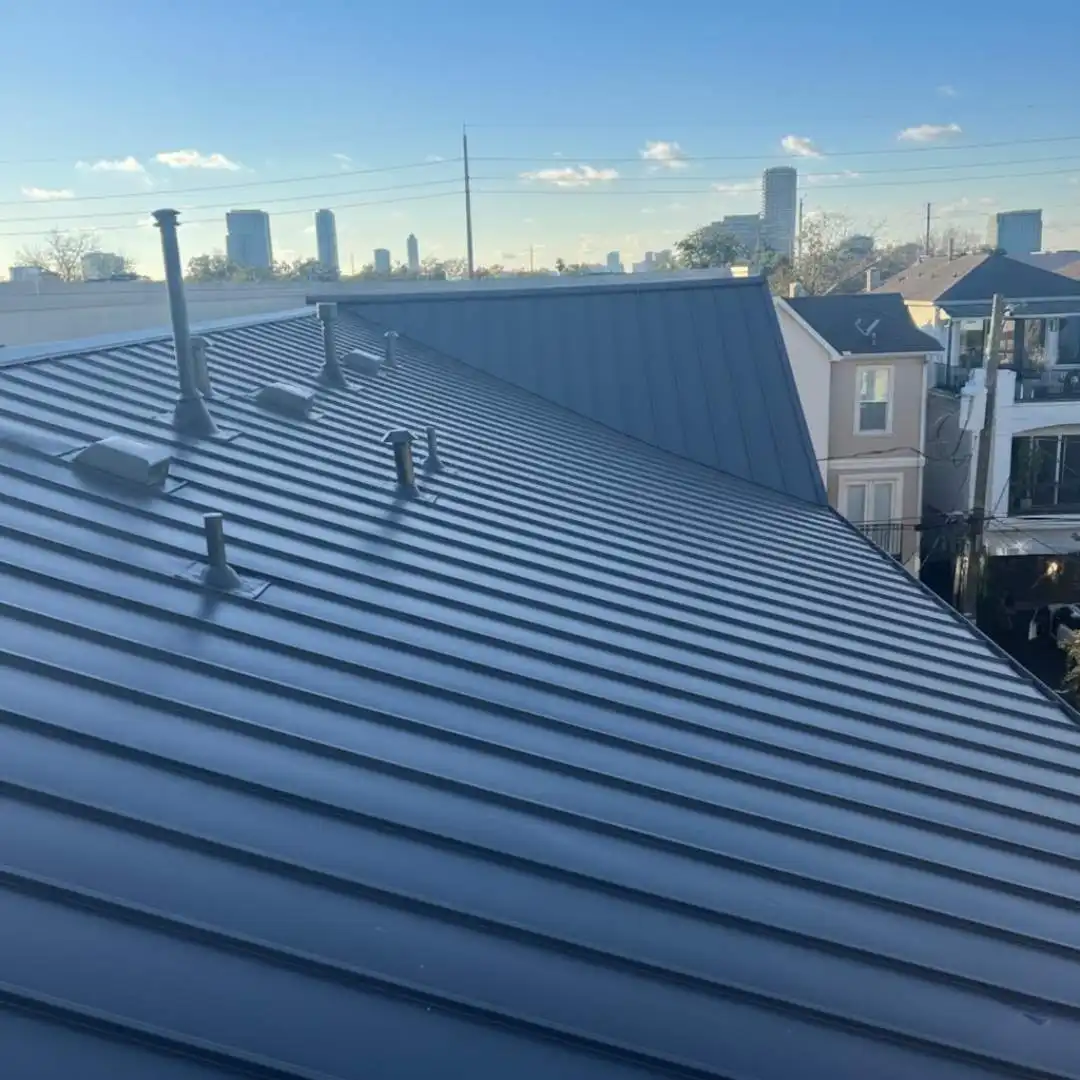
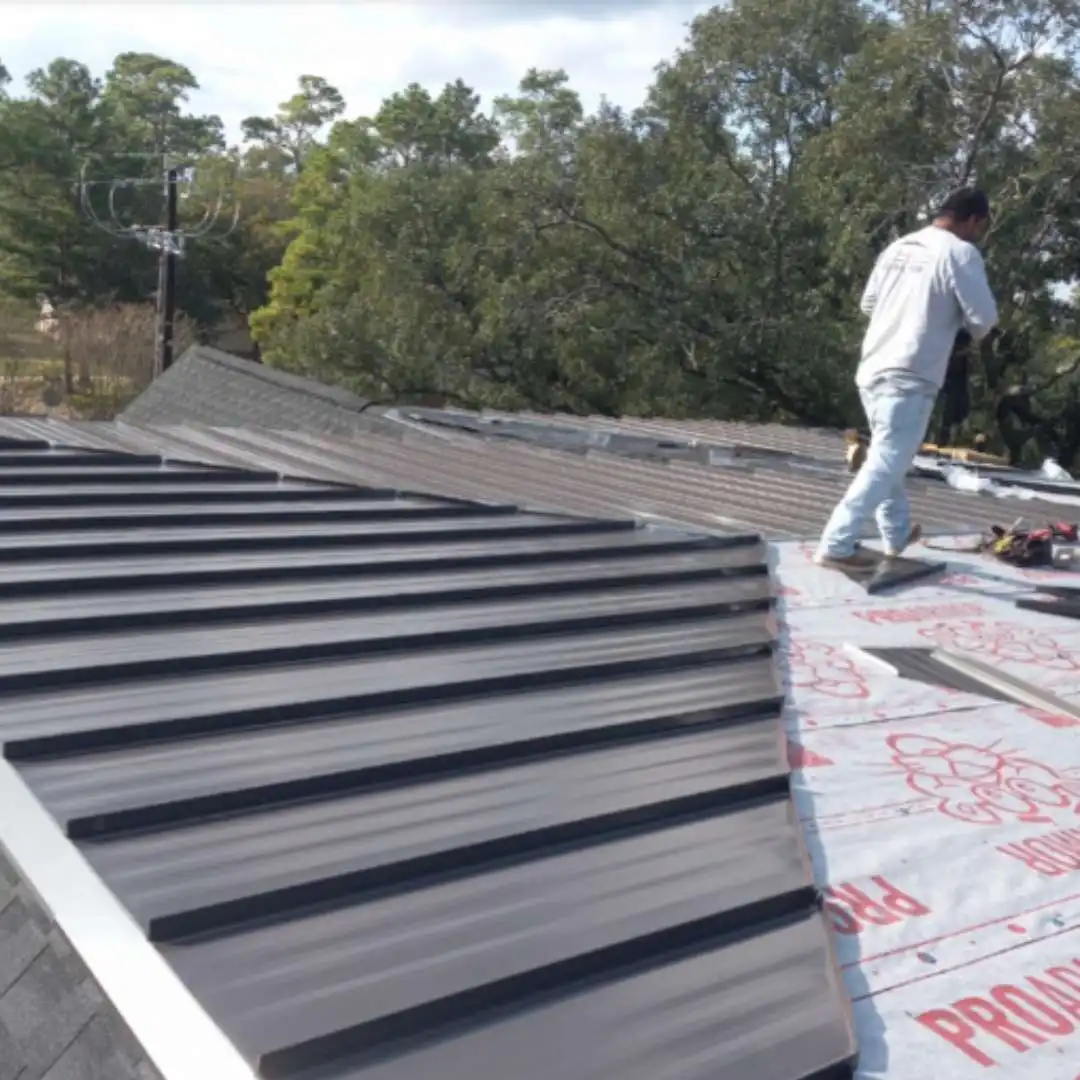
When it comes to snap-lock standing seam metal roofing, panels click together by hand or with a hand seamer and don’t require a motorized seaming tool on-site, which shortens install time on most Houston residential roofs. Mechanically seamed panels need a powered seamer and are typically reserved for lower-slope or higher-wind-exposure applications.
How does snap-lock standing seam metal roofing perform in Houston’s hail corridor?
26-gauge steel snap-lock panels generally resist denting better than asphalt shingles or thinner-gauge aluminum, though hail impact can still leave cosmetic marks. Panel gauge and manufacturer impact rating both affect real-world hail performance.
Can snap-lock panels be installed over an existing asphalt shingle roof?
It depends on deck condition and local code allowances; in many cases a batten or furring system can go over sound decking, but a roof with existing moisture damage needs a tear-off first. We inspect the deck before recommending either approach.
What roof pitch is required for snap-lock standing seam?
Most snap-lock systems are rated for roof pitches of 3:12 or steeper; lower-slope sections typically need a mechanically seamed panel with additional sealant at the seams instead.
Does snap-lock standing seam metal roofing reduce attic heat in Houston summers?
A reflective-coated snap-lock panel can lower attic temperatures compared to dark asphalt shingles, since less solar heat is absorbed and re-radiated into the attic space over the afternoon.
How long does a snap-lock standing seam metal roofing installation take?
A typical residential snap-lock installation runs a few days to just over a week depending on square footage, roof complexity, and weather delays common during Houston’s rainy stretches.
What warranty applies to snap-lock standing seam metal roofing installed by Achilles Roofing?
Achilles Roofing backs snap-lock installations with a 5-year workmanship warranty; material and finish warranties are set separately by the panel manufacturer and vary by product line.
Are exposed fasteners ever used on a snap-lock roof?
The field panels use concealed clips with no exposed fasteners, though trim pieces such as ridge caps and end walls sometimes require fasteners depending on the detail — we finish those with color-matched, gasketed screws.
Can snap-lock standing seam handle Houston’s wind gusts during tropical storms?
Concealed-clip systems are designed to resist wind uplift better than exposed-fastener panels because the clip spacing and panel width are engineered together, but actual wind rating depends on the specific clip system, fastening pattern, and deck attachment used.
What does a Houston homeowner typically pay for snap-lock metal roofing?
Pricing depends heavily on panel gauge, finish, and roof complexity. For reference, standard residential roof replacement work starts at $9,000; a metal panel upgrade is typically quoted after a free on-site or satellite measurement.
Does a metal roof need special gutters or drip edge?
Standing seam roofs shed water faster than shingles, so drip edge and gutter capacity are sized to handle heavier sheet-flow during Houston downpours rather than reusing undersized shingle-roof gutters.
How do I know if my roof needs repair or a full snap-lock replacement?
A roof with isolated storm damage on an otherwise sound deck is usually a repair candidate; widespread granule loss, multiple past leak repairs, or deck rot found during inspection point toward full replacement. Deck condition is documented with photos before recommending either path.