

















How do I know if my attic has poor ventilation?
Common signs include an attic that feels noticeably hotter than outside air on a summer afternoon, musty odors, visible moisture on the underside of the roof deck, or shingles that curl or age faster than expected. A licensed inspection measuring intake and exhaust airflow confirms whether poor roof ventilation is the cause.
What’s the difference between soffit vents and ridge vents?
Soffit vents sit under the roof’s eaves and pull outside air into the attic (intake). Ridge vents run along the roof’s peak and let hot, humid air escape (exhaust). Both sides have to be sized correctly together — exhaust without enough intake pulls air from the wrong source, including conditioned indoor air.
How much does a roof ventilation upgrade cost?
Cost depends on attic size, existing vent condition, and whether soffit intake needs to be added or unblocked in addition to ridge exhaust. A written estimate follows the on-site attic inspection, which measures current airflow against your roof’s square footage before any work is quoted.
Can poor attic ventilation void my roof warranty?
Yes, in some cases. Manufacturers including GAF specify minimum attic ventilation as a condition of certain shingle warranties, since excess attic heat accelerates shingle aging from underneath. Confirming your attic meets the manufacturer’s airflow requirement protects that warranty coverage.
Will better attic ventilation lower my cooling bills?
An overheated, poorly ventilated attic radiates heat into the living space below, making your AC run longer cycles through Houston’s extended cooling season. Balanced ventilation reduces that heat transfer, though savings vary based on attic insulation levels and home layout.
Do I need a ventilation upgrade if I’m not replacing my roof?
Yes, ventilation upgrades can be performed independently of a full roof replacement. Soffit and ridge vent work is typically installed without disturbing the existing shingle field, making it a standalone option for homeowners whose roof is otherwise in good condition.
Does installing a ridge vent require cutting into my existing roof deck?
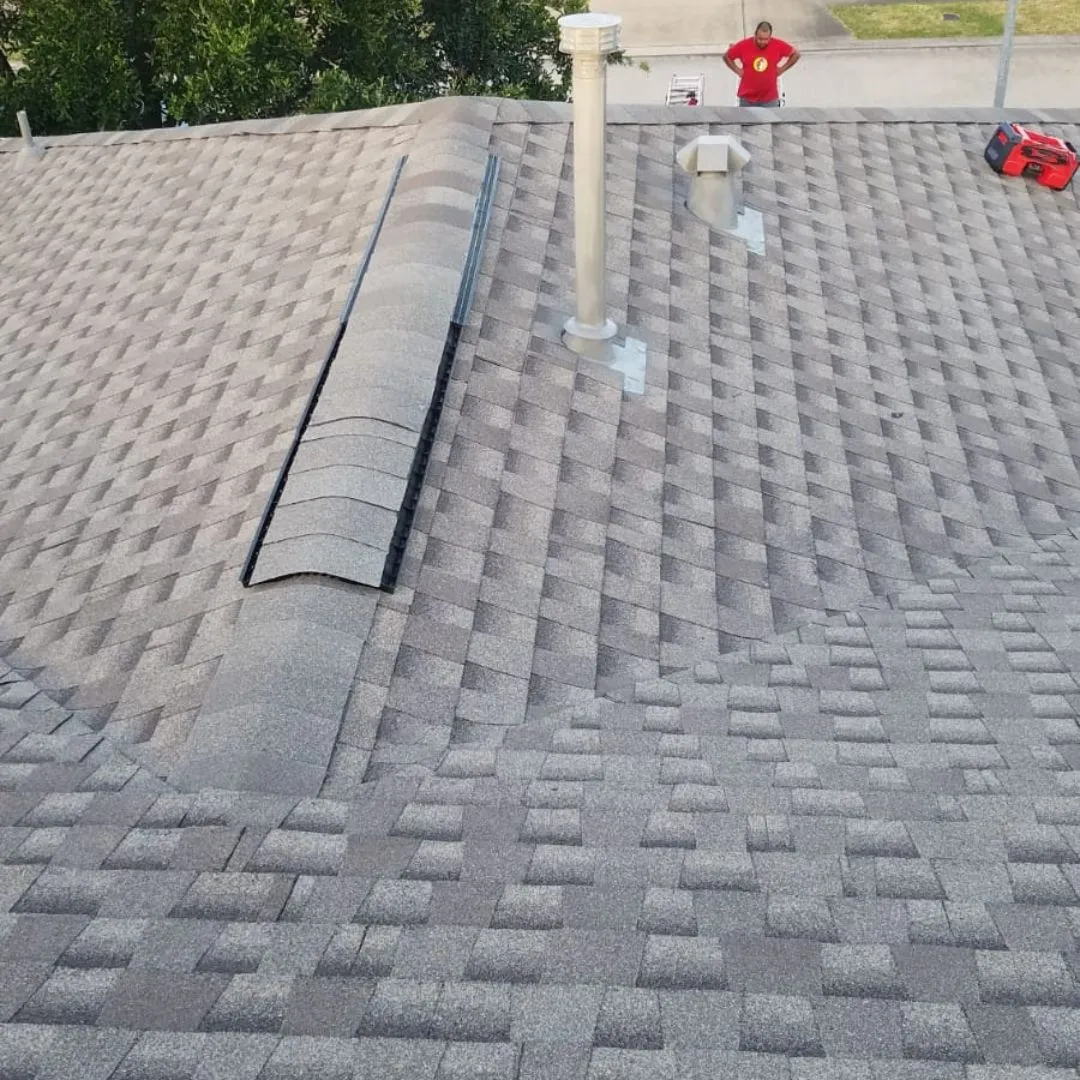
Yes, a ridge vent requires cutting a narrow slot along the roof’s peak, which is then capped with a ventilated ridge cap shingle. This is a routine part of installation and does not compromise the surrounding shingle field when done to manufacturer specification.
How long does a ventilation upgrade take to install?
Most standalone ventilation upgrades on a typical single-family home are completed within a single day, since the work is limited to the ridge line and soffit areas rather than the full shingle field. Larger homes or homes requiring soffit vent additions may take longer.
What causes musty odors or mold smell in my attic?
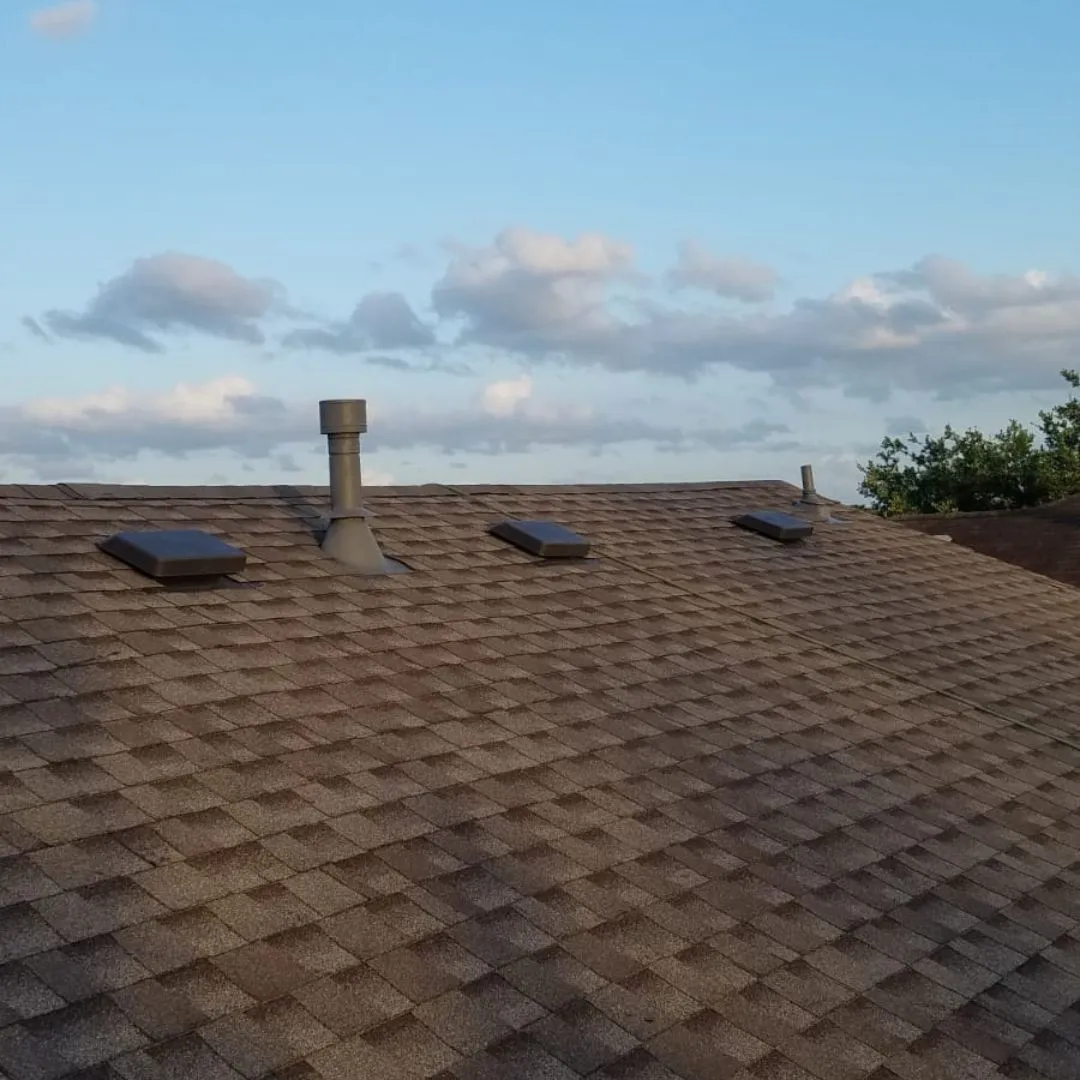
Musty odors typically indicate trapped humidity condensing on the roof deck or insulation due to insufficient exhaust airflow. Houston’s humidity makes attics particularly prone to this when ridge or box vents are undersized or when soffit intake has been blocked by insulation.
Are powered attic fans better than passive ventilation?
Not necessarily. A powered fan without adequate soffit intake can depressurize the attic and pull conditioned air up from the living space through ceiling gaps, increasing cooling costs. Properly sized passive soffit-to-ridge ventilation is usually the more reliable long-term solution.