

















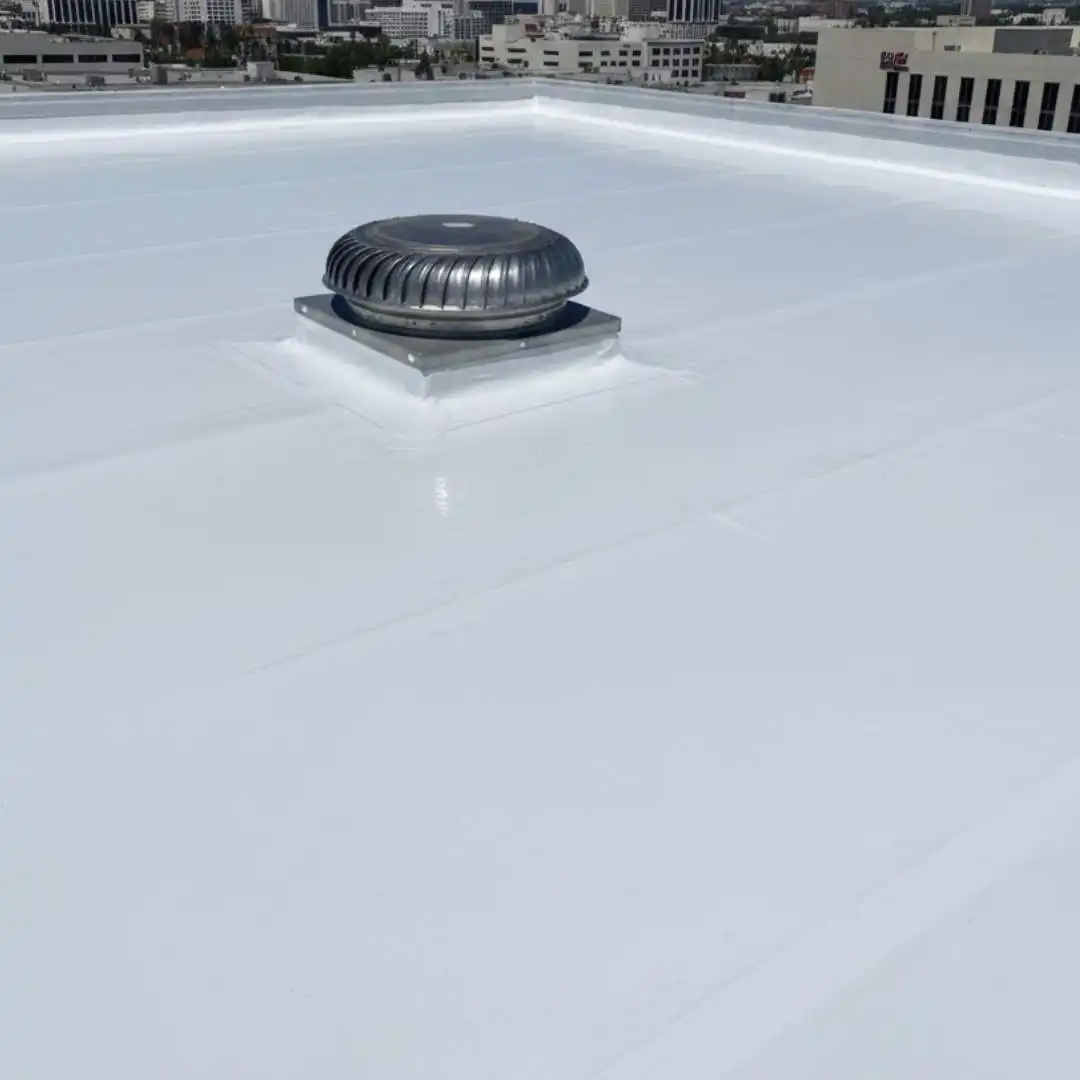
Full-System Protection. Zero Operational Downtime.
Commercial Roof Replacement · Houston, TX
Most Houston commercial roofs fail not from a single storm event but from years of undetected moisture in the insulation assembly — a problem that accelerates HVAC energy consumption well before the first interior leak appears. Achilles Roofing & Exterior performs complete commercial roof replacements using TPO, Modified Bitumen, and BUR systems, with full tear-off, insulation upgrade, and a 5-year workmanship warranty. Starting at $20,000. Call (832) 346-8021.
When Repair Is No Longer Enough
Don't Risk Your Operation on a Failing Assembly.
Commercial flat roofs in Houston carry a load most property owners underestimate: dense HVAC equipment, internal drainage systems, and a roof membrane system that must simultaneously handle 60+ inches of annual rainfall and 105°F summer surface temperatures. When the membrane begins failing, it rarely fails all at once. It fails in the insulation first.
Wet polyisocyanurate insulation loses up to 50% of its R-value when saturated. A building owner notices rising energy costs 12–18 months before the first interior ceiling stain appears. By then, the insulation is often too saturated to dry out — full replacement of the membrane and insulation assembly is the only cost-effective path forward.
At Achilles Roofing & Exterior, Ahmad Faiz has managed commercial roof replacements across Harris County since 2017. Every job begins with a thorough infrared-assisted inspection to map wet insulation zones before we write a single line in the scope of work. Replacement starts at $20,000 for commercial systems — but catching a failing assembly before it reaches tenant impact typically saves two to three times that figure in interior damage and disruption costs.
Why Commercial Replacement Is the Right Call
-
Eliminates Wet Insulation — the Silent Cost Driver
Saturated polyiso causes year-round HVAC overruns. Full tear-off and replacement stops energy losses other patch repairs cannot address. -
Full Code Compliance for Drainage Slope
Houston's IBC-adopted code requires 1/4" per foot slope. New tapered insulation brings legacy flat decks into compliance during replacement. -
High-Reflectivity Options Reduce Cooling Load
TPO membranes with Energy Star-rated white surfaces can reduce rooftop temps by 50–60°F vs. dark membranes — meaningful in Houston summers. -
Minimal Business Interruption
We stage work by building zone, schedule tear-off sequencing around tenant hours, and contain all debris within active work areas. -
5-Year Workmanship Warranty on Every System
Documented, transferable warranty issued at project completion — a meaningful differentiator for lease renewals and property sales.
Recognize the Signals Early
Replacement vs. Repair: How to Know When the Line Is Crossed.
3×
Repairs in 5 Years = Replacement Threshold
48 hrs
Max Ponding Before Structural Concern
50%
R-Value Lost in Saturated Polyiso
20–30
Year Expected Life, New TPO or BUR System
Stage 1: Bright Penny (Day 0 – Month 6)
Fresh copper arrives with a warm, lustrous orange-red finish. No surface treatment applied. Natural brightness will begin fading as surface oxide forms within weeks of first rainfall.
Stage 2: Dark Brown Oxide (Month 6 – Year 3)
Cupric oxide forms across the surface. Darker, richer tone. Houston’s humidity accelerates this stage vs. dry climates. Some homeowners prefer this deep mahogany finish and seal it at this point — though unsealed copper continues evolving naturally.
Stage 3: Blue-Green Transition (Year 3 – Year 10)
Cupric sulfate and carbonate compounds begin appearing near seams, valleys, and drainage paths first. The distinctive muted teal appears in patches before spreading uniformly across the surface.
Stage 4: Full Verdigris (Year 8–15 in Gulf Coast)
Complete patina coverage — the iconic blue-green that signals full protection. At this stage, the copper surface is inert and self-maintaining. No further treatment or maintenance required under normal conditions.
Our Proven Replacement Process
Stress-Free Replacement, Step-by-Step.
Full membrane and substrate evaluation including, where conditions permit, infrared thermography to map wet insulation zones. Ahmad Faiz presents a transparent, itemized scope with material specifications and the rationale for each line item before any contract is signed.
We coordinate installation timing with your tenant schedule and business hours. HVAC equipment disconnect and reconnect is sequenced to minimize occupant impact. Site safety perimeter and debris containment protocols are established before tear-off begins.
Complete removal of the existing membrane and insulation assembly to the structural deck. Deck condition is inspected for soft spots, fastener pullout, and structural deterioration. Damaged decking sections are replaced before any new material is installed. All debris is staged, contained, and hauled off-site daily.
Vapor retarder installed directly on the clean deck. Tapered polyiso insulation boards installed at calculated slope to achieve IBC-required 1/4" per foot drainage — or greater where building geometry allows. Insulation fastened at code-required density for wind uplift resistance in Houston's hurricane risk zone.
TPO or modified bitumen membrane installed per manufacturer specification. For TPO: hot-air welded seams at minimum 1.5" overlap width, inspected by probe testing for seam continuity. For mod bit: torch-applied or hot-mopped overlaps verified for full saturation. No seam goes uninspected before the next course is installed.
Ahmad Faiz conducts the final walkthrough — all seams, flashings, drain collars, parapet terminations, and HVAC curb tie-ins are inspected and photographed. The 5-year workmanship warranty is issued with a full photographic and material record. The site is cleaned to pre-construction condition before we leave.
Field Knowledge
What the Houston Commercial Building Stock Teaches You.
Drainage Design
HVAC Equipment Clusters Create Shadow Drainage Problems
Houston commercial buildings — particularly strip centers and medical office parks built in the 1990s and 2000s — often concentrated rooftop HVAC equipment in a single quadrant of the roof. This equipment weight, combined with vibration over 20+ years, gradually deflects the roof deck in that zone, creating a low point that no amount of patch repair will fix. Tapered insulation in those zones during replacement is the only durable solution.
Material Performance
TPO Seam Width Is the Single Most Important Quality Indicator
A TPO installation can look flawless from the rooftop and fail within three Houston storm seasons if the heat-welded seams were run at inadequate width or temperature. Standard practice calls for a minimum 1.5-inch weld width with probe testing after welding. We’ve inspected competitor installations where seams were as narrow as 3/4 inch — adequate in a dry climate, but not against the water pressure Houston’s tropical systems produce.
Property Management
The Most Expensive Decision Is Waiting One More Year
We regularly assess commercial buildings where the property manager has deferred replacement for 2–3 years to avoid the capital expenditure. In most cases, the interior damage accumulated during that deferral period — ceiling replacements, drywall, electrical remediation, tenant rent concessions — exceeds the replacement cost by 40–60%. The roof replacement is never the largest cost in a deferred decision; the interior remediation is.
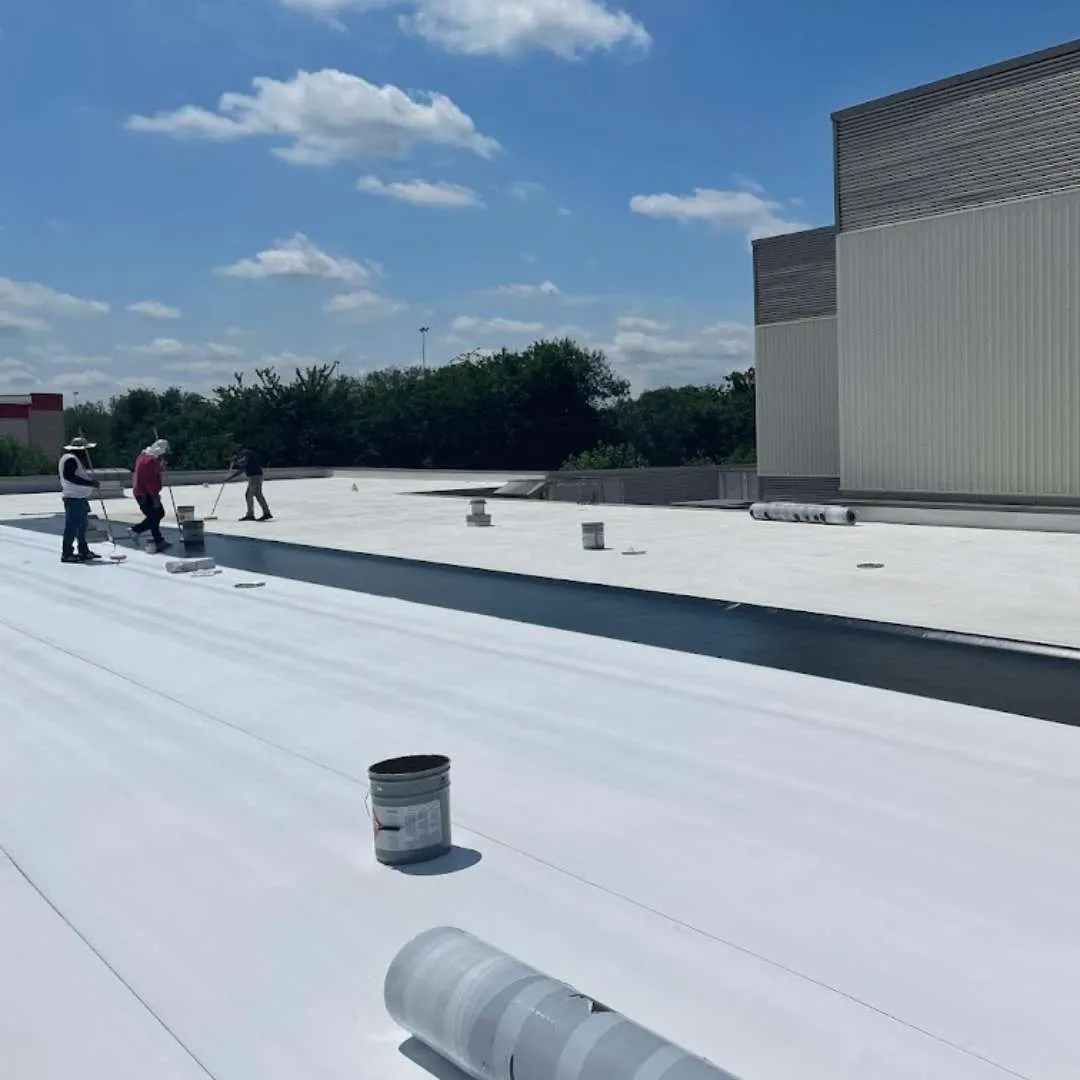
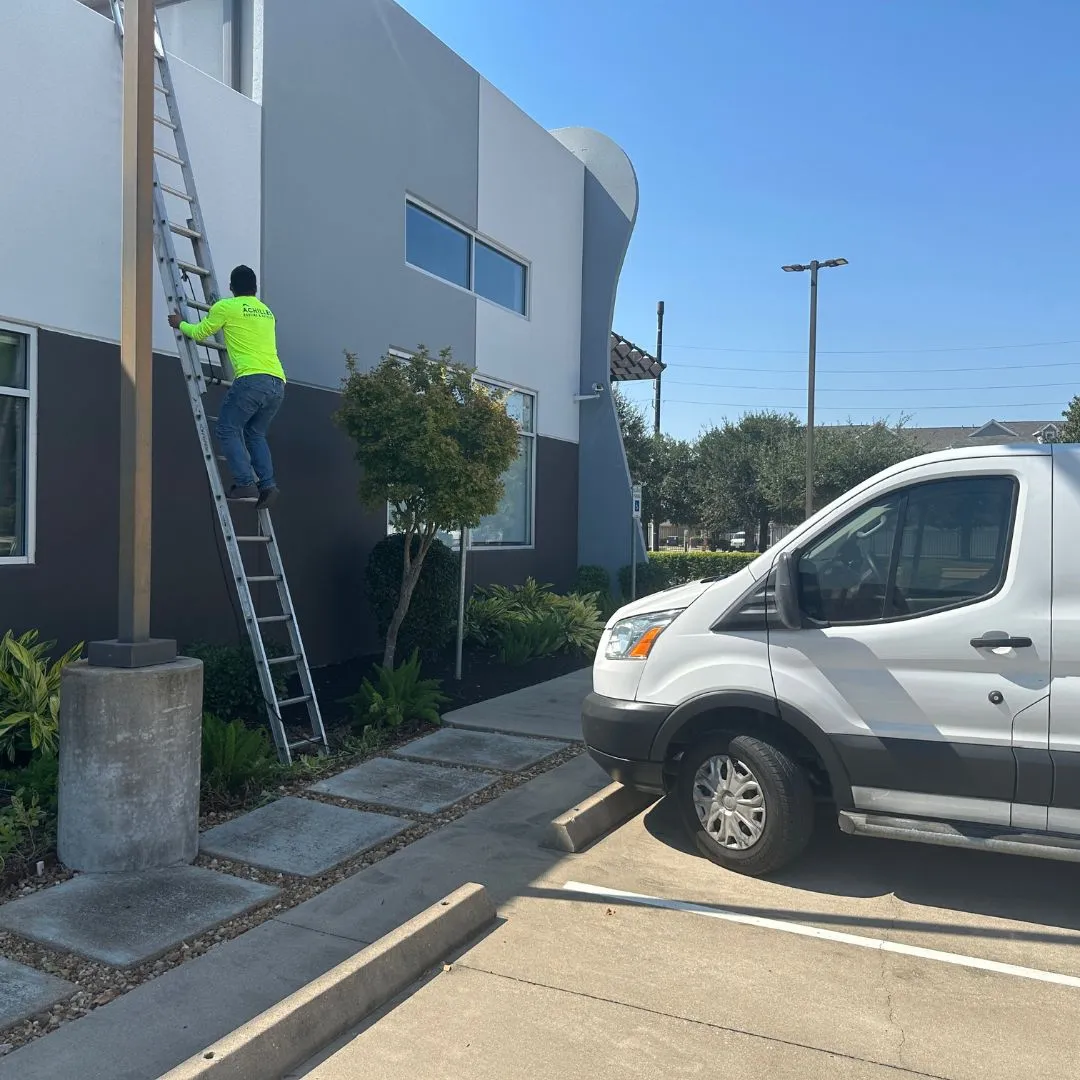
See Our Work:
Quality Commercial Roof Replacement in Action.
The Team Behind Every Project
Expertise With a Name Behind It.
Commercial replacements are managed on-site by Edwardo Cano, lead foreman with 12 years of experience and approximately 5,000 roofing projects completed across the Houston metro. Edwardo specializes in both flat and shingle systems, with deep experience in the low-slope commercial market that defines Houston's commercial building stock.
Achilles Roofing holds RCAT Membership #208834 (Roofing Contractors Association of Texas) — the professional body that establishes workmanship, insurance, and continuing education standards for Texas roofing contractors. We carry full liability insurance and serve all of Harris County and surrounding areas.
Lead Commercial Foreman
Edwardo Cano
Flat Roofing & Commercial Systems Specialist
12
Years Experience
5K+
Projects Completed
TPO
Primary Specialty
Houston TX
All of Houston Metro
Achilles Roofing & Exterior
RCAT Member #208834 · Licensed & Insured Houston, TX · Founded 2017 · Harris County & Surrounding Areas
Invest in Durability
and Peace of Mind.
Secure Your Commercial Property's Future.
Protect your assets and operations with a robust, reliable new commercial roof. Contact Achilles Roofing & Exterior now for a free, no-obligation assessment and replacement quote.
I would like to post a positive review for Achilles Roofing & Exterior team. It is second time we are doing minor work on our house and I'm very satisfied with quality of work, dedication and enormous progress on a transformation they made in both times. I do not foresee any roof repairs on my house in future but if you are looking for someone trustworthy, punctual, caring to do your roof work, I would totally trust them.
Achilles Roofing & Exterior did an exceptional job with our residential roofing project, providing top-notch roof repair services and professional work done at a reasonable cost. Their experienced roofer team handled the quick roofing service with care and attention to detail, ensuring our new roof exceeded our expectations.
We really needed a new roof and we got 5 different quotes from 5 companies and Achilles gave us the best quote by thousands of dollars! Very professional work and service and very flexible to help meet our busy schedules.I would highly recommend this company to anybody who needs roofing services.
Great price · $2,000–4,000
To cool down my attic, I decided to install a solar attic fan. I got proposals from four different vendors and evaluated them based on customer service, experience, implementation, and price. Achilles Roofing & Exterior, led by Ahmad Faiz, was the standout choice.
Great price · $10,000–12,000
Ahmad is very professional. The process was very simple. Price was affordable and the quality of work is amazing. Thank you for the new replacement and previous rook repairs.
Quick turnaround on some roof repairs we needed for the sale of our home. Everything was documented on the invoice and with photos. Very professional.
Great job on my Atrium cover. Used them before for my roof. Well done and very reasonable.
Who Does the Work
Secure Your Commercial Property's Future. Start Today.
Commercial Pricing Reference
- Roof Inspection & Report - Starting at $150
- Commercial Roof Repair - Starting at $300
- Commercial Roof Replacement - Starting at $20,000
- Free Estimate $0 · No Obligation
- Workmanship Warranty - 5 Years on All Systems
Starting prices shown. Final cost varies by building size, system selection, insulation scope, and existing deck condition. Discounts available for veterans, military personnel, seniors, and persons with disabilities ($150 off replacements).
Commercial Roof Replacement FAQs
Specific questions about Houston commercial flat roof systems, failure signals, and replacement decisions — not generic contractor answers.
Why is my commercial building's energy bill rising even though the HVAC equipment hasn't changed?
Rising HVAC costs without equipment changes are the most reliable early indicator of wet insulation in a commercial roof assembly. Saturated polyisocyanurate insulation loses up to 50% of its R-value when wet, forcing rooftop units to run longer cycles to maintain interior setpoints. This often begins 12–18 months before the first visible interior leak.
How is TPO commercial roof replacement different from modified bitumen in Houston's climate?
TPO is a single-ply membrane with heat-welded seams and Energy Star-rated white surfaces that can reduce rooftop temps by 50–60°F — a meaningful cooling cost benefit in Houston summers. Modified bitumen is a multi-ply asphalt system offering greater puncture resistance and redundancy, better suited for buildings with high rooftop foot traffic. Ahmad Faiz specifies the appropriate system after inspecting each building’s conditions.
Can a commercial roof in Houston be replaced without interrupting business operations?
Yes, with proper staging. We sequence tear-off by building zone, schedule around tenant hours, and contain all debris within active work sections. For occupied buildings, we do not leave uncovered deck exposed overnight — particularly important during Houston’s April–October storm season. Most commercial replacements are completed in 3–7 days depending on building size.
Why does ponding water on Houston flat roofs remain a problem even after the membrane is replaced?
Ponding that returns after membrane replacement indicates the underlying drainage slope issue was not corrected. Houston’s IBC-adopted code requires a minimum 1/4″ per foot slope. Replacing just the membrane without installing tapered polyiso insulation to achieve compliant slope produces the same drainage problem on the new system. Tapered insulation during replacement is the only durable fix.
At what point is roof coating or restoration no longer appropriate for a Houston commercial building?
Coating and restoration work only on membranes that are structurally intact with sound insulation and no active moisture infiltration. If infrared inspection shows wet insulation, if the membrane has delaminated from the substrate, or if the building has had 3+ repair cycles in 5 years, coating over the existing system creates a false sense of protection. Ahmad Faiz assesses coating suitability on every inspection before recommending it.
Does Houston's building code require permits for commercial roof replacement?
Most commercial roof replacements in Houston require a permit from the City of Houston’s Department of Planning & Development. Permit requirements vary by job scope and building type. Re-roofing over existing systems may have different requirements than full tear-off replacements. Achilles Roofing handles permit coordination as part of the project scope on commercial jobs.
How does a TPO seam failure happen, and what makes Achilles's installation different?
TPO seam failure occurs when heat-weld seams are run at inadequate width or inconsistent temperature, creating micro-gaps that admit water under the high pressure Houston tropical systems produce. Industry standard requires a minimum 1.5-inch weld width with probe testing after each seam. We inspect every weld before proceeding to the next membrane course — not after the project is complete.


