































Does Fulshear’s newer construction affect how often roofs need attention?
Many Fulshear neighborhoods were built within the same few years, so builder-grade shingles installed at the same time tend to show wear on a similar schedule. A roof inspection is the only reliable way to confirm actual condition rather than assuming based on age.
Do Fulshear’s larger, more open lots increase storm exposure?
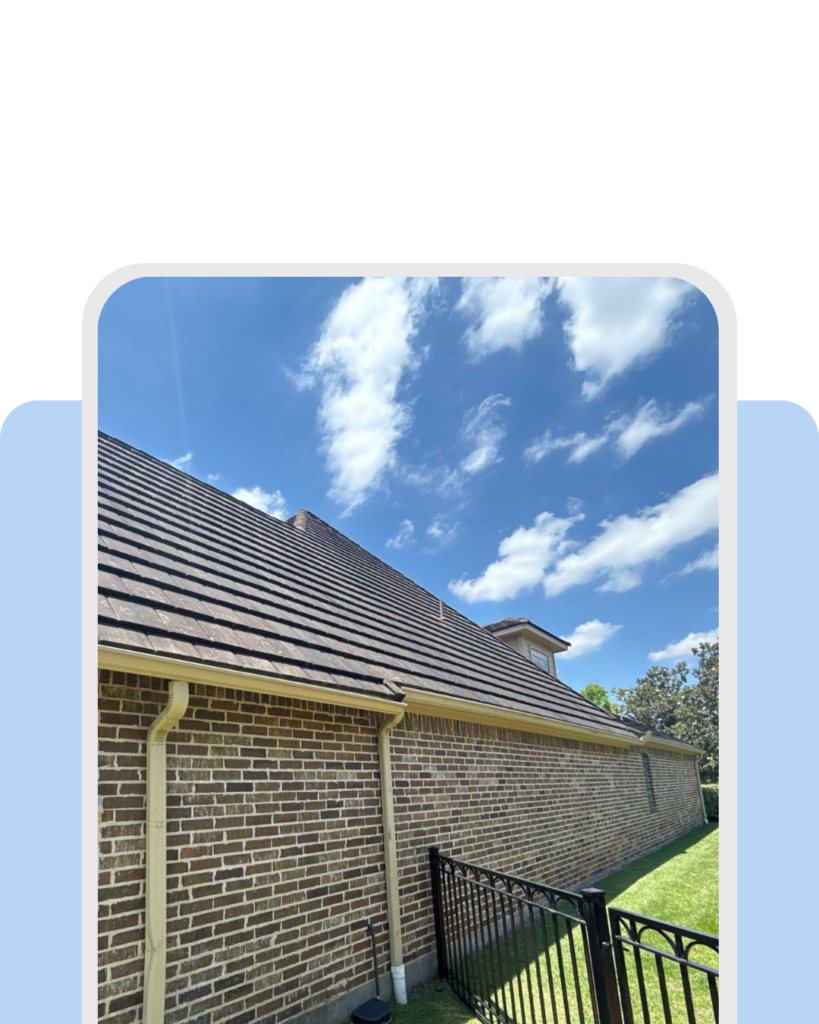
Homes on Fulshear’s bigger acreage lots often have fewer surrounding trees and structures to break wind, which can increase shingle and tile stress during storms. Our storm damage repair team checks for wind-lifted tabs and displaced tile after these events.
Is tile roofing common on Fulshear homes, and does it need different care?
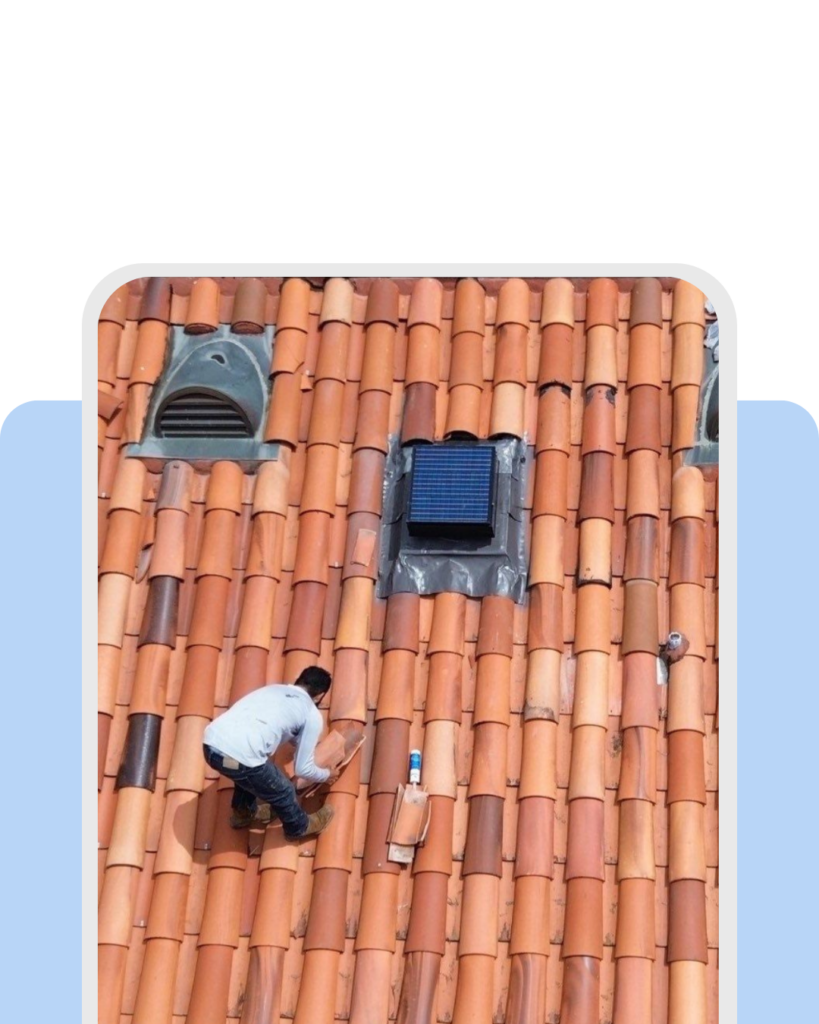
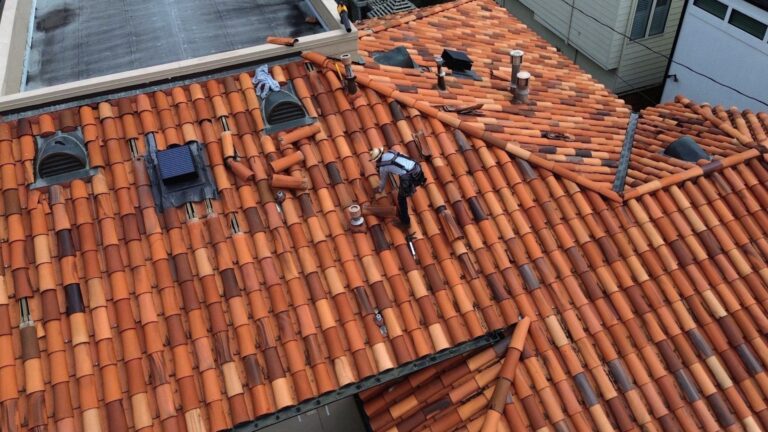
Spanish and concrete tile appear frequently on Fulshear’s custom and Hill Country-style builds, and individual tiles can crack from foot traffic or debris impact without the underlayment failing. Learn more about our Spanish tile installation and repair process.
How does Gulf Coast humidity affect roofs in Fulshear specifically?
Fulshear sits far enough inland that humidity swings are slightly less extreme than closer to Houston, but moisture can still collect under poorly ventilated attics.
What roof pitch is typical on Fulshear homes, and why does it matter?
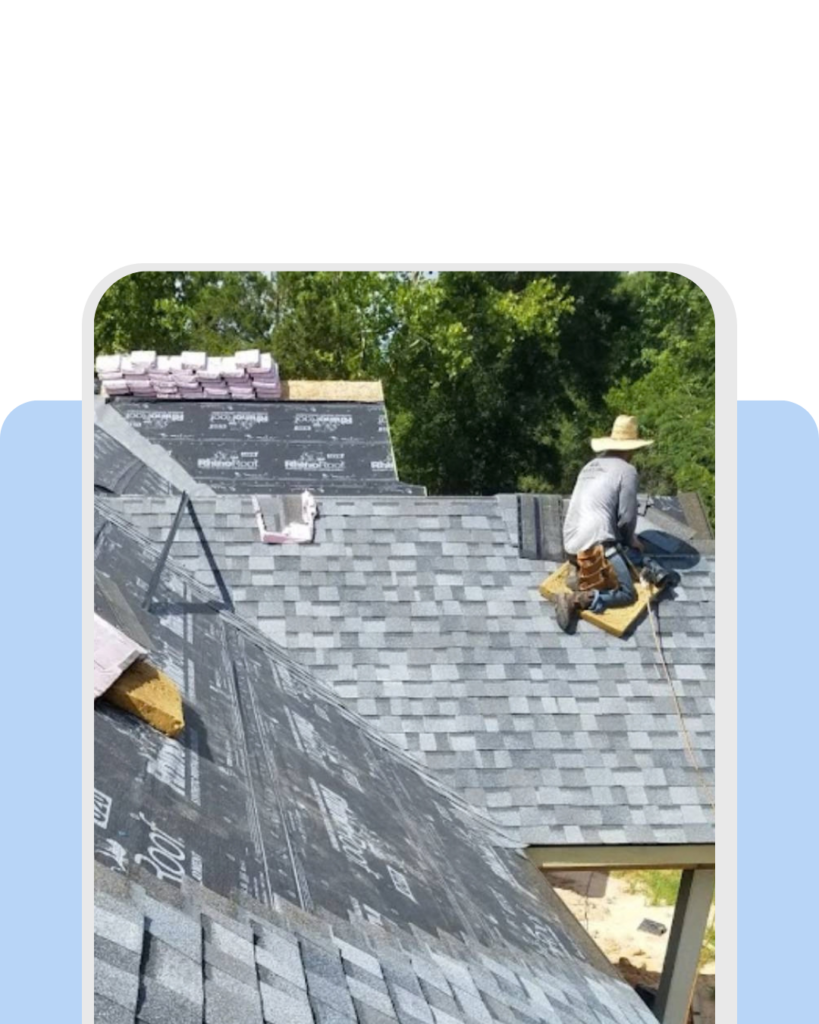
Many Fulshear custom homes are built with steeper rooflines than standard Houston-area tract housing, which changes water shedding speed and safe walkability during inspection. This is one reason our inspection process is done on-roof rather than from the ground.
Do Fulshear HOAs typically restrict roofing material choices?
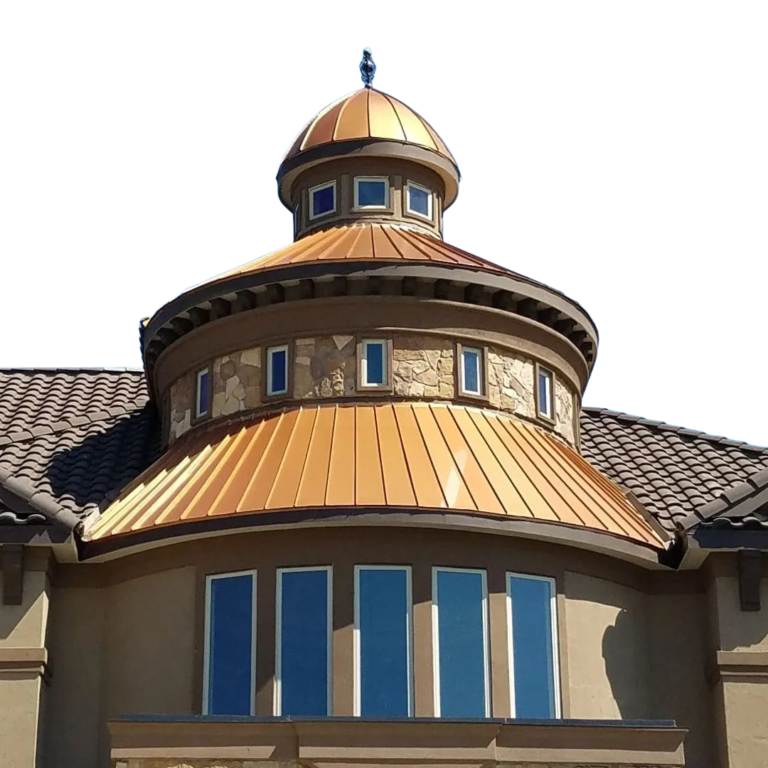
Many Fulshear subdivisions have HOA architectural guidelines that limit shingle color or require specific tile and metal profiles. We recommend homeowners check their HOA’s architectural review requirements before selecting materials for a roof replacement.
Does Fulshear’s flat-to-gently-rolling terrain affect drainage planning?
Like much of the greater Houston region, Fulshear’s terrain doesn’t move water quickly, so gutter sizing and downspout placement matter more than in hillier climates. The FEMA flood map service can help homeowners understand drainage risk on their specific lot.