


















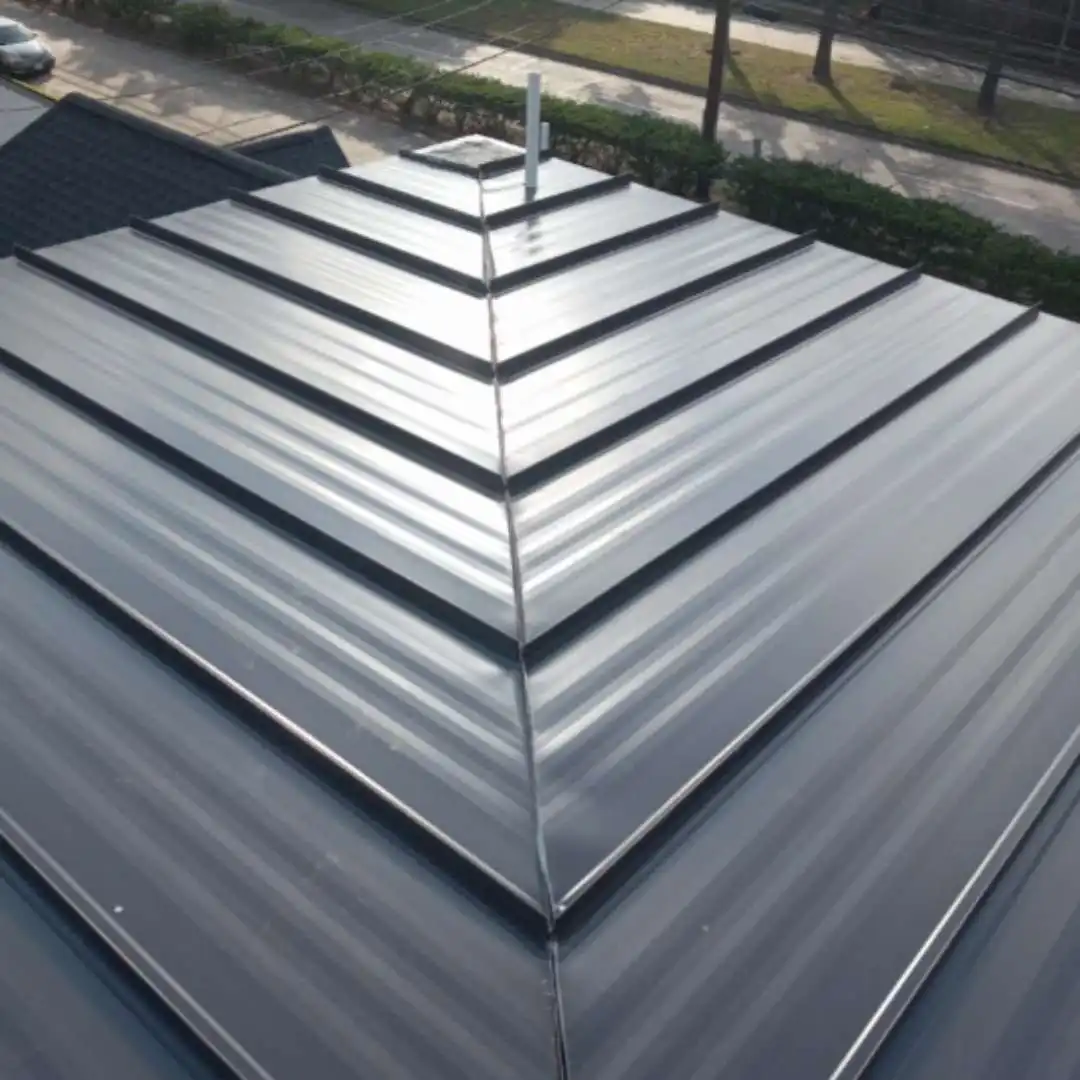
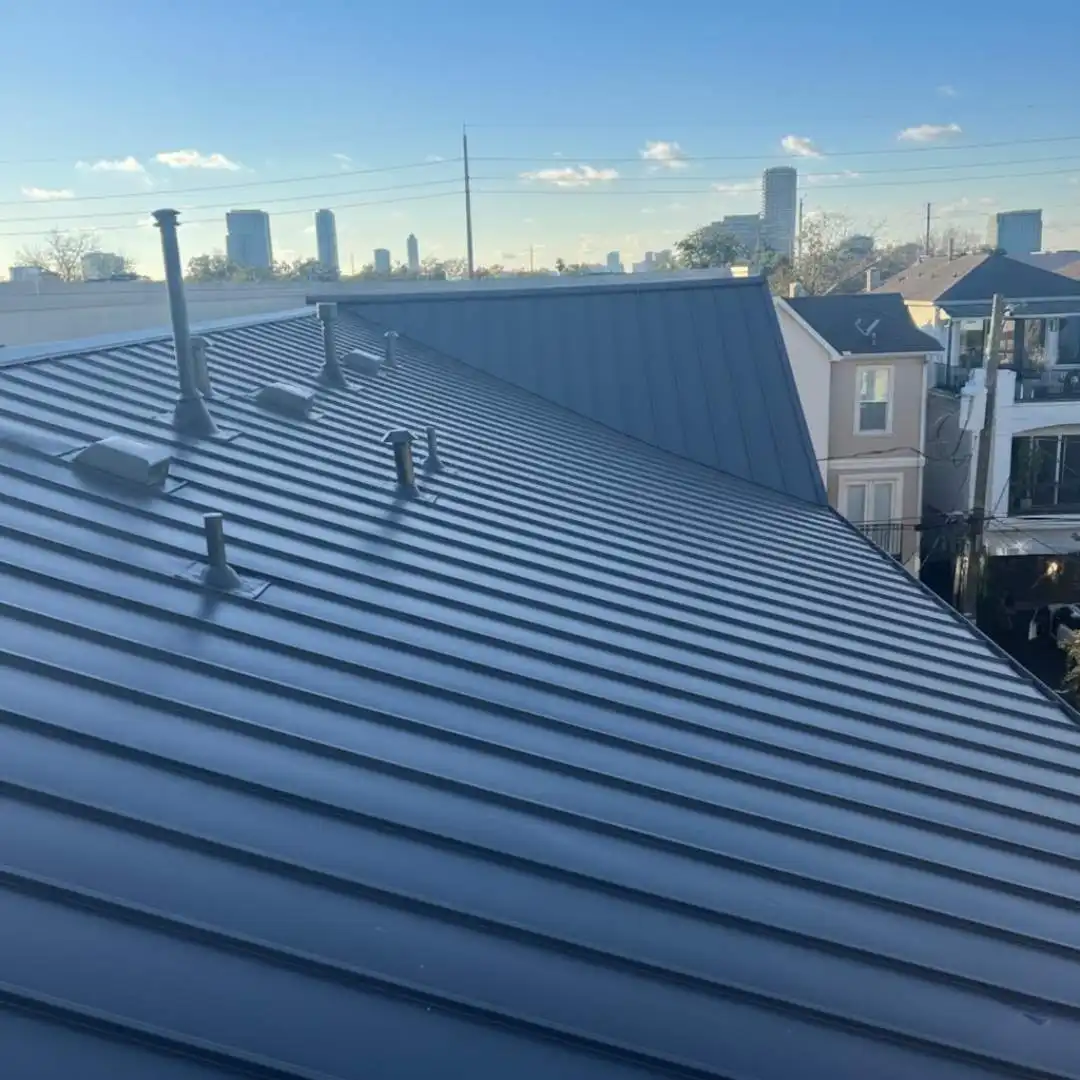
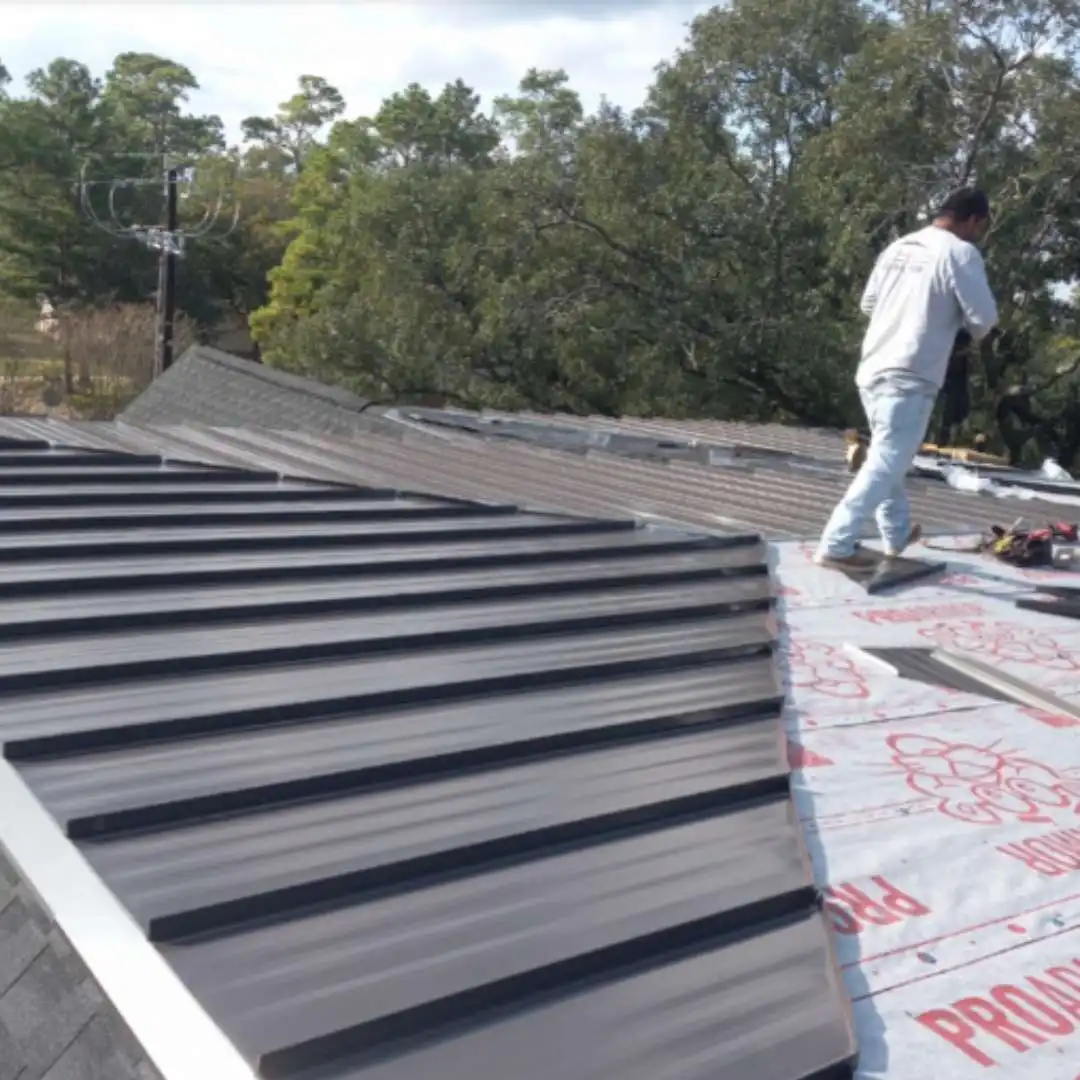
How much does a standing seam metal roof cost in Houston?
For a typical Houston home, a standing seam metal roof installation runs about $15,000 to $25,000 or more. Panel gauge, finish, roof geometry, and how much decking has to be replaced move the number most. A roof inspection starts at $150, and our instant roof estimator measures your roof from satellite imagery if you want a figure before anyone visits. GreenSky financing starts at $199 per month for qualified homeowners.
How long does a standing seam metal roof last in Houston’s climate?
A correctly completed 24-gauge standing seam metal roof installation commonly reaches 40 to 50 years in Houston, against roughly 15 to 20 for architectural shingles under the same sun and humidity. Because fasteners sit under the seam, the usual first failure point — a degraded rubber washer around an exposed screw — does not exist. What ages instead is the finish, and a PVDF coating holds color and film integrity far longer than polyester.
Will a standing seam roof lower my summer electricity bill in Houston?
It can, though the panel is only part of the equation. A reflective finish on your standing seam metal roof installation sends back solar energy that a dark shingle absorbs, which lowers deck temperature and the heat pushed into a Houston attic through August. The measurable savings show up when the panel is paired with correct airflow and adequate insulation, so roof ventilation upgrades and roof insulation get assessed alongside the roof itself.
Is a standing seam metal roof loud during Houston thunderstorms?
Not the way an uninsulated barn roof is. Over solid decking, self-adhered underlayment, attic insulation and a finished ceiling, interior sound during rain is comparable to a shingle roof. The drumming people remember comes from panels screwed to open purlins with nothing underneath, which is not how a proper residential Houston standing seam metal roof installation is assembled.
Can standing seam panels be installed over my existing shingles?
We do not recommend it on Houston homes. Clips need direct, verified purchase in sound decking, and a shingle layer hides soft sheathing, old leaks and previous patchwork. Moisture trapped between layers also has nowhere to dry in Houston humidity. Full tear-off lets us document deck condition, which is also why we handle metal roof replacement as a removal-and-rebuild rather than an overlay.
What gauge and finish should a Houston standing seam roof use?
We specify 24-gauge steel with a PVDF (Kynar 500 class) finish for every standing seam metal roof installation on Houston homes. 26-gauge is thinner, telegraphs deck imperfections as visible waviness on long panel runs, and dents more easily from hail. Aluminum is worth discussing where salt-laden air is a factor, and copper for accent roofs and turrets — aluminum metal roofing and copper metal roofing cover those alternatives.
Does a metal roof make my house more likely to be struck by lightning?
No. A structure’s height, geometry and surroundings determine strike likelihood, not the conductivity of its roof covering. Metal roofing is non-combustible, so if lightning does strike nearby, a standing seam assembly is less likely to ignite than wood shake or asphalt. That non-combustibility is one reason metal appears in wildfire and fire-rating guidance from federal agencies including the Federal Emergency Management Agency.
How does standing seam handle hail compared with shingles?
A standing seam metal roof installation resists puncture far better than an asphalt mat, so a stone that would fracture and displace shingle granules usually leaves the panel watertight. Cosmetic denting is still possible with large hail. Most Houston policies treat functional damage and cosmetic denting as separate matters, so that language is worth reading before you buy. We also handle hail damage roof repair and storm damage repair on existing metal roofs.
Will the panels dent or look wavy in Houston heat?
Slight waviness in the flat of a panel — oil-canning — is a characteristic of light-gauge formed metal rather than a defect, and it shows most on wide flat pans laid over uneven decking. We reduce it with 24-gauge stock, striations or a pencil rib in the pan, flattened decking, and floating clips that let a panel expand on a 100°F Houston afternoon instead of binding against its fasteners.
Do standing seam roofs work with solar panels, vents and skylights?
Yes, and better than most systems. After a standing seam metal roof installation, solar mounting rails can clamp directly onto the seam with no roof penetration at all. Vents, skylight installation and pipe boots require formed metal flashings and high-temperature boots rather than the shingle details many crews default to — that transition is exactly where a poorly executed metal roof leaks first, and where flashing repair work usually starts.
How long does installation take, and can we live in the house during it?
A typical standing seam metal roof installation on most Houston homes takes four to eight working days depending on roof size, valley count and how much decking is replaced, plus lead time for panels to be roll-formed to length. You can stay in the house throughout. Tear-off and fastening are loud, driveways and landscaping are tarped, and work is staged in sections so no deck area is left open overnight.
What maintenance does a standing seam roof need in Houston?
Little, but not none. Once or twice a year, clear debris from valleys and behind chimneys where oak leaves and pine needles hold moisture against the panel, confirm gutters still drain, and inspect penetration flashings and pipe-boot sealant — sealant is the shortest-lived component on the assembly. Our roof maintenance plan covers those checks, and drone roof inspections let us document seam and flashing condition without walking the panels.