













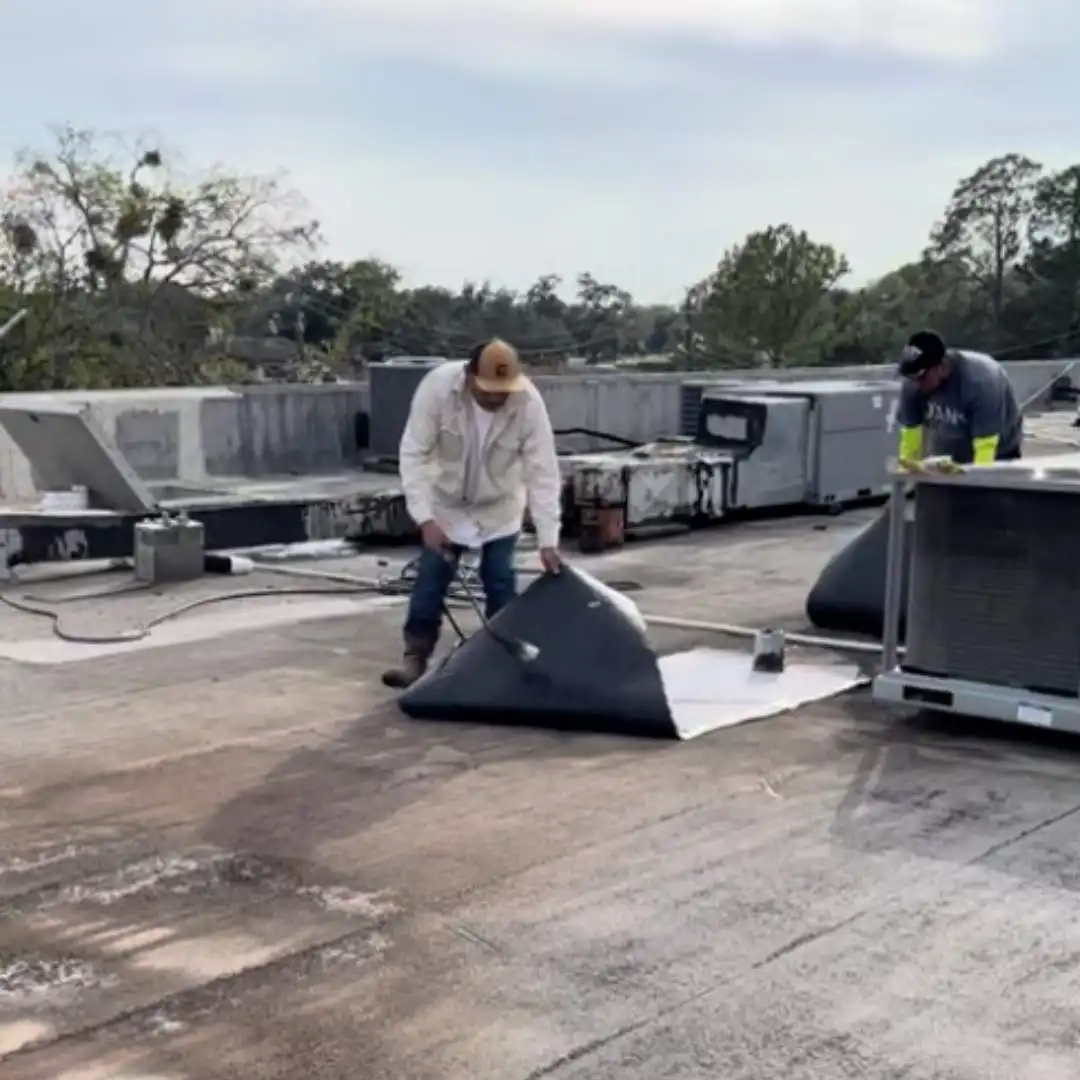
What is torch down roofing, and why is it common on Houston commercial buildings?
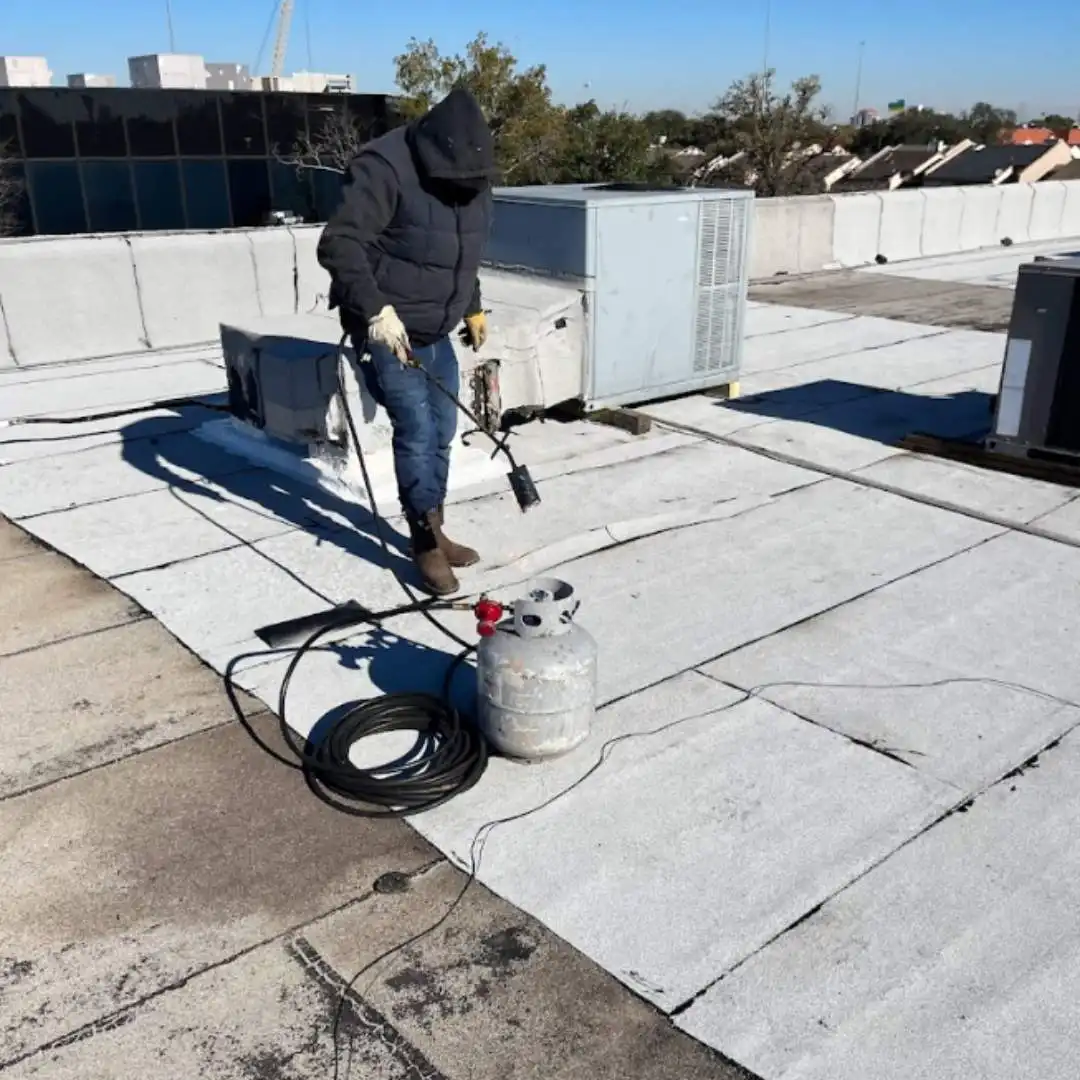
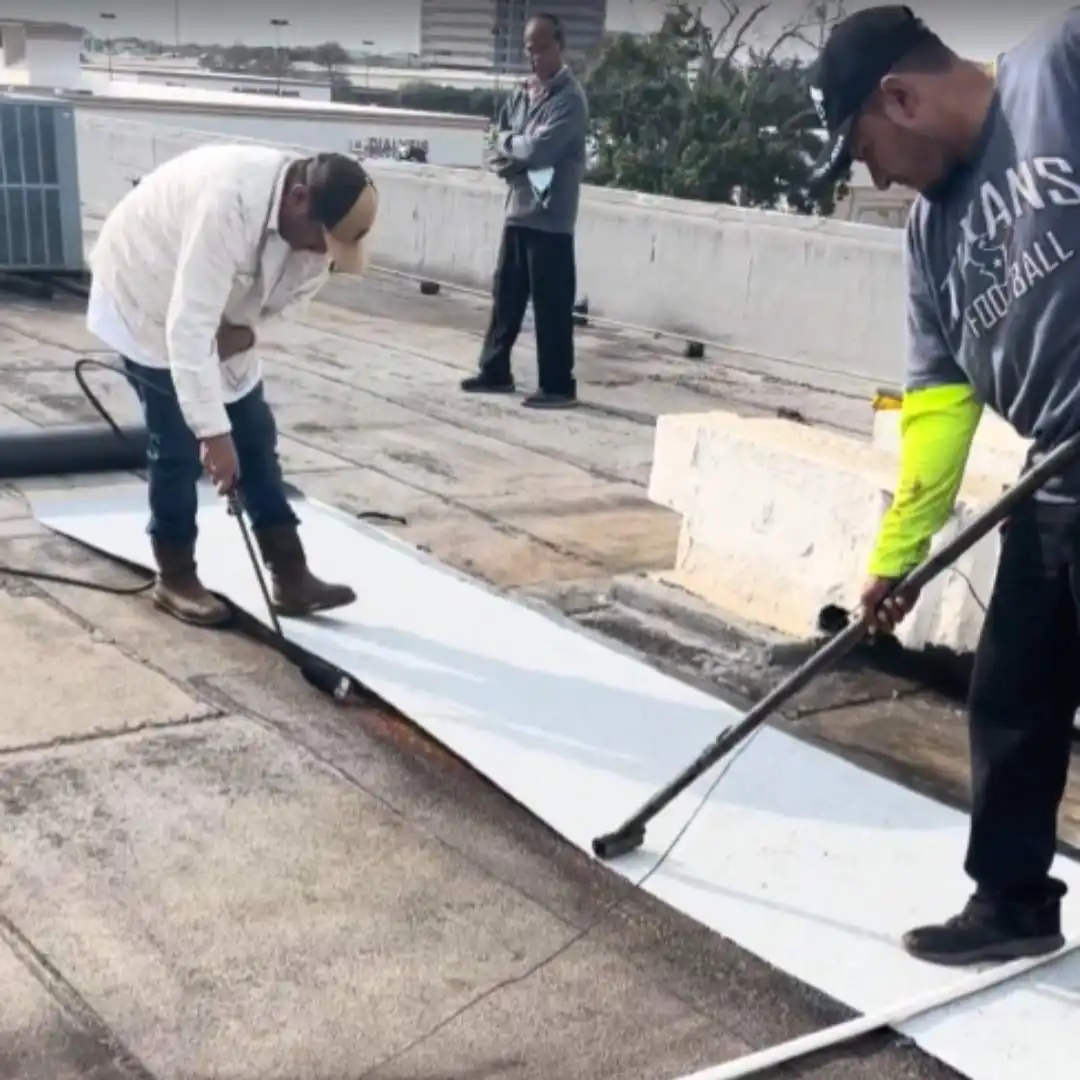
Commercial Torch down roofing is a modified bitumen system installed in layers and fused together with an open-flame torch, creating a fully welded, seamless membrane. It’s a common choice for Houston’s flat and low-slope commercial roofs because the heat-welded seams resist standing water better than mechanically fastened alternatives.
How is commercial torch down roofing different from TPO or EPDM?
TPO and EPDM are single-ply membranes that are typically adhered or fastened, while torch down uses multiple heat-fused layers of modified bitumen. Torch down tends to hold up well under foot traffic and ponding water, which is a factor on many flat Houston roofs with limited slope.
Can commercial torch down roofing be installed over an existing roof?
In some cases a torch down cap sheet can be applied over an existing base if the deck and insulation are still sound. We inspect the substrate first, since wet or deteriorated insulation underneath will cause premature failure regardless of the new membrane installed on top.
Is open-flame torch application safe on an occupied commercial building?
Yes, when performed by trained crews following fire-safety protocols — fire extinguishers on-site, monitored flame application near parapets and penetrations, and a post-installation walk to check for hot spots. We coordinate scheduling with building occupants ahead of time.
How does ponding water affect commercial torch down roofing?
Water that sits on a flat roof for more than 48 hours accelerates membrane degradation and adds unnecessary structural load. We address ponding with tapered insulation, additional drains, or crickets that redirect water toward existing drainage points.
How often should a commercial torch down roof be inspected?
We recommend a seam and drain inspection at least twice a year — once before hurricane season and once in late fall — plus a walk-through after any major hail or wind event.
What causes blistering on a torch down membrane?
Blisters form when moisture or trapped air expands under the membrane as roof surface temperatures climb during Houston summers. Left alone, blisters can crack open and expose the underlying layers to water.
How long does a commercial torch down roof installation take?
Timeline depends on square footage, roof access and the number of penetrations, but most single-building commercial torch down projects in Houston are completed within a few days to two weeks, weather permitting.
Does commercial torch down roofing help with energy efficiency?
A reflective cap sheet or an added acrylic coating can reduce surface temperature and heat transfer into the building, which can ease cooling loads during Houston’s long summer season.
Can torch down roofing be repaired instead of fully replaced?
Isolated seam failures, blisters or punctures can often be patched and re-welded without a full tear-off, as long as the underlying insulation and deck are still dry and structurally sound.
What should I ask for in a torch down roofing warranty?
Ask whether the warranty covers workmanship separately from material defects, and confirm the specific duration in writing. We provide documented workmanship coverage on new commercial torch down installations.
Will my property insurance require documentation after a torch down roof repair?
Most commercial policies require photo documentation and a written scope of repair for storm-related claims. We photograph damage before and after work and provide documentation your adjuster can reference directly.