

















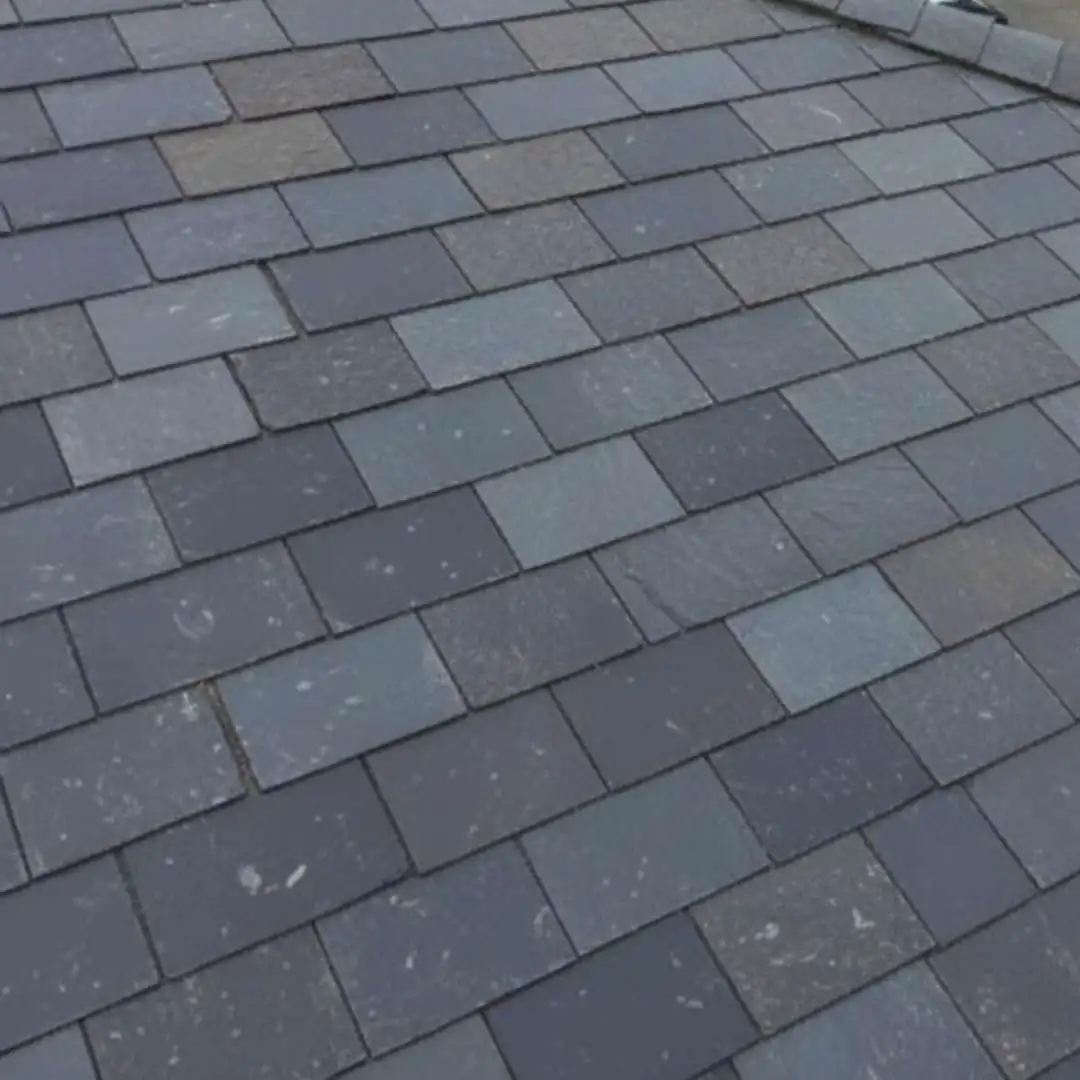
Can my Houston home’s roof frame actually support natural slate?
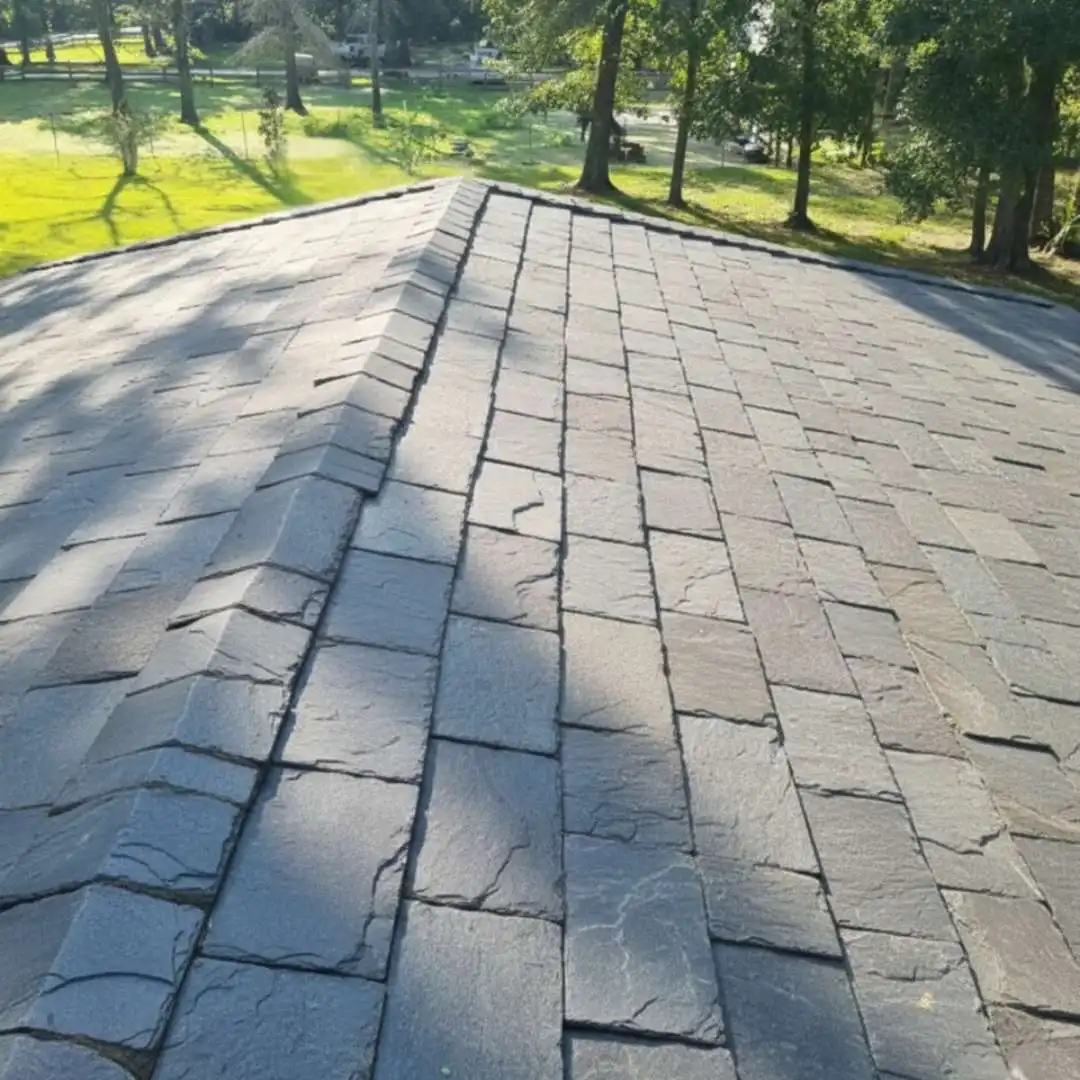
Not always without reinforcement. Natural slate runs 800–1,500 lbs per square versus roughly 250–400 lbs for architectural shingles. Homes built before modern truss engineering, or with long unsupported rafter spans, often need sistered rafters or added decking before slate roofing can be installed safely.
How long does a slate roof actually last in a humid, hot climate?
Quarried natural slate itself can last 75–150 years, but in Gulf Coast humidity the underlayment, flashing, and fasteners typically wear out long before the slate does. The practical service life of a Houston slate roof is usually set by the underlayment and flashing quality, not the tile.
Is synthetic slate a better option than natural slate for Houston?
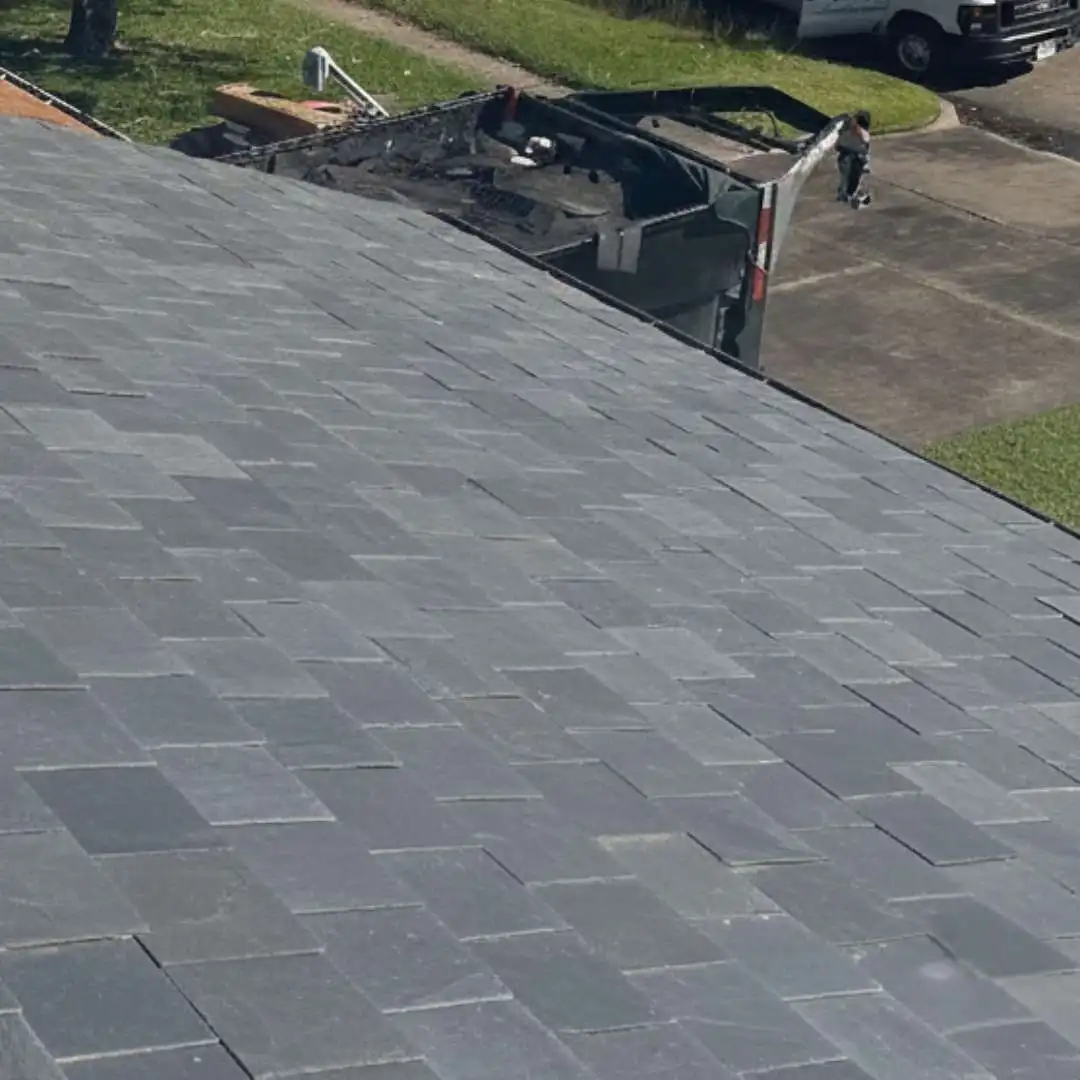
For many homes, yes. Synthetic slate weighs a fraction of natural stone, doesn’t require the same structural reinforcement, and holds up well under UV exposure and hail. Natural slate remains the choice for historic or high-end homes where authentic material is a requirement.
Does slate perform well during Houston’s hurricane season?
Slate roofing has strong wind resistance when properly fastened, but individual tiles can crack from wind-driven debris. Copper or stainless flashing at valleys and penetrations matters more for storm performance than the slate itself, since flashing failure is the most common source of hurricane-related leaks.
Why does slate need copper flashing instead of standard flashing?
Standard galvanized flashing corrodes faster under sustained coastal humidity and can fail within a decade, well before the slate around it needs attention. Copper or stainless-steel flashing is the industry standard for slate roofing specifically because it matches the tile’s multi-decade lifespan.
Can a slate roof be installed over my existing shingles?
No. Slate always requires a full tear-off to the deck. The weight and rigidity of slate roofing tiles require direct attachment to solid, inspected decking — layering it over existing shingles is not a safe or code-compliant installation method.
How is a cracked slate tile replaced without damaging the surrounding roof?
A trained installer removes the broken tile’s concealed nail using a slate ripper, slides in a matched replacement tile, and secures it with a copper hook or nail bib — without walking on or disturbing adjacent tiles, which are the most common source of accidental breakage during repairs.
What does a Houston slate roof cost compared to standard replacement?
Slate typically costs several times more than architectural asphalt shingles due to material cost, structural prep, and specialized installation labor. Residential replacements through Achilles start at $9,000; slate-specific pricing is provided after an on-site structural review since roof pitch and framing condition affect the scope significantly.
Does homeowners insurance treat slate roofs differently after storms?
Many insurers recognize slate’s durability with favorable premiums, but claims documentation matters more for slate than asphalt since damage is often limited to individual tiles rather than an obvious full-roof failure. Detailed photo documentation supports a stronger windstorm claim.
How often does a slate roof need maintenance in Houston?
An annual slate roofing inspection is recommended to check flashing seals, replace any cracked tiles from storm season, and clear debris from valleys where humidity and organic buildup accelerate underlayment wear beneath the tile.
Will a slate roof affect my home’s cooling costs?
Slate’s mass provides some thermal buffering, but attic ventilation has a bigger effect on cooling load than the roofing material itself in Houston’s climate. Proper ridge and soffit ventilation matters as much as tile selection for keeping summer attic temperatures manageable.
How do I know if a contractor is actually qualified to install slate?
Slate installation is a specialized trade distinct from shingle roofing. Ask whether the crew has direct slate experience, how they source matched replacement tile, and what flashing material they specify — copper or stainless, not standard galvanized.