


















How long does a clay tile roof last in Houston’s climate?
Properly installed clay tile roofing in Houston typically lasts 50 years or more, since fired clay resists UV degradation and Gulf Coast humidity far better than asphalt shingles. The underlayment beneath the tiles usually needs replacement around year 20-25, well before the tiles themselves fail.
Is clay tile roofing rated for Houston’s hurricane and high-wind exposure?
Yes, when installed with proper fastening and underlayment systems, clay tile can meet Texas windstorm requirements for Harris County. Achilles Roofing & Exterior is RCAT Member #208834 and installs tile systems designed to hold up under high-wind events common to the region.
Can my Houston home’s structure support the weight of clay tile?
Clay tile weighs roughly 800-1,100 pounds per square, significantly more than asphalt shingles. Most homes built to Harris County residential code can support it, but older framing should be evaluated before installation. We inspect rafter spacing and load capacity as part of every free estimate.
Why do clay tiles develop a white, chalky residue in Houston?
That chalky residue is efflorescence, a mineral deposit caused by moisture moving through the tile and evaporating on the surface. It’s common in humid Gulf Coast climates and is typically cosmetic, though heavy or spreading efflorescence can indicate an underlayment or ventilation issue worth inspecting.
How much does clay tile roofing installation cost in Houston?
Residential clay tile installation in Houston typically starts around $9,000 depending on roof size, pitch, and structural reinforcement needs, and can run higher for steep or complex rooflines. We provide a written estimate after an on-site inspection, with no obligation to proceed.
Do individual clay tiles crack from Houston hailstorms?
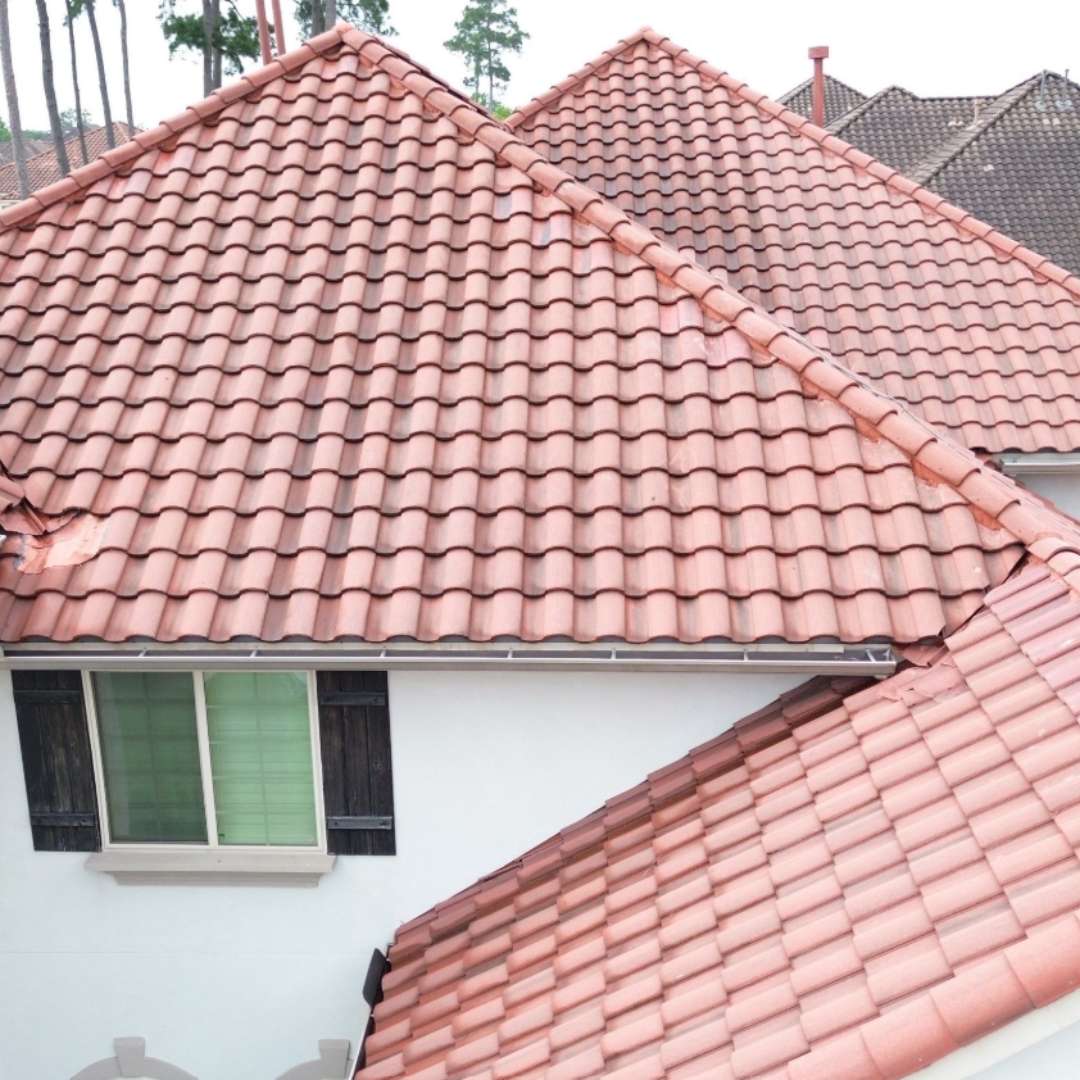
Clay tile can crack or chip from large hail, though it generally withstands smaller hail better than asphalt shingles since it doesn’t bruise or lose granules. After a hailstorm, individual cracked tiles can usually be replaced without re-roofing the entire section.
How often should a clay tile roof be inspected in Houston?
We recommend a clay tile inspection once a year and after any major wind or hail event. Because the tiles themselves rarely fail first, inspections focus on flashing, valleys, ridge caps, and underlayment condition, the components most affected by Houston’s rain volume and humidity.
Can broken or slipped clay tiles be repaired without replacing the whole roof?
Yes. Individual clay tiles can be matched, replaced, or reset without disturbing the surrounding roof field. We keep common profile and color matches on hand and can typically complete spot repairs in a single visit.
Does clay tile help with cooling costs in Houston’s heat?
Clay tile creates an air gap between the tile and roof deck that allows heat to vent rather than transfer directly into the attic, which can reduce attic temperatures compared to direct-nailed asphalt shingles. Lighter tile colors reflect additional solar heat, a relevant factor during Houston summers.
What underlayment does Achilles Roofing use beneath clay tile in Houston?
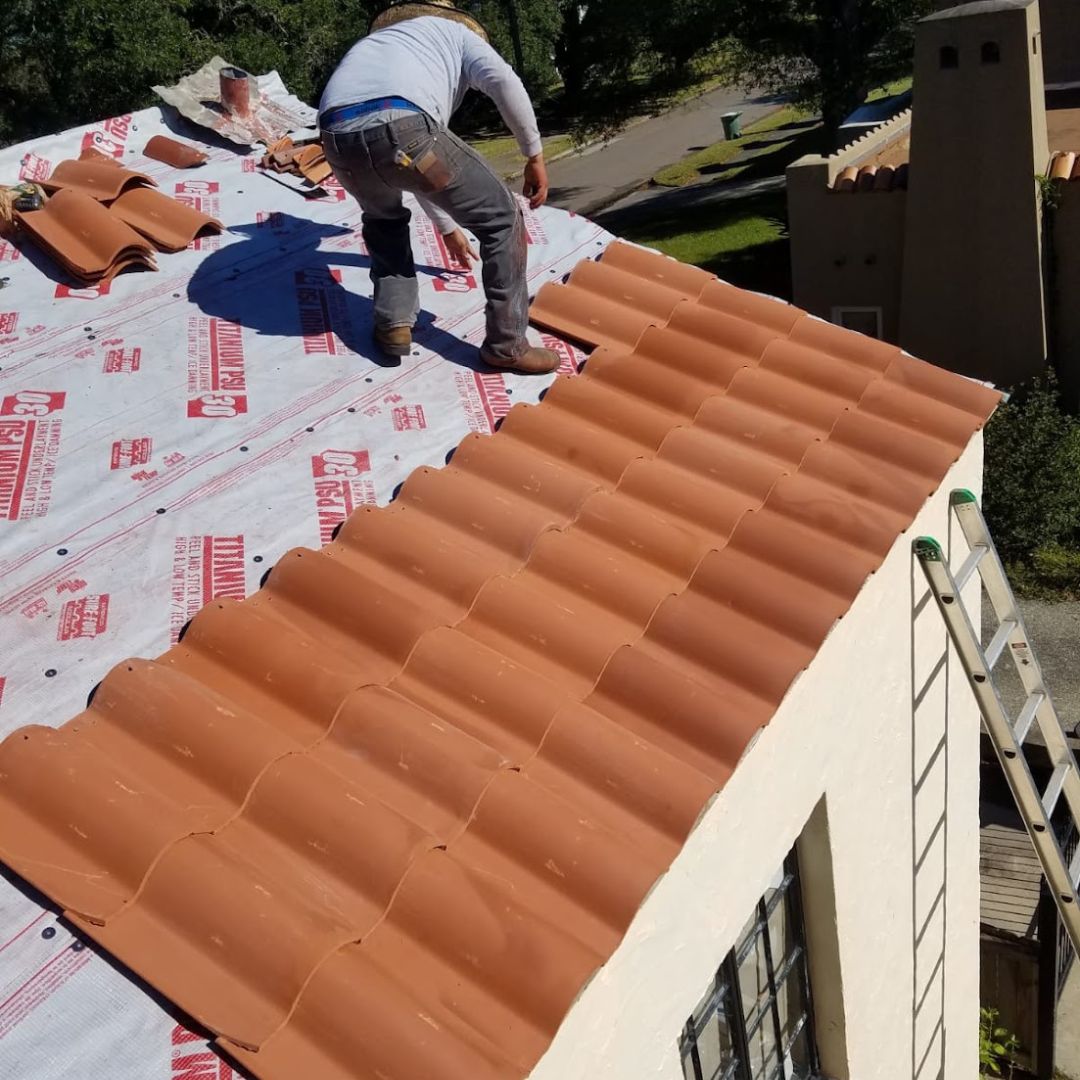
We install high-temperature, self-adhering underlayment rated for the sustained heat and moisture exposure typical of Houston roofs. This layer is the primary waterproofing barrier and is engineered to outlast standard felt underlayment beneath tile systems.
Do I need a permit for clay tile roof replacement in Harris County?
Most jurisdictions within Harris County require a permit for roof replacement, including tile-to-tile and material changes. We handle permit applications and schedule required inspections as part of the installation process.
How does Achilles Roofing match tile color and profile for repairs on an existing Houston roof?
We identify the existing tile’s profile and manufacturer where possible and source matching or closely comparable tile for spot repairs. Where an exact match isn’t available, we recommend pulling replacement tiles from a less visible roof plane to preserve the front-facing appearance.