












Commercial Roofing · Houston, TX
Built-Up Roofing. Layer by Layer. Done Right.
Most commercial property owners with low-slope or flat roofs don’t realize water has breached the membrane until ceiling tiles are already discolored. Achilles Roofing & Exterior installs commercial Built-Up Roofing (BUR) systems that use alternating layers of reinforcement felts and hot-applied bitumen to create a monolithic, redundant waterproofing barrier — so a single membrane failure doesn’t become a building-wide leak. With 18 years of storm restoration and commercial installation experience, we assess your roof and begin staged installation planning within 48 hours of initial contact.


Houston's Humidity Doesn't Forgive Thin Membranes.
Single-ply membranes dominate the commercial roofing market because they’re fast to install. What they lack is redundancy. When a seam separates — which happens regularly on Houston rooftops subjected to daily thermal cycling between 50°F nights and 95°F afternoon temperatures — there’s nothing behind that single layer to catch the moisture intrusion.
Built-Up Roofing (BUR) was engineered specifically for this failure mode. By laminating 3, 4, or 5 alternating plies of reinforcement felt with hot-applied asphalt bitumen, the system creates independent waterproofing layers. One ply can develop a pinhole penetration without the system failing — because the next layer intercepts it.
This redundancy is why BUR remains the system of choice for facilities that cannot tolerate interruption: distribution centers, medical offices, warehoused inventory, and multi-tenant commercial properties throughout Greater Houston.
Not Sure If Your Current System Is At Risk?
Our $279 commercial roof inspection gives you a written condition report covering aggregate coverage, flashing integrity, drain functionality, blister survey, and deck moisture indicators. It’s designed to answer the question “how many years does my roof have left?” — not just “is it leaking today?”
Ahmad Faiz, who began his career in storm restoration across the Gulf Coast, personally oversees our commercial assessment process.
Why Choose Achilles for Roof Repair
- GAF Certified Plus — not just a contractor, a manufacturer-certified specialist
- 5-Year Workmanship Warranty on every Houston repair job
- All Harris County permits pulled before work begins
- Photo documentation on every invoice — standard, not optional
- Free inspection + same-day written assessment
- 5.0 stars from 370+ Houston Google reviews ·A+ BBB Accredited
Why Deferred BUR Maintenance Compounds Damage
Three Conditions That Accelerate Failure
Houston's humidity means moisture vapor is always present beneath the roofing system. When the vapor barrier is improperly lapped or missing at seams near drains, internal vapor pressure builds and causes delamination blisters between plies — visible as raised bubbles across the field. Each blister concentrates stress, creating future rupture points.
Parapet wall counter-flashings on Houston commercial buildings expand and contract daily with temperature swings. Over time, the metal fatigues and pulls away from the wall embed. This gap — often invisible from ground level — allows bulk water intrusion to travel horizontally across the deck during the prolonged rainfall events that accompany Gulf tropical systems.
Low-slope roofs depend on internal drain bowls and scuppers sized for code-minimum rainfall rates. Houston regularly exceeds those rates during storm events. When drain strainers become blocked by accumulated debris and gravel migration, ponding water in excess of 48 hours adds structural load and accelerates bitumen oxidation — even on properly installed BUR systems.
System Components We Install
Certified Materials. Structural Defense.
The binding agent that fuses each reinforcement ply into a continuous, self-adhering monolithic system. Applied at precise temperature ranges for proper viscosity — a detail that separates experienced commercial installers from cut-rate operations.
The structural backbone of the BUR system. Applied in 3, 4, or 5 alternating plies depending on specified redundancy level and building occupancy classification. Overlap dimensions are non-negotiable for system integrity.
A thick final asphalt coat applied over the topmost ply, creating a uniform surface bed to receive and embed aggregate surfacing. Flood coat consistency determines how well the gravel layer bonds and how long UV protection holds.
Embedded gravel or a granule-surfaced mineral cap sheet protects bitumen layers from UV oxidation and physical impact. Mineral cap sheets offer a cleaner finished appearance and are appropriate when HVAC foot traffic is expected.
nstalled directly over the roof deck before insulation and plies, the vapor barrier prevents interior humidity from migrating upward into the BUR system — the primary defense against delamination blistering in Houston's climate.
Every curb, drain, pipe penetration, and parapet receives custom-fabricated flashing work. Flashing failures account for the majority of commercial roof leaks — we treat them as primary work, not afterthoughts.
Our Proven Installation Process
Methodical Execution. No Shortcuts.
We evaluate the existing roof deck for deflection, moisture content, and load capacity. Core samples are taken when deck condition is uncertain. Material staging and site safety plans are finalized before any tear-off begins.
The substrate is mechanically fastened and cleaned. Vapor retarder is installed and lapped at all seams with specified overlap dimensions — this step is the most commonly rushed on competing bids and the most consequential for long-term performance.
Reinforcement felts are applied in alternating layers with hot-applied bitumen, each layer lapped and rolled to eliminate air pockets. The specified ply count (3, 4, or 5) is applied without modification — each ply is accounted for in the final warranty documentation.
The flood coat is applied and aggregate embedded while asphalt is still workable. All parapet counter-flashings, drain flashings, and HVAC curb flashings are completed to full detail before the aggregate sets.
Before leaving the site, we perform a complete seam, flashing, and saturation inspection. Drain clearance is confirmed. The 5-year workmanship warranty is issued in writing with specific coverage terms — not just a verbal commitment.
Material Performance & Durability
What a Properly Installed BUR System Actually Delivers.
A properly specified and installed Built-Up Roofing system on a Houston commercial building — with a functioning vapor barrier, correct ply count, and maintained drainage — routinely performs for 20 to 30 years before major work is required.
The caveat is maintenance. BUR systems that go uninspected for 5+ years typically develop aggregate displacement and minor flashing separations that, left unaddressed, shorten lifespan by 8–12 years. An annual $150–$300 maintenance visit consistently extends the system’s useful life well beyond the industry average.
Our team includes Edwardo Cano, a foreman with 12 years of flat roofing specialization and approximately 5,000 completed commercial and residential roofing projects — experience that shows in the details: consistent bitumen temperature management, correct lap dimensions, and drain bowl clearances checked at project close.
20–30 Years Expected Service Life
BUR systems with proper installation, vapor management, and maintained drainage in Houston commercial environments.
3–5 Reinforcement Plies Standard
Reinforcement Plies Standard Ply count is specified based on building occupancy, expected foot traffic, and structural load capacity.
Class A - Fire Rating with Aggregate Surfacing
Gravel-surfaced BUR systems achieve Class A fire ratings — a requirement for most commercial and industrial occupancies.
48 hrs Initial Site Assessment Turnaround
From first contact to on-site structural evaluation and material staging plan.
What Most Property Owners Don't Know
The Field Knowledge That Separates Good BUR from Great BUR.
Vapor Barriers Fail at Seams, Not in the Field
Vapor barrier failures almost never occur at the center of a membrane — they occur at laps that were installed with insufficient overlap or that weren’t heat-sealed. We inspect every lap dimension before it’s covered by the first ply layer.
- HVAC Equipment Replacement Voids Existing Flashings
When rooftop HVAC units are replaced — a common event on 10–15 year old commercial buildings — the new equipment curb dimensions rarely match the original. Installers fill the gap with sealant rather than reflashing. Within 2–3 Houston summers, that sealant fails.
- Ponding Water After 48 Hours Isn’t a Drainage Problem — It’s a Design Issue
Code requires commercial roofs to drain within 48 hours of a rain event. When they don’t, the problem is usually inadequate slope or undersized drain counts, not just clogged strainers. BUR is tolerant of standing water far better than single-ply alternatives, but persistent ponding still accelerates bitumen oxidation over time.
- Storm Season Timing Affects Installation Scheduling
We schedule commercial BUR projects around Houston’s Gulf tropical weather patterns. Hot-applied bitumen cannot be applied in sustained rain — and a partially completed system left unprotected overnight carries real risk. We build weather windows into every commercial project schedule, particularly June through October.
Not Sure If Your Current System Is At Risk?
Our $279 commercial roof inspection gives you a written condition report covering aggregate coverage, flashing integrity, drain functionality, blister survey, and deck moisture indicators. It's designed to answer the question "how many years does my roof have left?" — not just "is it leaking today?"
Ahmad Faiz, who began his career in storm restoration across the Gulf Coast, personally oversees our commercial assessment process.
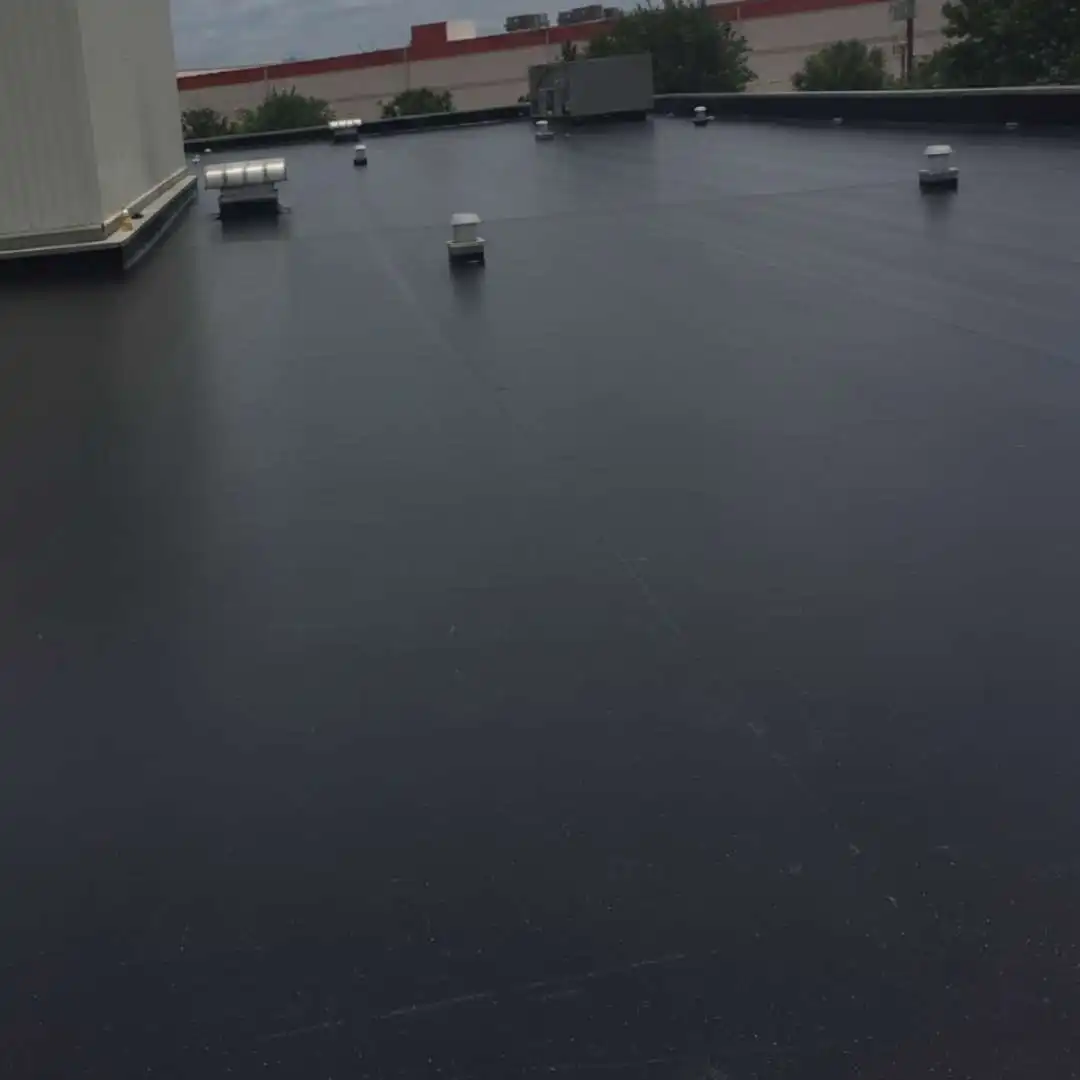
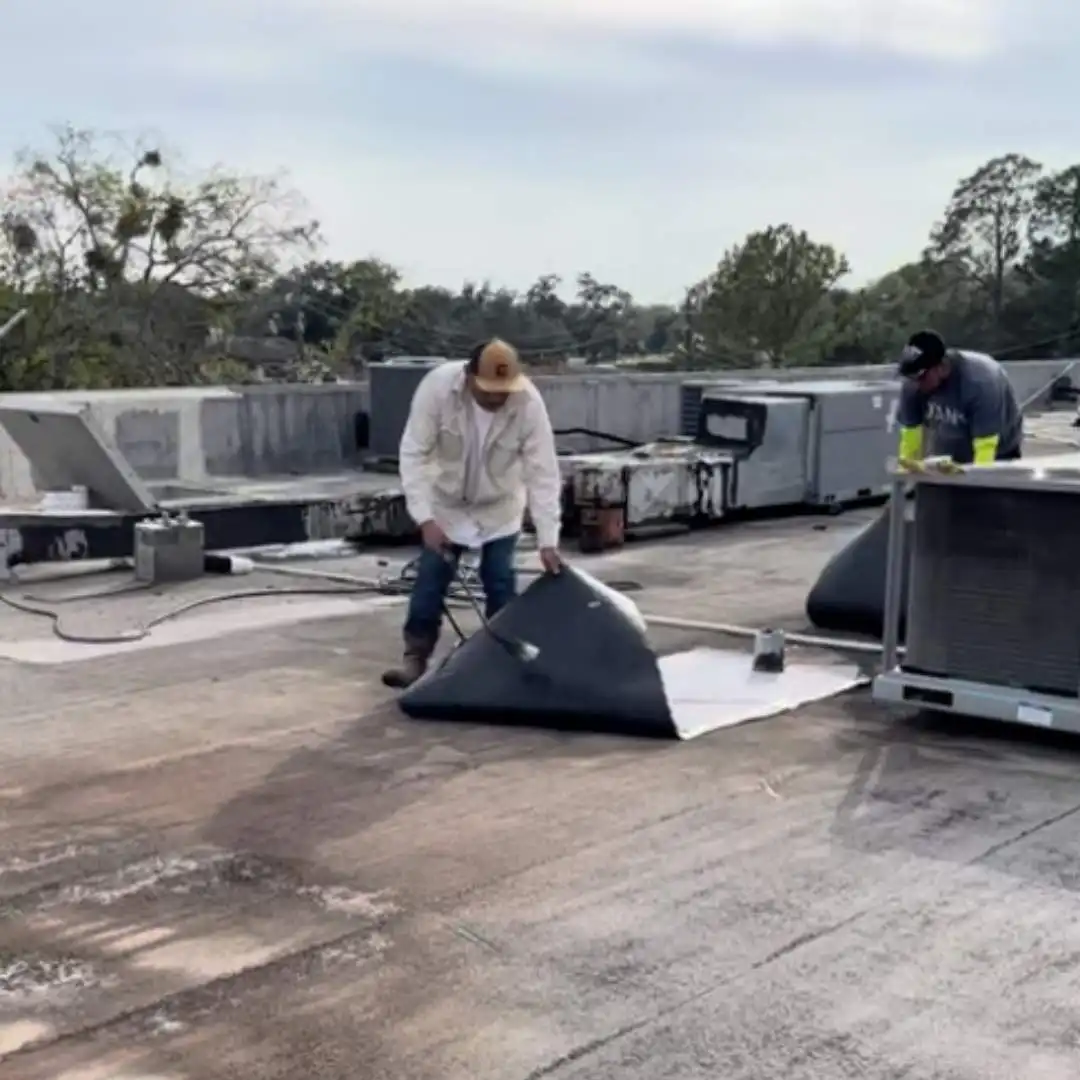
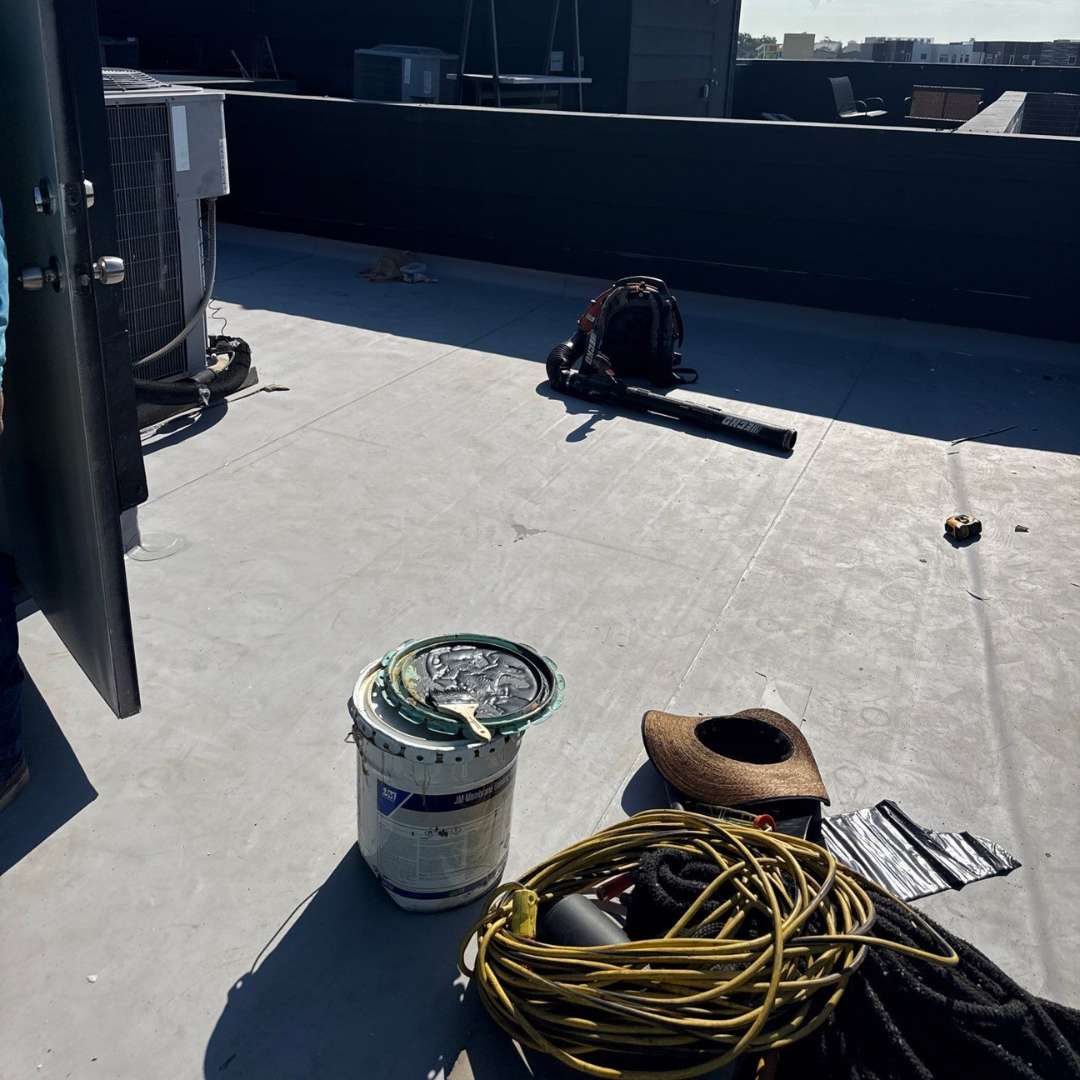
See Our Work:
Built-Up Roofing System in Action.
Invest in Foundational Reliability.
Secure Your Operations Today.
Choose the time-tested waterproofing and durability of Built-Up Roofing. Contact Achilles Roofing & Exteriors now for a free consultation and quote.
I would like to post a positive review for Achilles Roofing & Exteriors team. It is second time we are doing minor work on our house and I'm very satisfied with quality of work, dedication and enormous progress on a transformation they made in both times. I do not foresee any roof repairs on my house in future but if you are looking for someone trustworthy, punctual, caring to do your roof work, I would totally trust them.
Achilles Roofing & Exteriors did an exceptional job with our residential roofing project, providing top-notch roof repair services and professional work done at a reasonable cost. Their experienced roofer team handled the quick roofing service with care and attention to detail, ensuring our new roof exceeded our expectations.
We really needed a new roof and we got 5 different quotes from 5 companies and Achilles gave us the best quote by thousands of dollars! Very professional work and service and very flexible to help meet our busy schedules.I would highly recommend this company to anybody who needs roofing services.
Great price · $2,000–4,000
To cool down my attic, I decided to install a solar attic fan. I got proposals from four different vendors and evaluated them based on customer service, experience, implementation, and price. Achilles Roofing & Exteriors, led by Ahmad Faiz, was the standout choice.
Great price · $10,000–12,000
Ahmad is very professional. The process was very simple. Price was affordable and the quality of work is amazing. Thank you for the new replacement and previous rook repairs.
Quick turnaround on some roof repairs we needed for the sale of our home. Everything was documented on the invoice and with photos. Very professional.
Great job on my Atrium cover. Used them before for my roof. Well done and very reasonable.
Frequently Asked Questions:
Commercial Built-Up Roofing
Why did my commercial roof start leaking near the HVAC unit and not at the low point where water pools?
HVAC curb flashings are the most mechanically stressed points on any commercial low-slope roof. The equipment vibrates, the curb expands and contracts thermally, and service technicians walking across the roof concentrate foot traffic around the equipment. When BUR is installed correctly, these penetrations receive fully integrated flashing work — but if the flashing was repaired with sealant rather than properly reflashed after an HVAC replacement, the sealant typically fails within 2–4 years. The water then migrates horizontally beneath the membrane and appears on the interior far from the actual breach point.
What's the difference between a 3-ply and 5-ply BUR system, and does it matter for a Houston climate?
Ply count determines redundancy, not just thickness. A 3-ply system provides three independent waterproofing barriers; a 5-ply system provides five. In Houston’s climate specifically, we typically recommend 4–5 plies for buildings with regular rooftop access (HVAC servicing, satellite equipment, rooftop utilities) because mechanical damage from foot traffic is a consistent failure vector. For low-access buildings like warehouses and distribution facilities, a properly installed 3-ply with quality aggregate surfacing is often the appropriate and cost-effective specification. We discuss the correct ply count for your specific occupancy during the initial assessment — not as an upsell, but as a project design decision.
Can a BUR system be installed over my existing membrane to avoid a full tear-off?
Recover (overlay) installation is technically possible on BUR systems, and some building codes permit it. However, we do not recommend recover installation when the existing substrate has any detected moisture or delamination. Installing new BUR over a wet deck traps that moisture permanently — it cannot escape, continues to migrate, and will cause blistering in the new system within 3–5 years. We use core sampling to test for substrate moisture before recommending whether a tear-off or recover is the appropriate approach. In most Houston commercial cases where the existing system is more than 15 years old, a full tear-off with deck inspection is the better long-term investment.
My BUR roof has visible blisters across the surface. Does it need replacement, or can it be repaired?
Blistering doesn’t automatically mean the system is at end-of-life. Small blisters that are dry inside (no moisture between plies) can be cut, drained, and patched without replacing the entire system. The critical determination is whether the blisters contain moisture — which indicates vapor barrier failure and interply delamination. We probe blisters during the inspection process. If the delamination is confined to isolated areas, targeted patch work is a legitimate repair strategy. If blistering is widespread and the deck shows elevated moisture readings on more than 25% of the roof area, replacement is more cost-effective than incremental patching.
How do I know if a BUR contractor is applying the correct number of plies or cutting the system short?
This is one of the most legitimate concerns in commercial roofing. Hot-applied BUR is applied in layers that are hidden from view by the time the flood coat and aggregate go on. The best protection is to request material delivery manifests — the asphalt and felt rolls delivered to the job site should correspond to the square footage and ply count in your specification. A contractor applying 3 plies where 5 were specified will need significantly less material. We provide material staging documentation and welcome property owner representatives on-site during installation. Our 5-year workmanship warranty is tied to documented installation compliance, not a verbal assurance.
Why does my flat commercial roof leak during heavy rain but not light rain?
This pattern is almost always caused by a flashing failure at a parapet wall, HVAC curb, or drain perimeter — not a field membrane failure. Light rain doesn’t generate enough hydrostatic pressure to force water through a partially sealed flashing gap. Heavy rain, particularly Houston’s tropical-system downpours with sustained rates of 2–4 inches per hour, generates enough water volume to push laterally under a flashing that appears sealed in dry conditions. The fix is flashing replacement, not a full roof replacement. However, if the water has been entering through the flashing long enough to wet the insulation board below, that section of insulation needs to be removed and replaced during the repair — otherwise the trapped moisture will continue migrating.
Does a BUR system affect my building's insurance position or premium?
BUR systems with Class A fire ratings and verified installation documentation can positively affect commercial property insurance positions — particularly for buildings insured under commercial property or business interruption policies. Some carriers in the Texas market provide premium credits for Class A rated roofing systems. We provide documented installation records and can coordinate with your insurance carrier’s inspection process. We’re also experienced with storm damage insurance claims from the commercial side — Ahmad Faiz’s background in storm restoration means we understand how claims adjusters document damage and what documentation supports a complete claim.


