

















Do commercial skylights in Houston need to meet wind-uplift codes?
Yes. Harris County commercial projects follow the International Building Code’s wind-uplift provisions, and curb-mounted skylights must be rated for the exposure category of your building. We select curbs and fasteners engineered for Gulf Coast wind loads before installation begins.
How much roof penetration does a commercial skylight installation require?
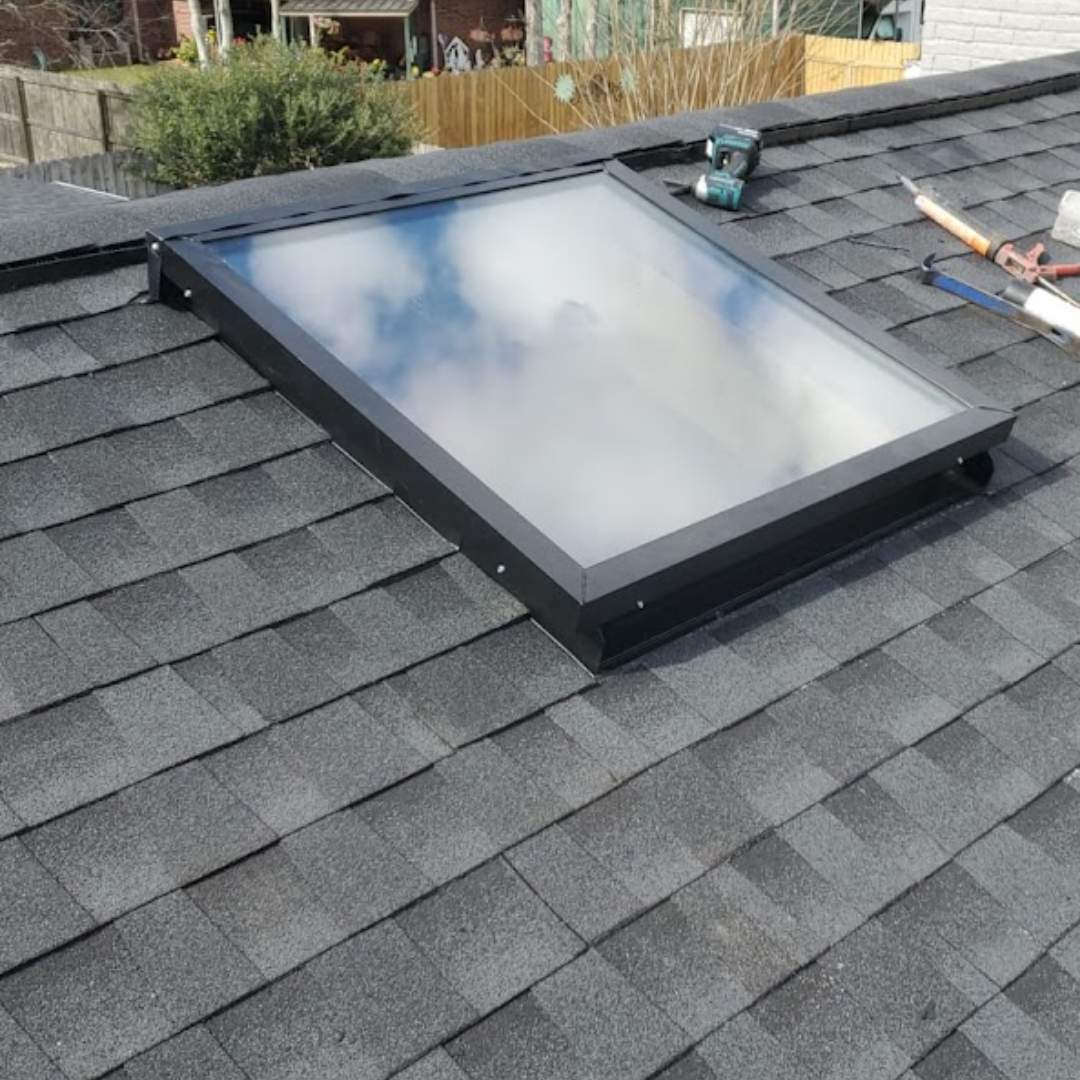
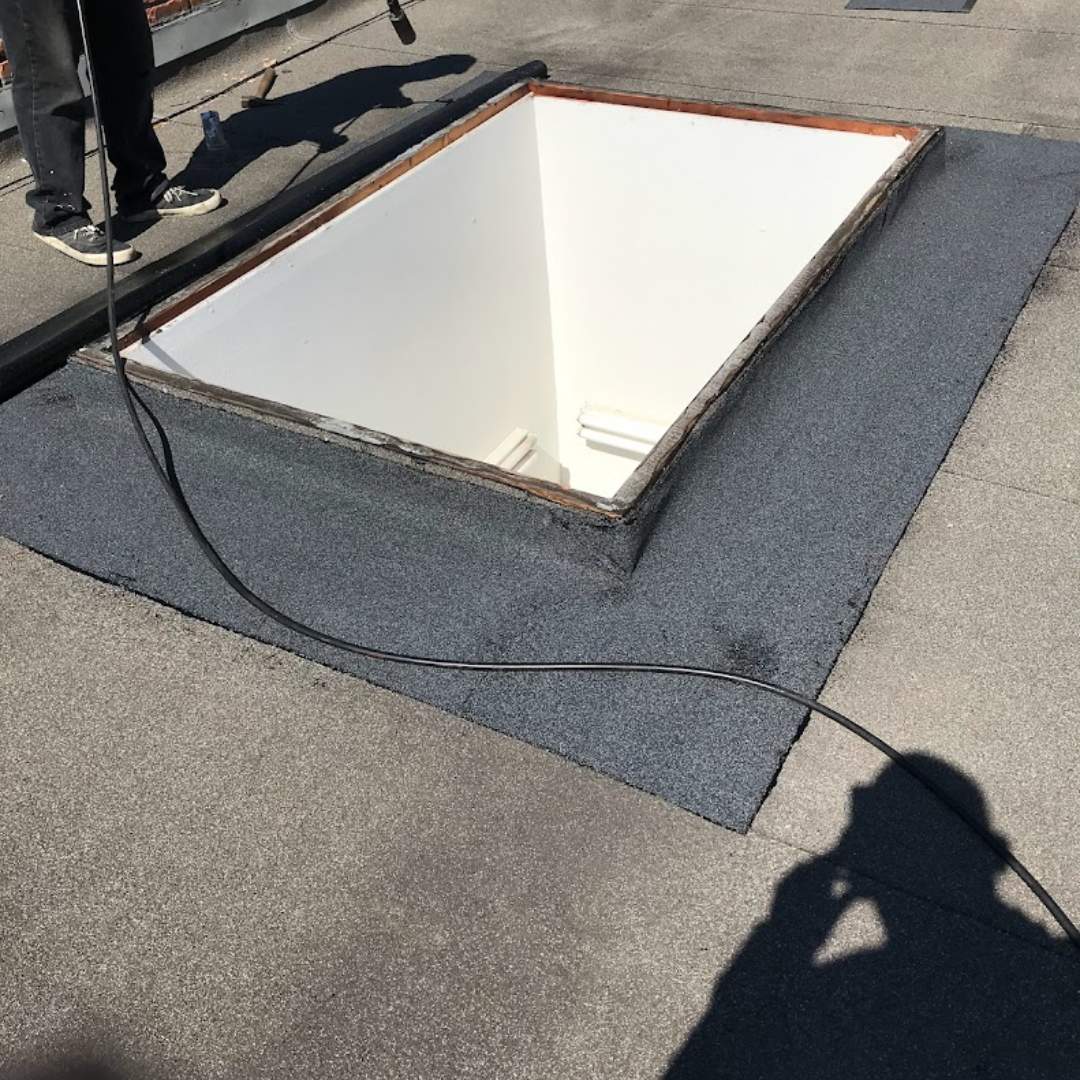
The opening is cut to the skylight’s rough dimensions, then framed with a structural curb that ties into the existing deck. On a typical unit that’s a single, engineered penetration, not multiple cuts, which keeps the surrounding membrane intact.
Can commercial skylights handle Houston’s humidity without fogging?
Insulated glazing units with a properly sealed argon gap resist interior condensation far better than single-pane or older units. In Houston’s humidity, we recommend dual-pane, low-E glazing specifically to reduce the fogging that shows up within a few years of installation elsewhere.
What’s the difference between curb-mounted and deck-mounted skylights on a flat commercial roof?
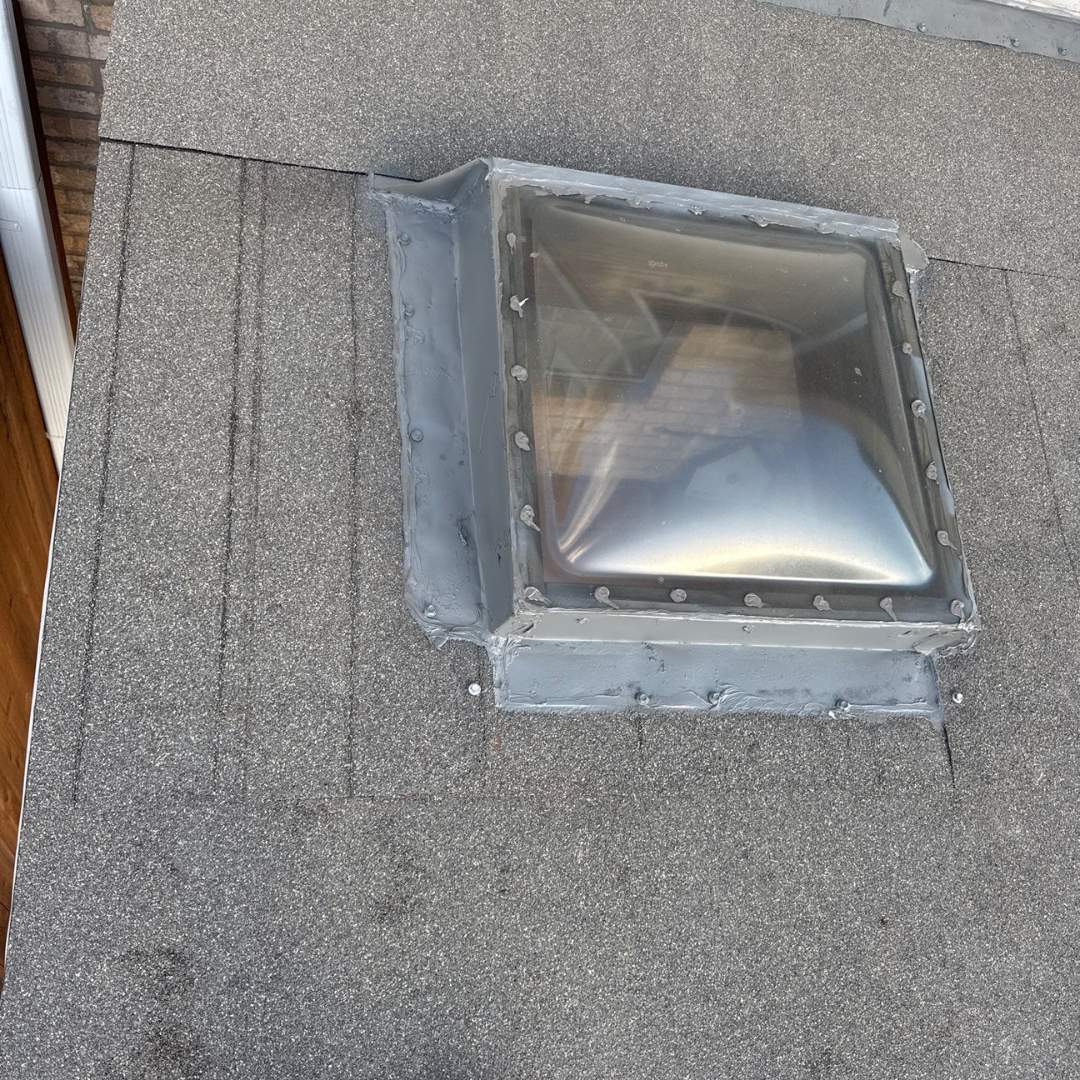
A curb-mounted skylight sits on a raised frame above the roof plane, which sheds water and is the standard for flat and low-slope commercial roofs common in Houston. Deck-mounted units sit flush and are better suited to steep-slope residential applications.
How long does commercial skylight installation take on an occupied building?
Most single-unit installations are completed in one work day, including framing, curb-setting, and membrane tie-in. Multi-unit skylight arrays on larger commercial roofs typically run 2-4 days depending on the number of penetrations.
Does adding a skylight affect my TPO or EPDM roof warranty?
It can, if the penetration isn’t tied in by a manufacturer-authorized installer. We’re Mule-Hide authorized and GAF Certified Plus, and we flash every skylight curb using methods that keep your existing membrane warranty intact.
What glazing reduces heat gain in Houston’s climate?
Low-E coated, dual-pane glazing blocks a significant share of solar heat while still admitting daylight, which matters for interior comfort and HVAC load on Houston commercial buildings that see sustained summer heat and direct UV exposure.
How are commercial skylights flashed to prevent leaks during Gulf Coast storms?
We install a continuous flashing detail that laps the curb into the field membrane on all four sides, sealed with manufacturer-matched adhesives. This detail is the difference between a skylight that holds through windstorm season and one that leaks in the first heavy rain.
Can skylights be added to an existing metal or flat commercial roof?
Yes, on both. Standing seam metal roofs require a curb adapter matched to the panel profile, while TPO, EPDM, or modified bitumen roofs need the curb flashed directly into the membrane. We assess your existing roof type before quoting the install.
What permits does Harris County require for commercial skylight installation?
Commercial roof penetrations, including skylights, generally require a building permit reviewed against current IBC wind and structural provisions. We handle permit submission and coordinate the required inspection as part of the installation.
How much does commercial skylight installation cost in Houston?
Cost depends on unit size, glazing package, curb height, and whether structural framing modifications are needed. Because every commercial roof and skylight spec is different, we provide an exact number after a free on-site inspection rather than a generic estimate.
What maintenance keeps commercial skylights leak-free after hurricane season?
An annual inspection of the flashing seams, gasket condition, and curb fasteners catches seal failure before it becomes a leak. We recommend scheduling this check each spring, ahead of peak Gulf storm season, alongside your broader roof inspection.