


















How often should a wood shake roof be inspected in Houston’s climate?
Twice a year is typical in Houston — once before hurricane season and once after — since humidity and wind cycles here stress wood shake roofing faster than in drier regions. Homeowners near mature tree cover often need a third check for debris buildup.
Can wood shake shingles be treated to resist Houston humidity?
Yes. Fungicidal and water-repellent treatments applied during installation or re-application slow moisture absorption, though no coating eliminates the need for airflow beneath the shakes. Treatment intervals depend on sun exposure and roof pitch.
Do wood shake roofs need special ventilation in Gulf Coast homes?
Wood shake systems rely on a ventilated space between the shakes and the deck to dry out after Houston’s frequent humidity spikes. Without it, trapped moisture accelerates rot from the underside, often before surface damage is visible.
What causes wood shake shingles to curl or split?
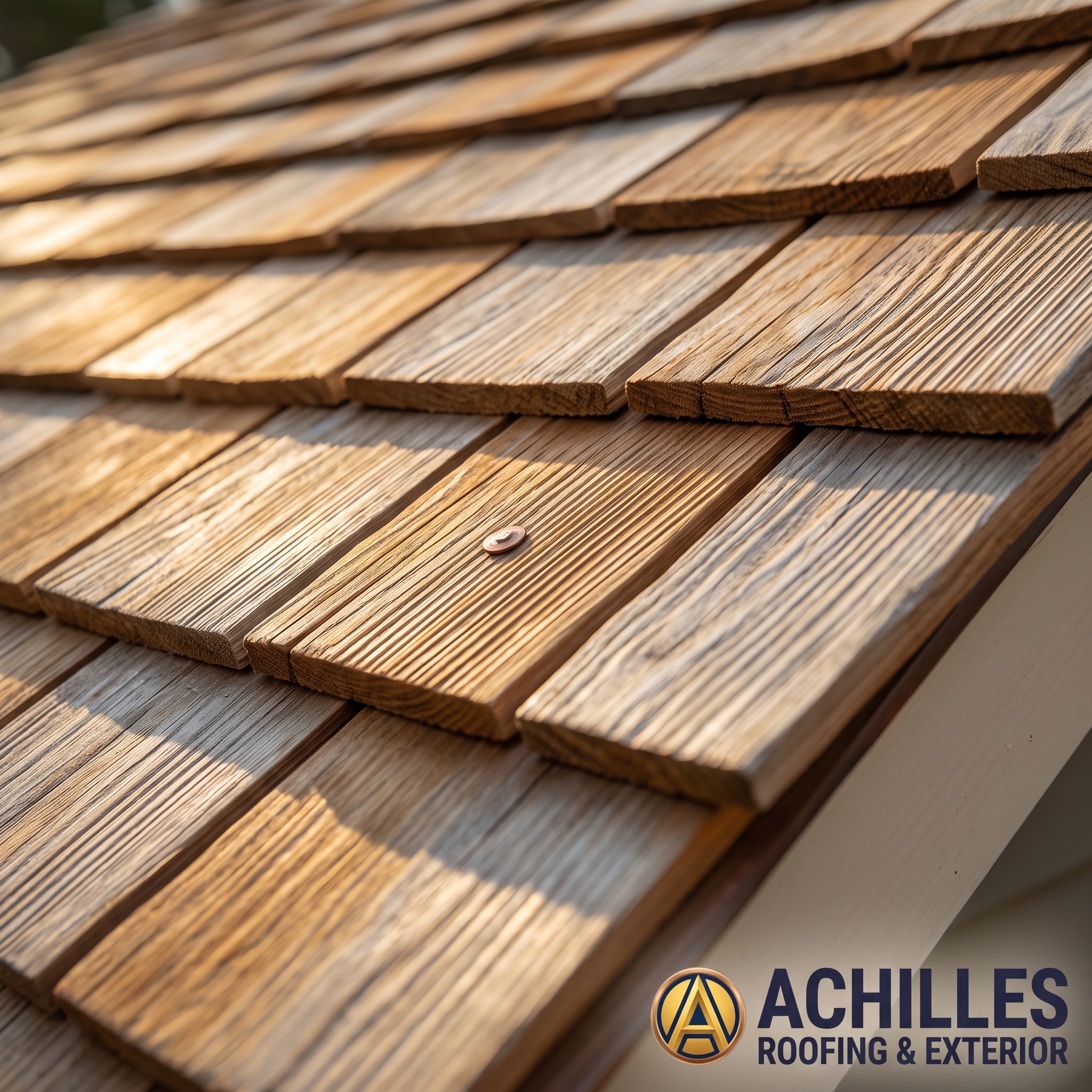
Repeated swelling and shrinking as shakes absorb humidity and then dry out in Houston’s heat creates internal stress that eventually curls or cracks the wood grain, especially on shakes installed with insufficient expansion spacing.
Is wood shake roofing fire-rated for Houston homes?
Untreated wood shakes carry a lower fire classification than asphalt or metal roofing. Pressure-treated, fire-retardant shakes can achieve a Class B or C rating; homeowners should confirm current requirements with their local building authority before installation.
How does algae growth affect wood shake roof performance?
Algae and moss hold moisture against the wood surface longer than it would otherwise sit, which softens fibers and accelerates decay. Shaded, north-facing slopes in Houston typically show growth first and need more frequent cleaning.
Can individual wood shake shingles be repaired instead of full replacement?
Isolated split or missing shakes can usually be replaced individually if the surrounding courses and underlayment are still sound. Widespread curling or soft decking across multiple sections usually signals a larger repair is more cost-effective than spot fixes.
ow long does wood shake roofing typically last in a humid climate?
In humid Gulf Coast conditions, wood shake roofs commonly reach 20–25 years with consistent ventilation and maintenance, compared to 30+ years in drier climates. Neglected ventilation or skipped cleanings can shorten that range considerably.
What maintenance keeps a wood shake roof watertight between seasons?
Clearing debris from valleys, removing algae buildup, and re-sealing exposed nail heads are the main recurring tasks. In Houston, scheduling this before and after hurricane season catches problems before heavy rain finds them.
How does wind-driven rain during Gulf storms affect wood shake roofs?
The raised, overlapping profile of wood shakes gives wind-driven rain more edges to work behind than a flat asphalt surface, which is why post-storm inspections in Houston often focus on lifted or displaced shakes rather than just missing ones.
What’s the difference between cedar shakes and shingles?
Shakes are split or hand-textured with a thicker, more rustic profile, while shingles are sawn flat on both sides for a uniform look. Shakes typically require a heavier underlayment system to manage the larger gaps between courses.
How can homeowners tell if moisture has reached the roof deck under wood shakes?
Interior signs include ceiling staining, a musty attic smell, or visible daylight through the decking from inside the attic. From the roof surface, soft or spongy footing across a wide area usually means the deck below has already absorbed water.