








What’s the difference between SBS and APP modified bitumen?
SBS (styrene-butadiene-styrene) modified bitumen is rubberized and stays flexible across Houston’s temperature swings between humid summers and occasional winter freezes. APP (Atactic Polypropylene) bitumen is more heat-resistant during application but can become brittle sooner. We install SBS systems on most Houston commercial roofs for that flexibility.
How many plies does a commercial modified bitumen roof need?
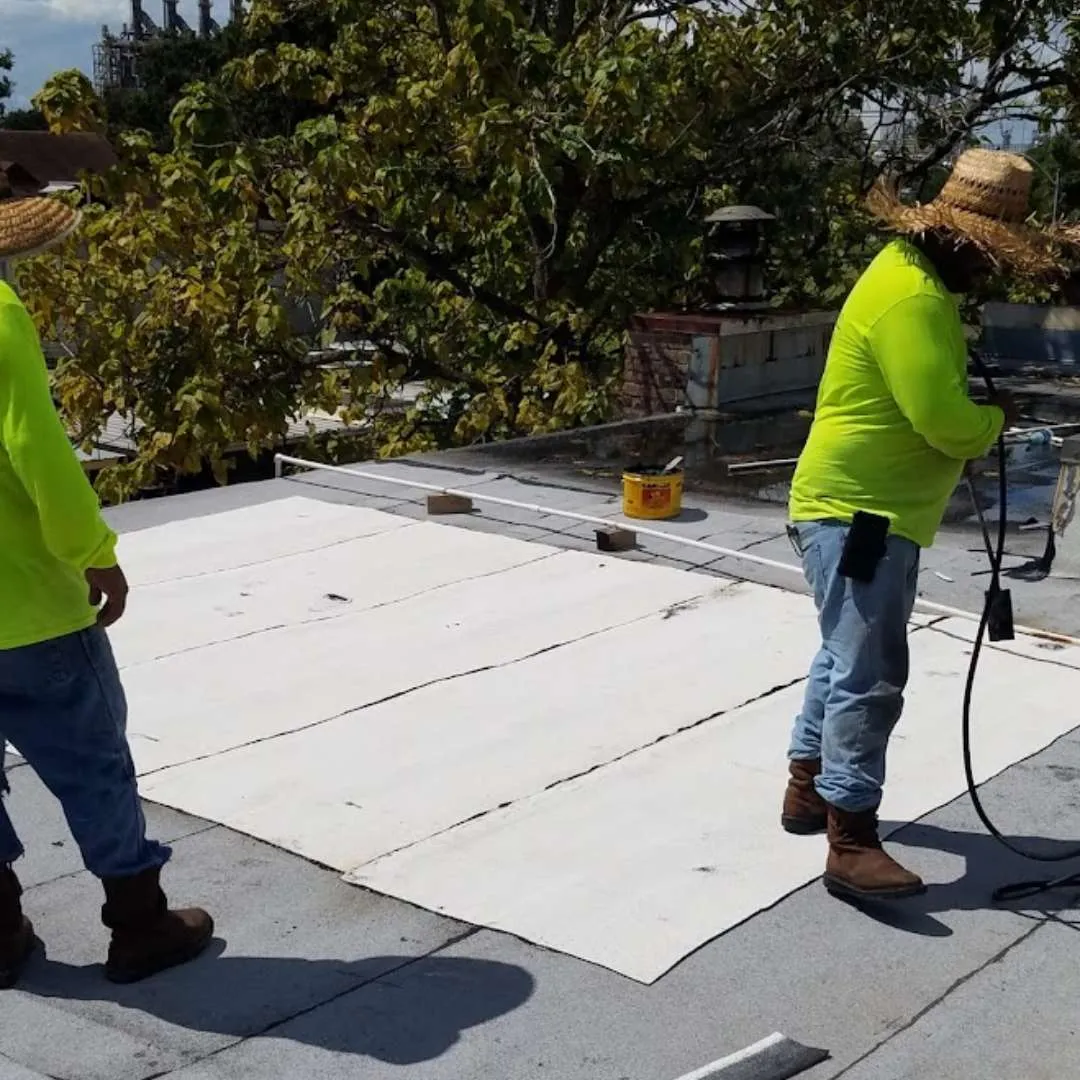
Most Houston commercial systems use two plies — a base sheet and a cap sheet — though buildings with a history of poor drainage or added wind-uplift requirements may need a third interply sheet for redundancy.
Can modified bitumen be installed over an existing roof, or does it require tear-off?
A re-cover is possible if the existing membrane and insulation are dry and structurally sound. If moisture is found in the insulation during inspection, a full tear-off to the deck is required to avoid trapping wet insulation under new material.
Is torch-applied modified bitumen safe on an occupied building?
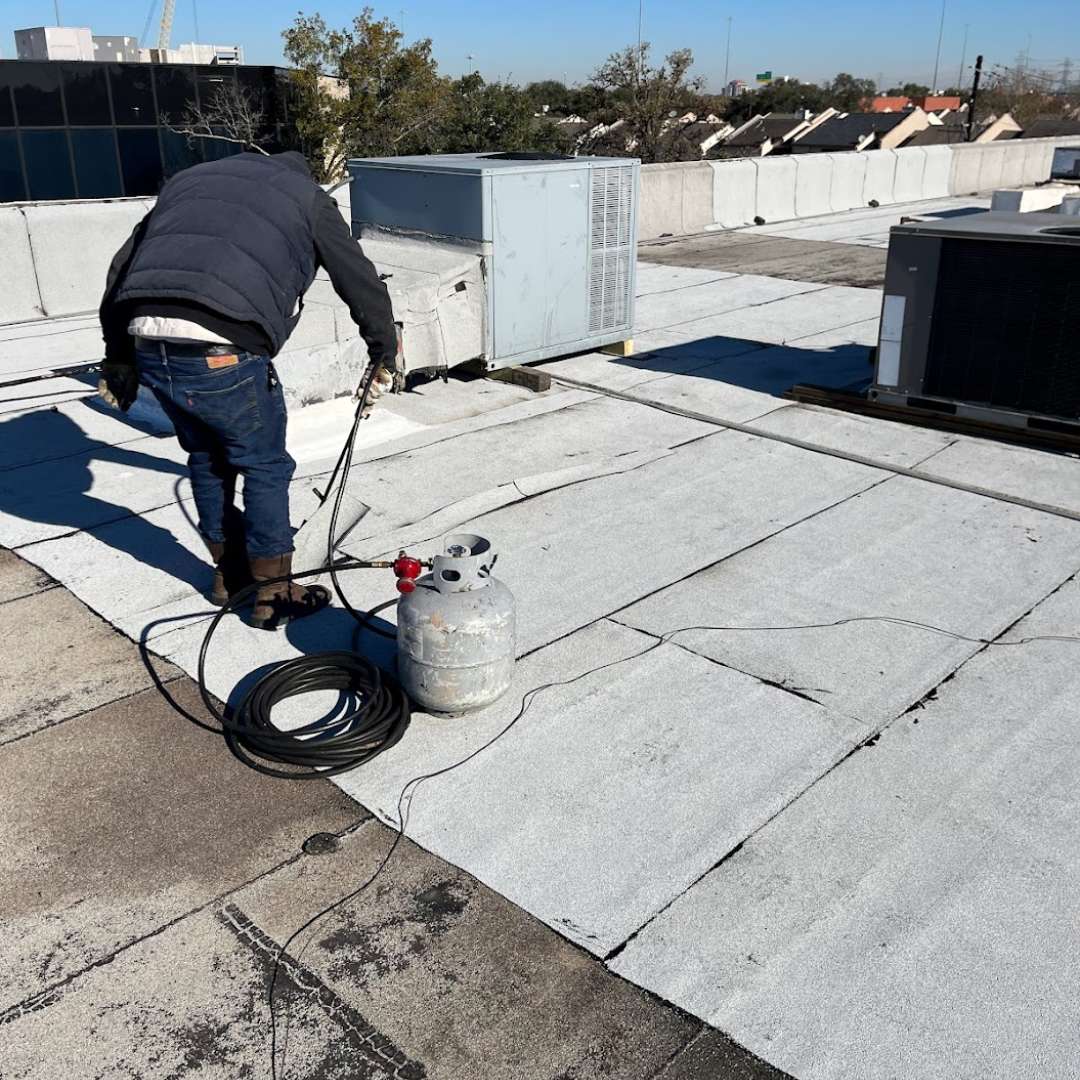
Torch application uses an open flame, so we often switch to cold-adhesive or self-adhered systems on occupied buildings or near flammable insulation, where flame exposure is a fire-code concern.
How do I know if my flat roof has a ponding water problem?
Look for standing water more than 48 hours after rain, dark staining or algae growth in low spots, or a spongy feel underfoot. Houston’s flat commercial roofs are especially prone to this as tapered insulation compresses over 10-15 years.
What causes blisters or bubbles in a modified bitumen membrane?
Blisters form when trapped moisture or air between plies expands under Houston’s summer heat, pushing the membrane up into a bubble. Left alone, foot traffic or thermal cycling can rupture the blister and expose the base sheet.
Will hail damage a modified bitumen roof?
Hail can bruise or fracture the granule-surfaced cap sheet without an obvious leak showing up right away, which is why post-storm inspections matter for Houston commercial properties.
How long does a commercial modified bitumen replacement take?
Timeline depends on square footage, tear-off scope, and weather windows, since both torch and adhesive application require dry conditions. Smaller sections can finish in a few days; larger roofs may take one to two weeks.
Does Achilles Roofing offer financing for commercial modified bitumen projects?
Yes, GreenSky financing is available with payments as low as $199 per month, subject to approval, plus a $500 Visa gift card referral program and a $150 discount off replacements for senior, military, veteran, or disabled property owners.
What warranty comes with a modified bitumen roof replacement?
Achilles Roofing backs commercial modified bitumen installations with a 5-year workmanship warranty, separate from any manufacturer material warranty on the membrane itself.
How much does commercial modified bitumen roofing cost in Houston?
Commercial modified bitumen replacement starts at $20,000 for smaller low-slope buildings, with total cost driven by square footage, tear-off requirements, deck repairs, and whether tapered insulation is added for drainage.
Can modified bitumen roofing be repaired instead of fully replaced?
Localized seam failures, isolated blisters, or flashing leaks can often be repaired starting at $300 rather than requiring full replacement, provided the underlying insulation hasn’t been compromised by long-term moisture.
Is commercial peel and stick roofing a type of modified bitumen?
Yes. It is typically an SBS modified bitumen membrane with a factory-applied adhesive backing. Instead of torch-welding or hot mopping, installers remove a release film and roll the membrane into place to create a fully bonded waterproofing layer.
Does peel and stick roofing require an open flame to install?
No. The membrane bonds through pressure-sensitive adhesive. This eliminates fire risk during installation and allows work near rooftop HVAC units, gas lines, and occupied tenant spaces where a torch-down application isn’t safe or permitted.