
















What gauge of steel is used for corrugated metal roofing in Houston?
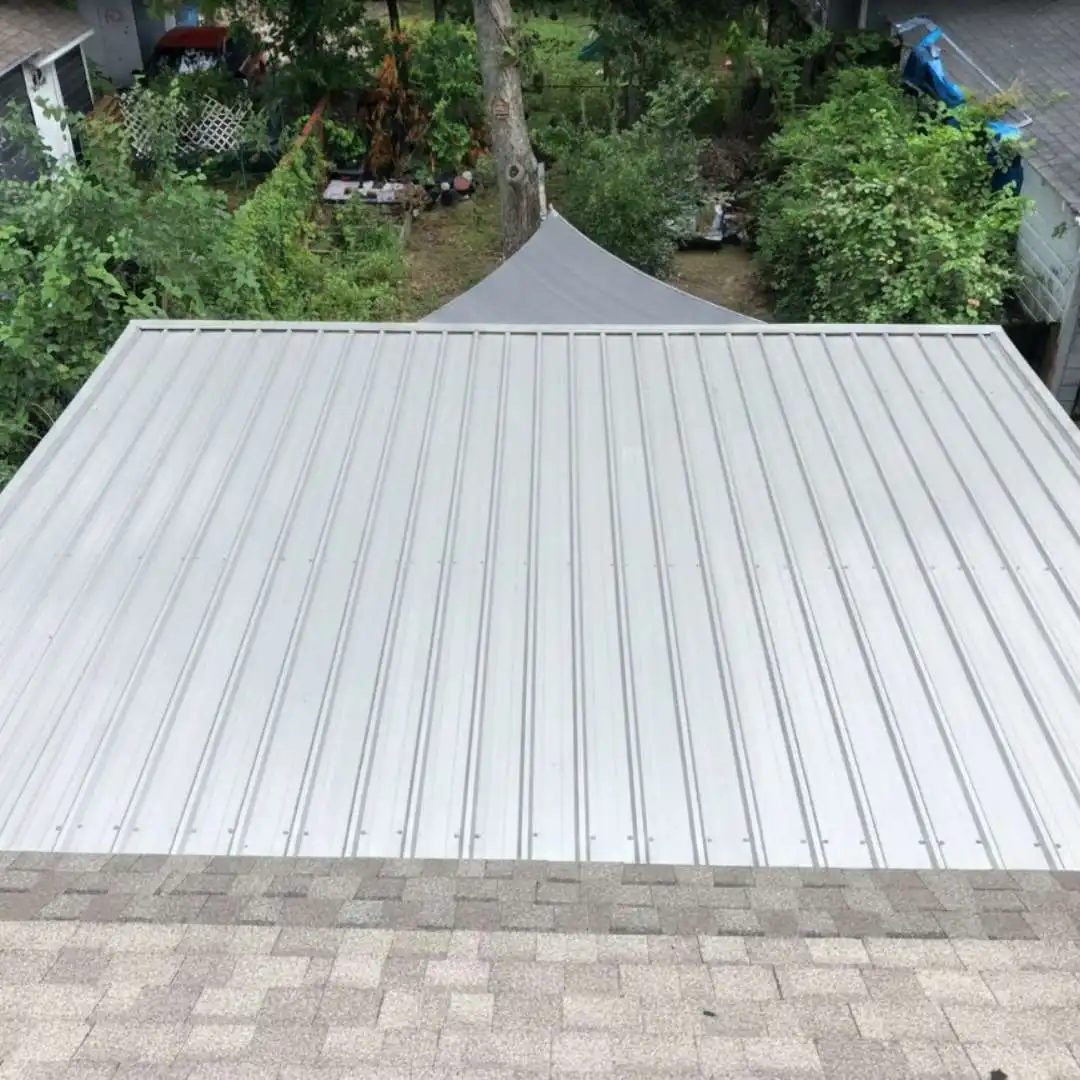
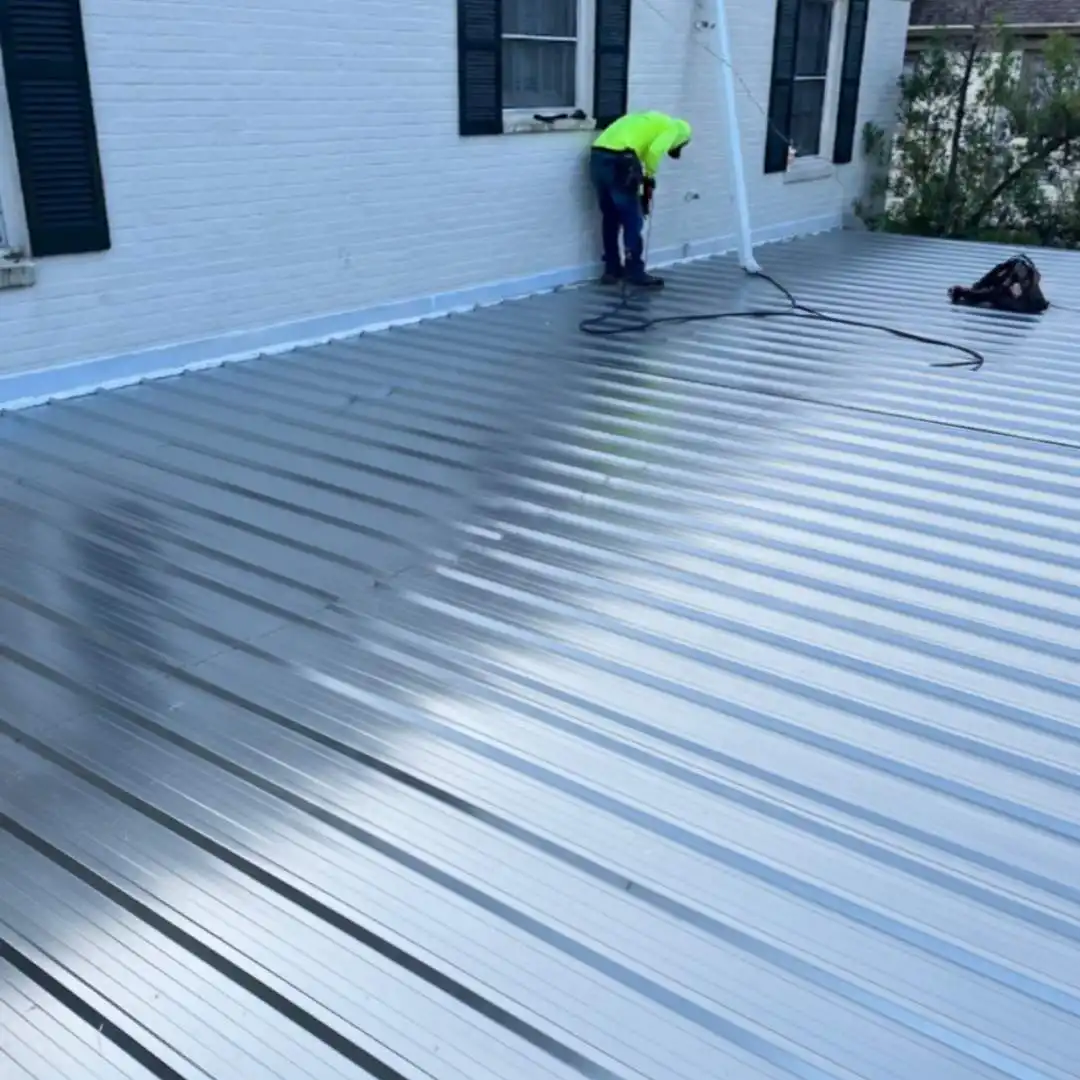
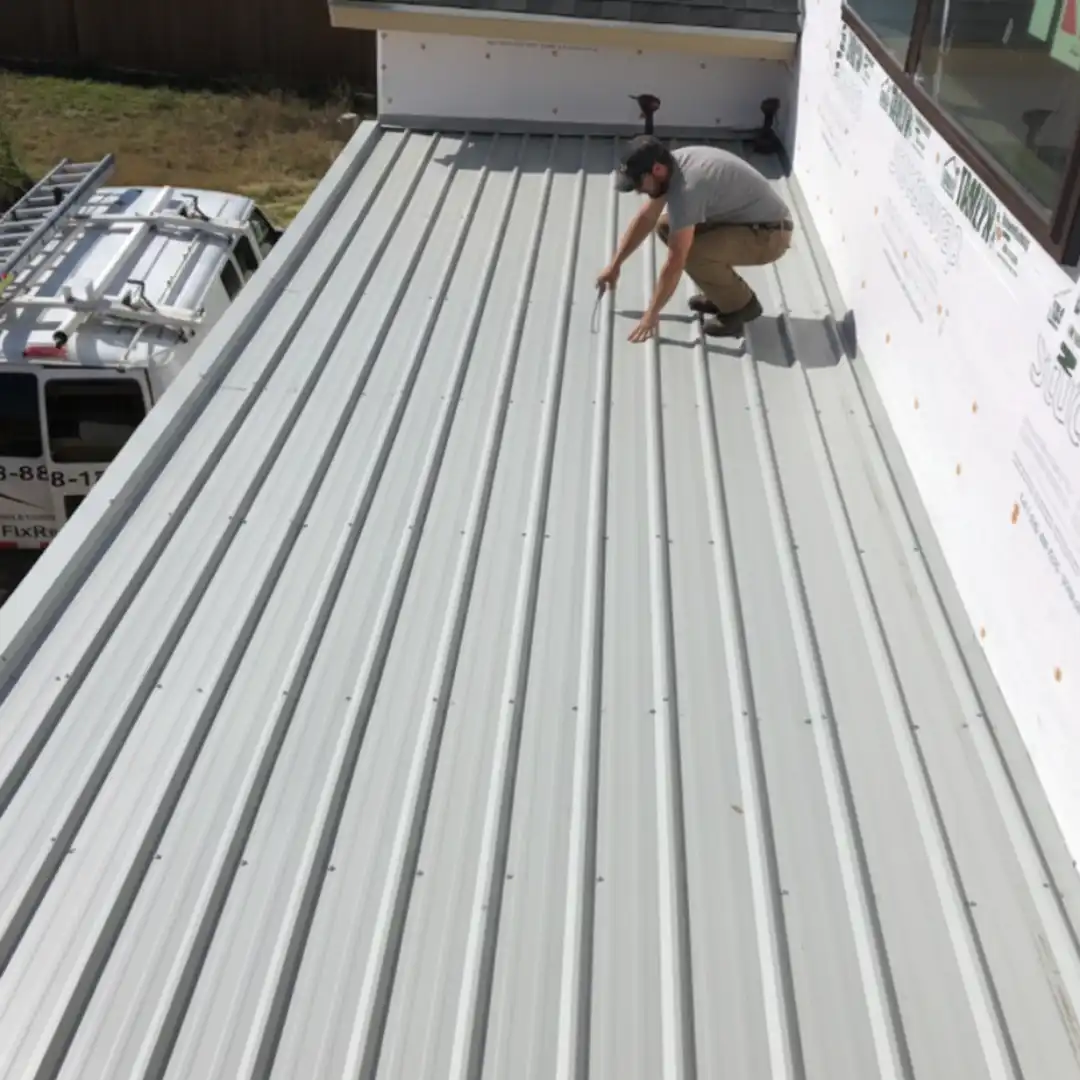
Achilles installs 26-gauge Galvalume corrugated panels on most residential and outbuilding projects, moving to 24-gauge for structures needing a higher wind-uplift rating. Thicker gauge resists oil-canning better under Houston’s summer heat cycling.
How long do corrugated metal roofs last in Houston’s climate?
A properly fastened 26-gauge Galvalume corrugated roof typically lasts 30-40 years in Houston, though exposed fasteners and sealant at penetrations need inspection well before the panels themselves wear out. Coastal humidity is harder on fasteners than on the steel.
Does corrugated metal roofing rust in humid, coastal-influenced air?
The Galvalume coating resists rust well, but field-cut panel edges expose bare steel. Houston’s humidity accelerates corrosion at unsealed cuts and around fastener heads, which is why edge sealing and washer condition matter more here than in drier climates.
Can corrugated metal panels handle Houston’s hail storms?
26-gauge steel resists denting from small to moderate hail far better than asphalt shingles, though large hail can leave cosmetic dimpling. Denting rarely causes leaks unless it deforms a fastener or seam. See our hail damage roof repair page for inspection guidance.
How is corrugated metal roofing different from standing seam?
Corrugated panels use exposed screws driven through the rib, while standing seam uses concealed clips with no roof-surface penetrations. Corrugated costs less installed but requires periodic fastener maintenance that standing seam doesn’t need.
Do exposed fasteners on corrugated panels need maintenance?
Yes. Neoprene washers under the screw heads degrade under Houston’s UV exposure and heat, typically needing inspection or replacement every 5-7 years. A maintenance plan catches backed-out fasteners before they become leaks.
Is corrugated metal roofing allowed under Harris County building codes?
Corrugated metal roofing is permitted in Harris County when the panel system meets the wind-uplift and fastening requirements in the adopted International Building Code. We pull permits and fasten to the spacing your specific structure requires.
How noisy is a corrugated metal roof during Houston rainstorms?
Bare corrugated decking over open framing is noticeably loud in heavy rain. Installed over solid decking with synthetic underlayment — our standard approach — noise drops close to that of an asphalt shingle roof.
Can corrugated metal roofing be installed over an existing roof?
In most cases yes, over a single layer of asphalt shingles in sound condition, using furring strips to create an air gap. We inspect the existing deck first; a roof inspection determines whether an overlay or full metal roof replacement is the right call.
What causes oil-canning on corrugated metal panels?
Oil-canning is the wavy, rippled look that appears as steel expands and contracts with temperature swings. It’s a cosmetic effect of the manufacturing process, not a structural defect, and is more visible on wider flat runs than on tightly ribbed corrugated profiles.
How does corrugated metal roofing affect cooling costs in Houston summers?
Galvalume’s reflective surface lowers attic heat gain compared to dark asphalt shingles. Reflective roofing is one of the strategies the ENERGY STAR program tracks for reducing residential cooling loads in hot-humid climates like Houston’s.
What wind rating do corrugated metal roofs need for hurricane season?
Fastening pattern and panel gauge are engineered to the wind-uplift rating required for the structure’s exposure category, following National Roofing Contractors Association fastening guidance. We check current storm outlooks against NOAA data before scheduling exterior work during hurricane season.