

















How long does a sheet metal roof last on a Houston home?
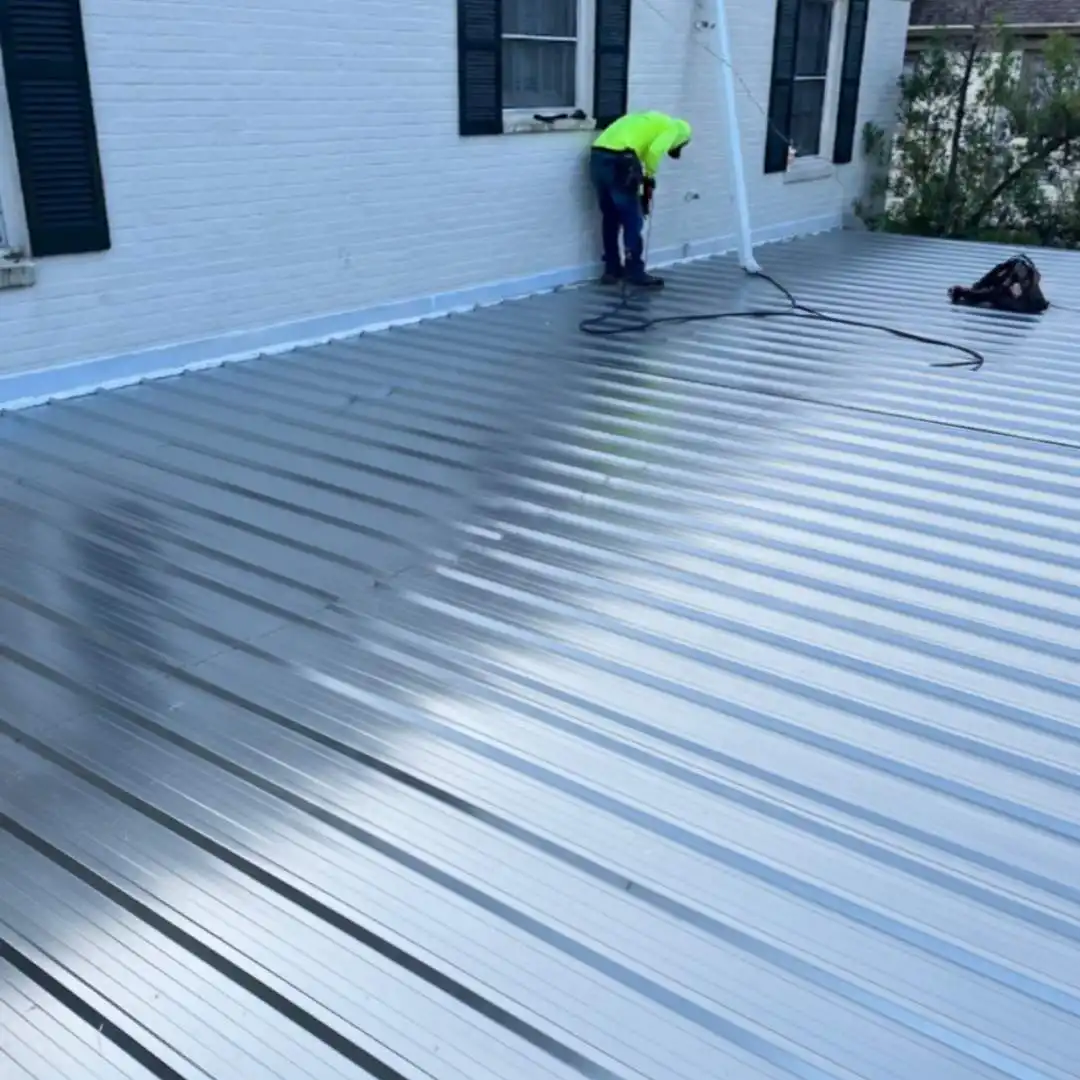
A correctly detailed 24-gauge sheet metal roofing installation commonly runs 40 to 60 years in Houston, with the finish fading before the substrate fails. What shortens that span is almost never the panel: it is unsealed cut edges, exposed fasteners with aging washers, and flashing at chimneys and walls. Those details get inspected, not replaced wholesale.
What gauge sheet metal is right for a Houston roof?
We install 24-gauge as the residential standard and 26-gauge on secondary structures such as porches and detached garages. The 29-gauge panels sold at big-box outlets oil-can visibly across long Houston roof planes and dent from routine foot traffic. Heavier steel holds its plane and resists the flex that loosens fasteners over time.
Does sheet metal roofing make a house hotter in Houston summers?
The opposite, when the finish is chosen properly. Bare or dark metal absorbs heat, but reflective factory coatings send most solar energy back before it reaches the deck. The EPA documents substantially lower surface temperatures on reflective roofs. Attic ventilation and insulation still govern the indoor result.
Will sheet metal roofing rust in Houston humidity?
Galvalume-coated steel resists corrosion in humid air for decades; rust shows up at vulnerable points instead. Field-cut edges, drilled fastener holes, and dissimilar metal contact are where it starts. We seal cut edges, keep copper and aluminum separated from steel, and clear valleys where wet leaf debris holds moisture against the panel.
How loud is a sheet metal roof during a Houston thunderstorm?
Far quieter than the tin-shed comparison suggests. Panels over solid decking, synthetic underlayment, and an insulated attic register close to a shingle roof from inside the house. Noise complaints trace back to panels fastened to open purlins with no decking beneath — a barn assembly, not a residential one.
What roof pitch does sheet metal roofing need?
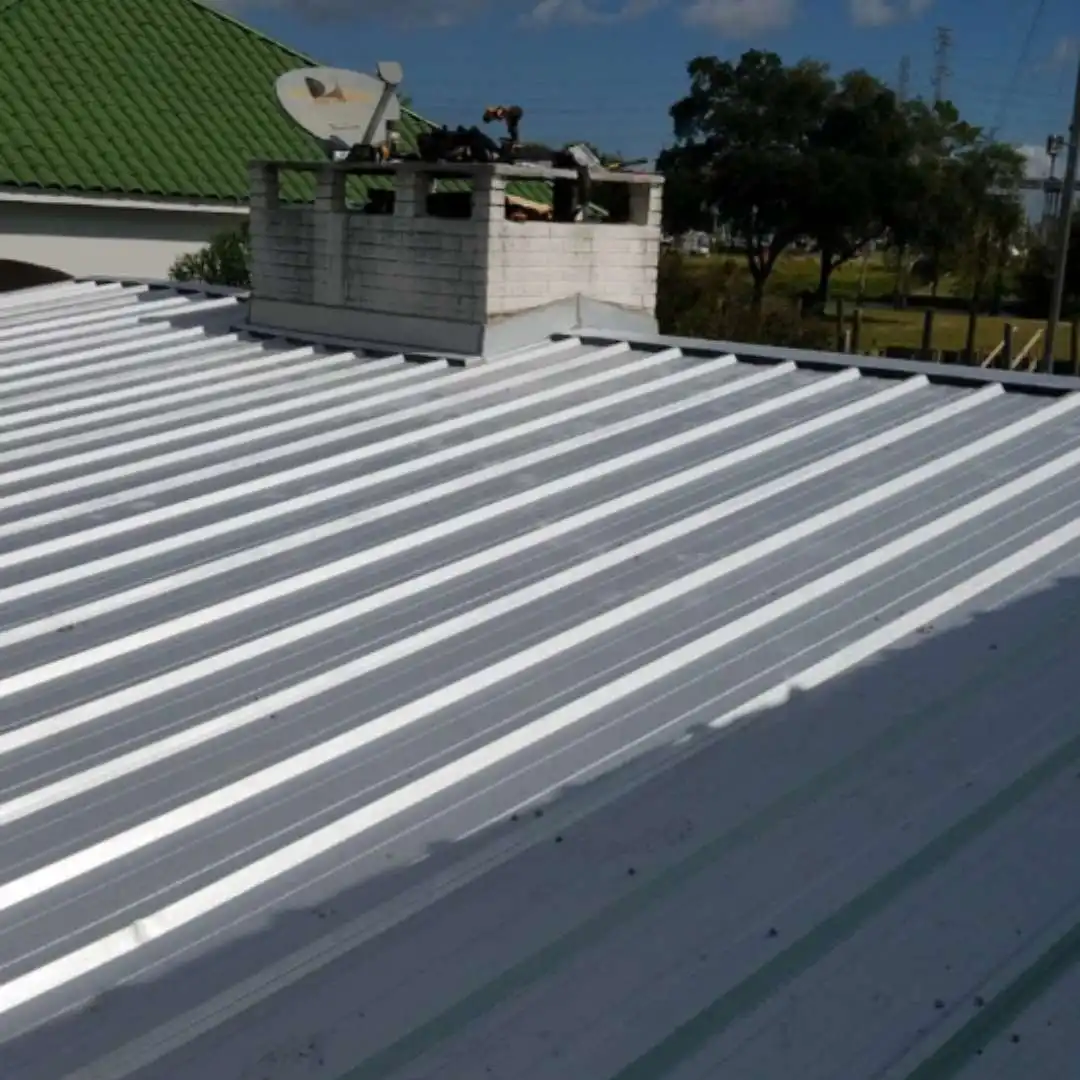
Exposed-fastener profiles like R-panel and corrugated metal generally want 3:12 or steeper. Mechanically seamed standing seam can go considerably lower because the watertight seal lives in the seam rather than under a lap. Low-slope Houston sections often route to a membrane system instead.
Do metal roofs attract lightning?
No. Metal does not increase strike probability; it is neither taller nor more charged than the structure it covers. Because metal is conductive and non-combustible, it disperses energy rather than igniting, which is why it is generally regarded as a favorable roof covering in a strike. Height, terrain, and nearby trees drive strike risk.
Can hail dent sheet metal roofing?
Large hail can cosmetically dent panels, especially lighter gauges over open framing. Function usually survives — a dented panel still sheds water, while a bruised shingle loses granules and begins failing. If a spring storm hits your roof, our hail damage assessment separates cosmetic marks from structural compromise.
How does a metal roof affect homeowners insurance in Houston?
Carriers differ, but impact-rated and wind-rated assemblies often qualify for premium credits, and some policies apply cosmetic-damage exclusions to metal. Request the specific product ratings from us and send them to your agent before signing. We provide documentation packages for insurance review at no charge.
What maintenance does sheet metal roofing need in Houston?
Budget one inspection a year, ideally before hurricane season. We check fastener washers on exposed systems, sealant at penetrations, seam integrity, and debris in valleys behind chimneys. Trimming limbs that scrape panels matters too — abrasion wears finish faster than sun does. Gutters get cleared during the same visit; see gutter replacement.
How long does a sheet metal roofing installation take?
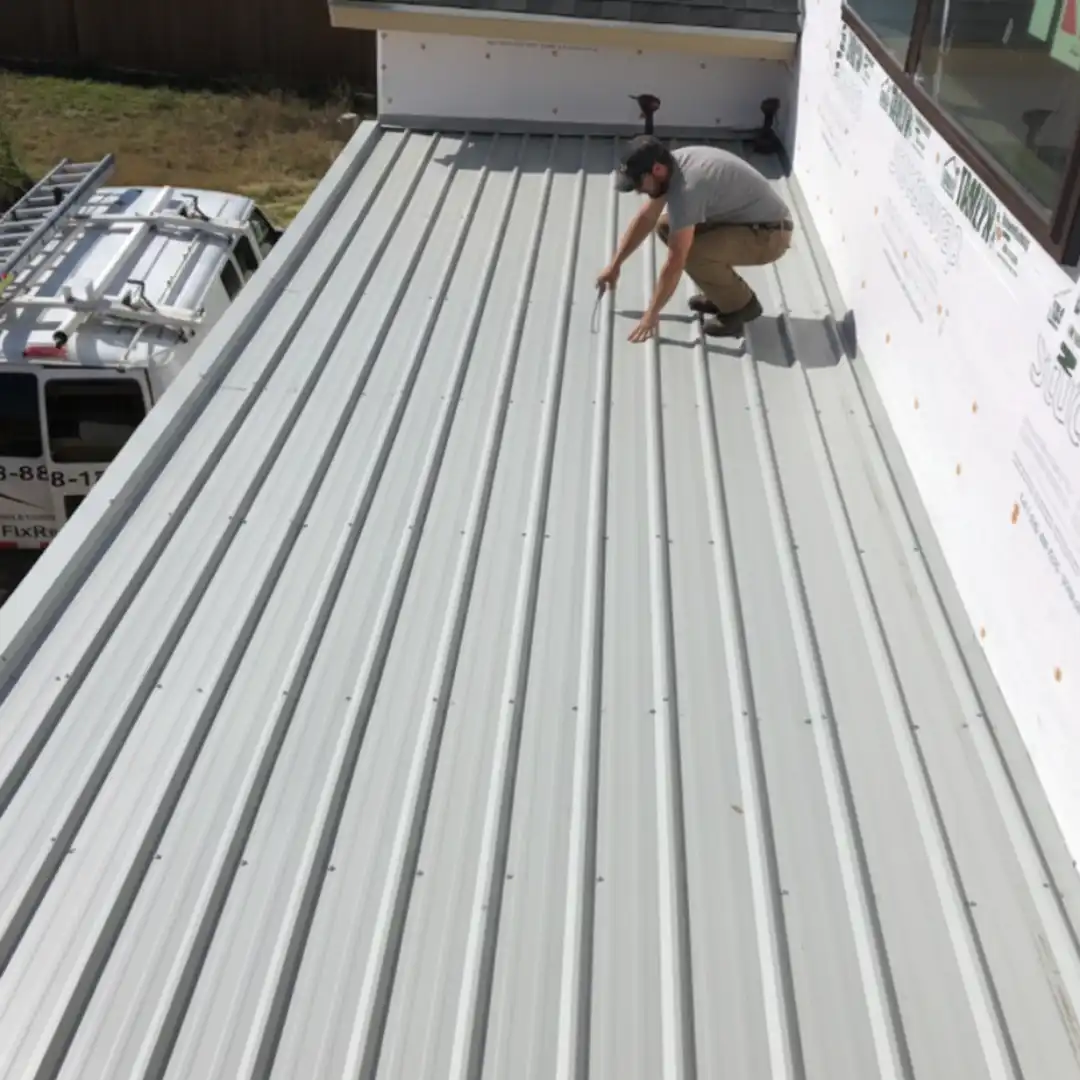
Most single-family Houston homes run three to six working days once material lands: tear-off and deck repair on day one, underlayment and panel runs mid-project, trim and flashing last. Summer storms and complex hip-and-valley layouts extend it. Panels are formed to measured lengths, so accurate field measurement precedes the order.
Which panel profile suits a Houston house best?
Concealed-fastener standing seam is the durability choice for a primary residence, since nothing penetrates the water plane. Exposed-fastener R-panel costs less and suits outbuildings, patio structures, and workshops. Aluminum and copper answer specific corrosion and architectural needs. Broader options sit on our metal roofing overview.