



















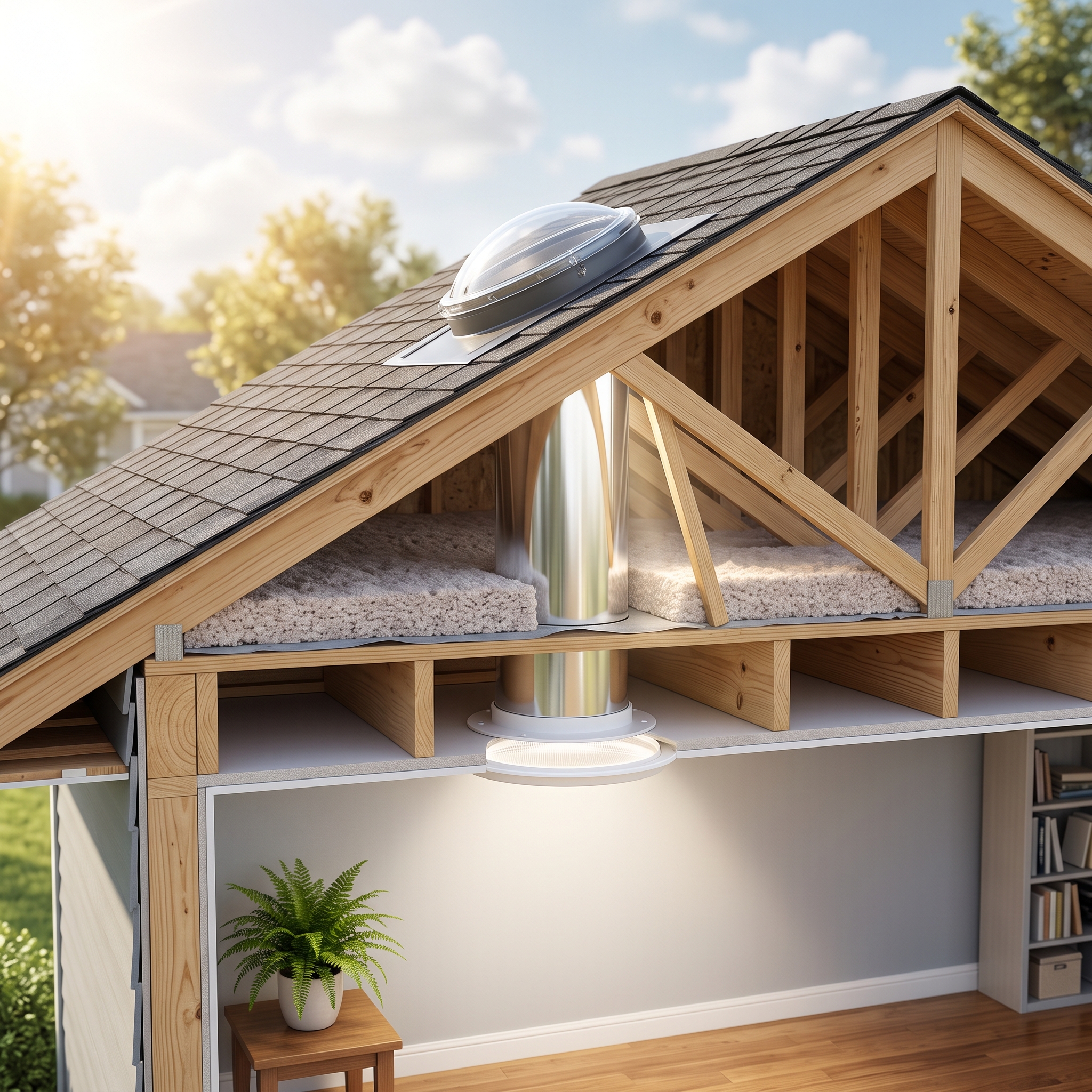
What is a sun tunnel and how is it different from a skylight?
A sun tunnel is a small roof-mounted dome connected to a reflective metal tube that channels daylight down through the attic into a ceiling diffuser. Unlike a skylight, a sun tunnel installation doesn’t require a framed shaft or large roof opening, which keeps both material cost and heat transfer lower.
How much daylight does a 10-inch sun tunnel provide in a typical room?
A 10-inch tunnel generally lights a room up to about 200 square feet on a clear Houston afternoon, comparable to a couple of 100-watt bulbs. A 14-inch tunnel is better suited to larger rooms or spaces with longer attic runs, which reduce light output over distance.
Will a sun tunnel make a room hotter during a Houston summer?
Properly installed sun tunnels use a sealed, insulated tube and a UV-filtering diffuser lens, so they transmit far less heat than an open skylight. Most homeowners notice added brightness without a measurable temperature increase in the room below.
Can a sun tunnel installation be done on any roof pitch?
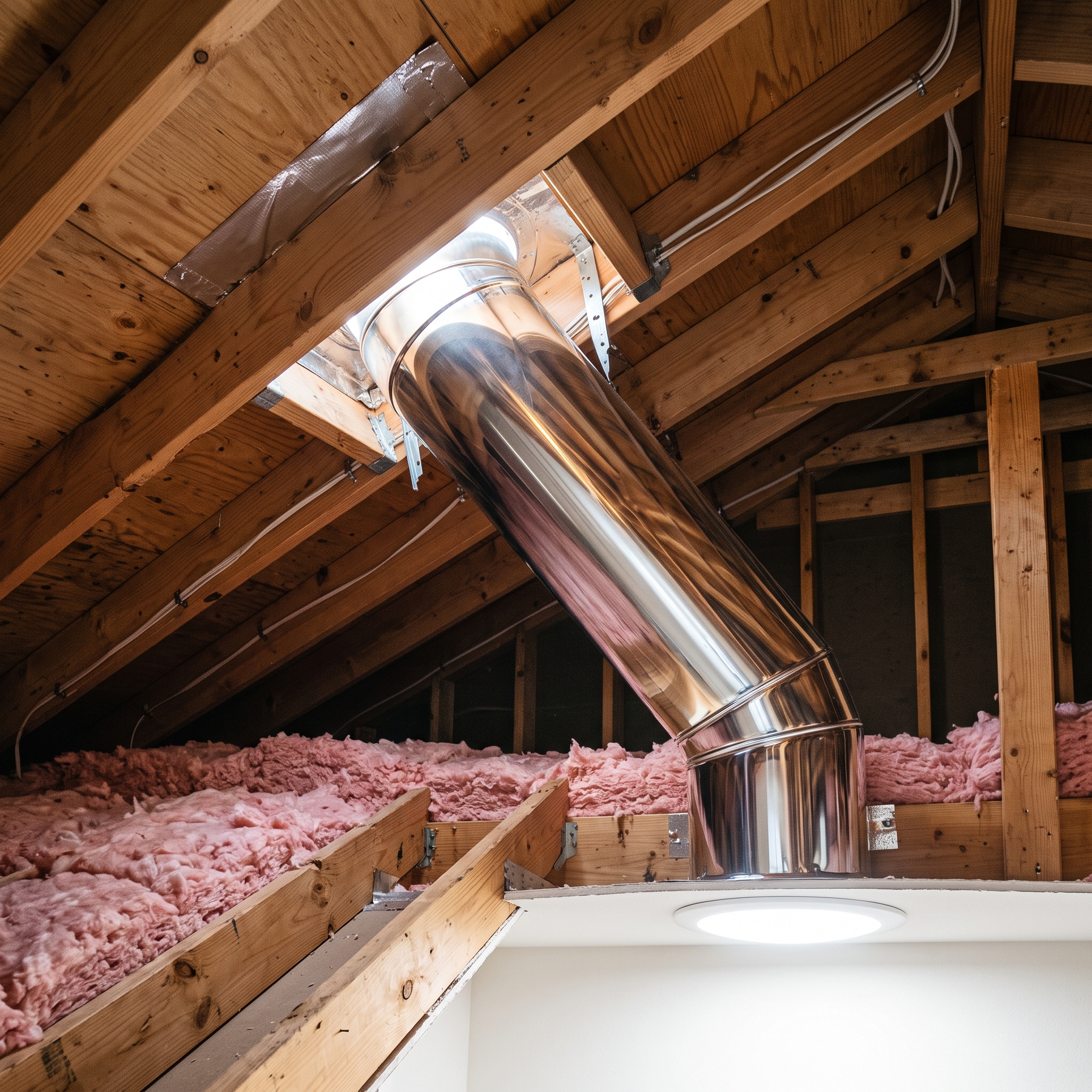
Most sun tunnel kits accommodate roof pitches from roughly 15 to 60 degrees using an adjustable flashing base. Steeper Houston roof designs or unusual truss layouts may need a longer flexible tube or an angled adapter, which our crew confirms during the attic inspection.
How long does a sun tunnel installation take?
A single sun tunnel on a single-story Houston home typically takes 2 to 4 hours from roof cutout to finished ceiling trim ring, assuming clear attic access and no rerouting needed around HVAC ducting or electrical runs.
Will a sun tunnel installation leak during Houston’s rainy season?
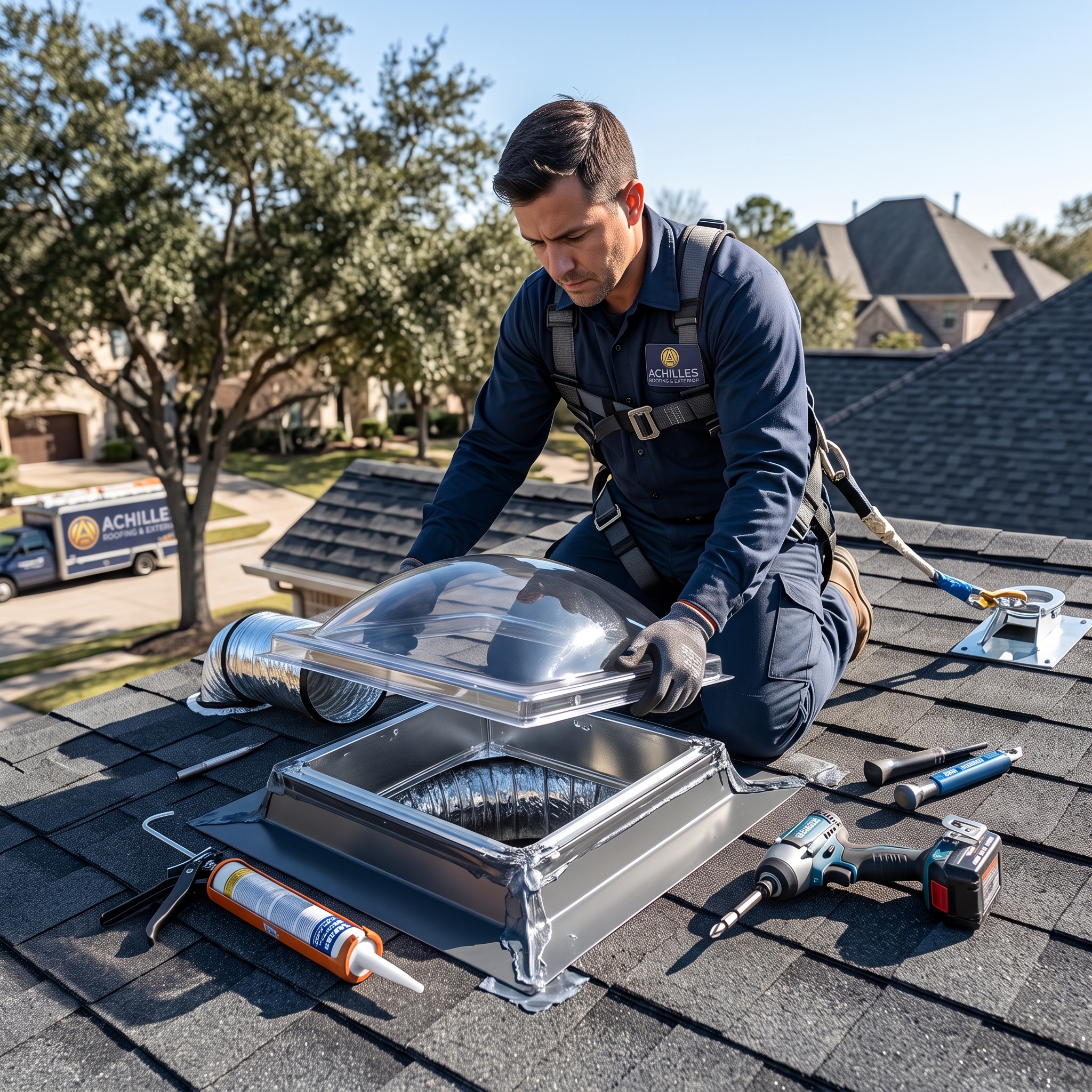
The roof penetration is sealed with a storm-collar flashing kit set beneath the surrounding shingle or tile course, not just caulked on top. We water-test every installation before considering the job finished, which is the same standard we hold for any roof penetration.
Do sun tunnels still provide light on cloudy or overcast days?
Yes, though output is reduced. The reflective tube captures ambient diffused daylight even without direct sun, so a room still gets noticeably brighter than with no daylighting source, just less intensely than on a clear day.
Can a sun tunnel be added to a bathroom that has no existing vent fan?
Some sun tunnel kits include an integrated exhaust fan adapter that shares the same roof penetration, which can address a windowless bathroom’s lighting and ventilation needs in one roof cutout instead of two separate ones.
How does Houston’s humidity affect sun tunnel flashing and seals over time?
High ambient humidity accelerates the breakdown of low-grade sealants, which is why we use flashing kits and sealants rated for sustained moisture exposure rather than standard caulk. Annual visual inspection of the flashing collar is still worth doing after major storms.
Are sun tunnels rated for high-wind conditions near the Gulf Coast?
The domes and flashing kits we install carry wind-uplift and impact ratings suited to Gulf Coast wind exposure. Homeowners in areas with additional wind-borne debris requirements should confirm their specific roofing code zone with their local permitting office before installation.
Can a dimmer, nightlight, or solar-powered vent kit be added during a sun tunnel installation?
Many manufacturers offer add-on kits including electric light kits for nighttime use, dimming diffusers, and solar-powered attic ventilation fans that share the same tube housing. These are typically selected at the time of installation rather than retrofitted later.
What roofing materials can a sun tunnel flashing kit be matched to?
Flashing kits are available for asphalt composition shingles, concrete and clay tile, and standing-seam or corrugated metal roofing. The flashing base and step design differ by roof type, so it should be matched to your specific roofing material rather than used interchangeably.