

















How long does a commercial flat roof last in Houston’s climate?
For commercial flat roofing, TPO and PVC membranes typically last 20–25 years, while EPDM systems often reach 20–30 years, though Houston’s UV intensity and humidity tend to shorten these ranges compared to drier climates. Regular inspections and prompt seam repairs are the biggest factors in reaching the upper end of that lifespan.
What causes ponding water on commercial flat roofing?
Ponding usually results from inadequate roof slope, clogged or undersized drains, or structural settling over time. In Houston, heavy rainfall events make drainage design especially important; ponding left unaddressed for more than 48 hours accelerates membrane degradation.
Is TPO or EPDM better for a Houston commercial building?
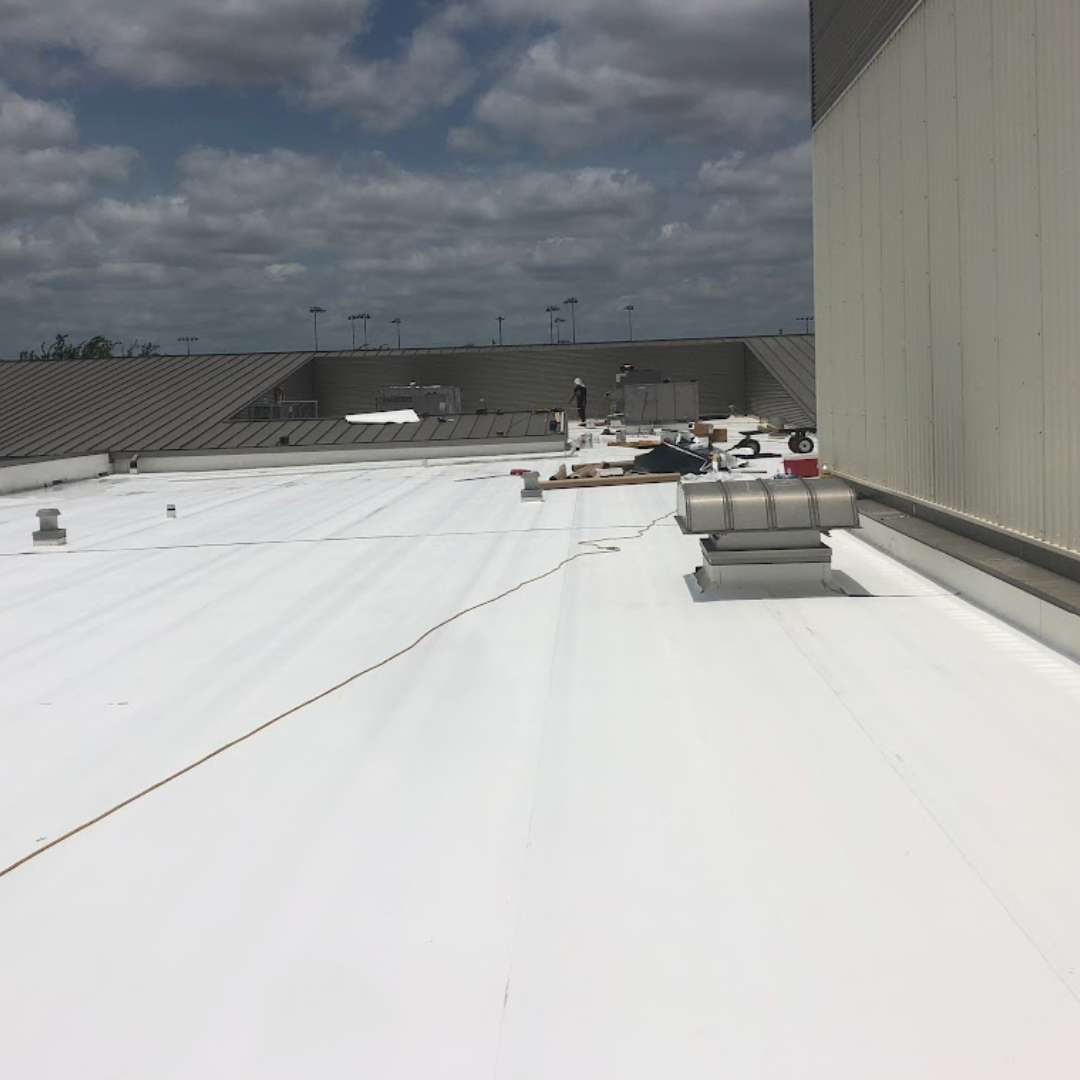
TPO’s reflective white surface helps reduce rooftop heat gain during Houston summers, which can lower cooling costs, while EPDM tends to perform well on roofs with existing ponding issues or irregular drainage. The right choice depends on your building’s slope, HVAC load, and roofing history.
Do I need a permit to replace a commercial flat roof in Houston?
Most commercial roof replacements in Houston require a permit through the City of Houston Permitting Center, particularly when work involves structural decking or exceeds a defined percentage of the existing roof area. We handle permit applications and coordinate required inspections as part of the project.
How long does a commercial flat roofing installation take?
We recommend two inspections per year for Houston commercial properties — once before hurricane season in late spring and once in early fall — plus an additional check after any major hail or wind event.
Can a flat roof be repaired instead of fully replaced?
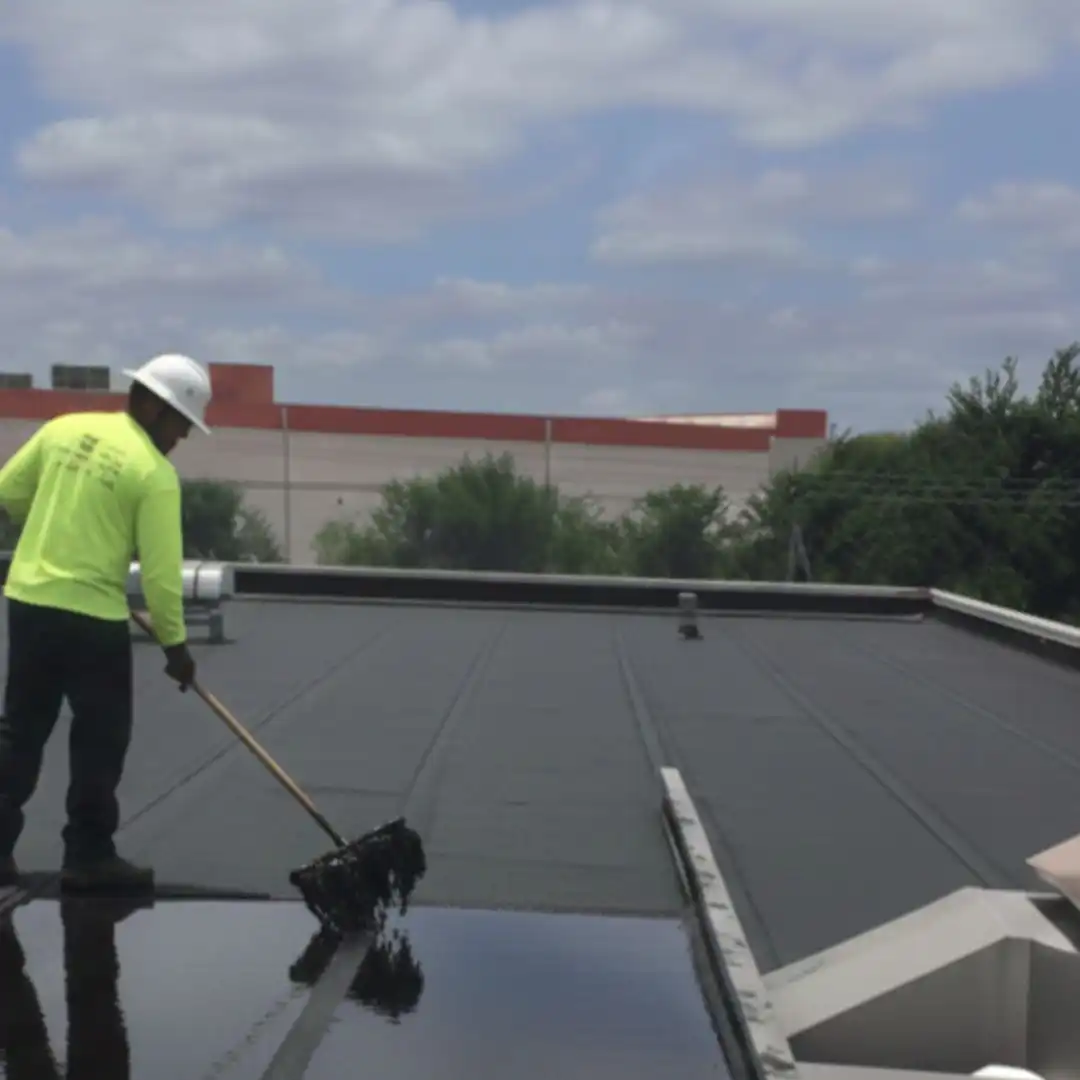
Localized membrane damage, seam failures, and isolated punctures can often be repaired without a full replacement, provided the underlying insulation and decking are still sound. We assess the roof’s overall condition before recommending repair versus replacement.
What roofing materials hold up best against Houston hailstorms?
Reinforced TPO and PVC membranes with impact-resistant backing generally withstand hail better than unreinforced EPDM. Membrane thickness (measured in mils) also affects hail resistance; thicker membranes typically show fewer punctures after storm events.
Will a new commercial roof reduce my energy costs?
A reflective TPO or PVC membrane can lower rooftop surface temperatures significantly compared to older, darker roofing materials, which may reduce HVAC run time during Houston’s extended cooling season. Actual savings depend on your building’s insulation, HVAC efficiency, and roof size.
How long does a commercial flat roof installation take?
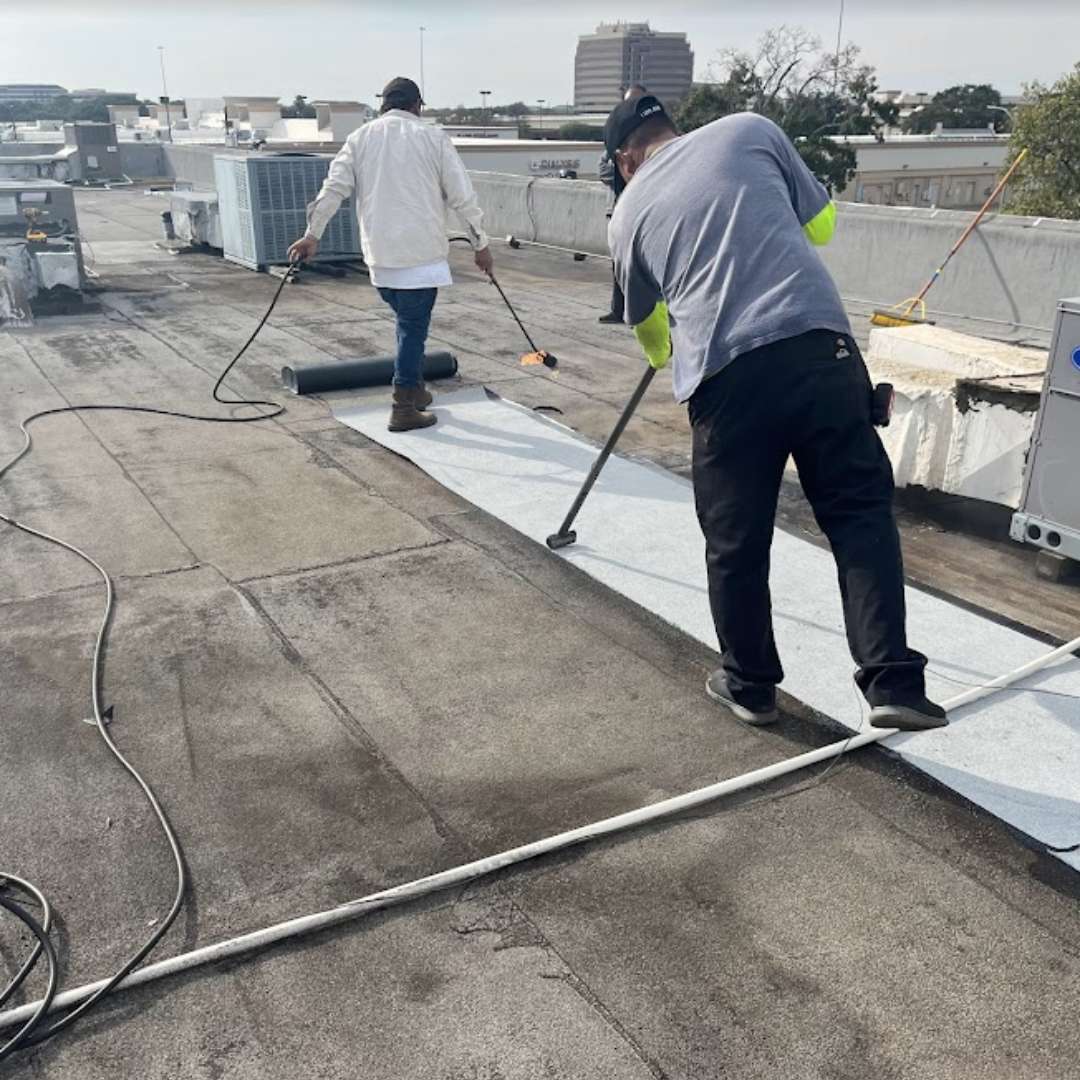
Most Houston commercial flat roof installations take between one and three weeks, depending on square footage, weather delays, and whether the existing roof requires tear-off versus a recover system.
What should I do immediately after storm damage to a flat roof?
Document visible damage with photos, avoid walking on the roof if structural damage is suspected, and request emergency tarping to prevent water intrusion. We provide same-day tarping and prepare documentation for insurance claims on Houston commercial properties.
Does insurance typically cover commercial flat roofing repairs in Houston?
Storm and hail-related damage is commonly covered under commercial property policies, though coverage depends on your specific policy and the roof’s documented condition prior to the event. We provide inspection reports and photo documentation that adjusters typically request.
What warranty comes with a new commercial flat roof?
Workmanship warranties on our commercial flat roof installations run up to 5 years, in addition to manufacturer material warranties on the TPO, EPDM, or PVC membrane itself, which vary by product line.
What thickness of TPO flat roofing membrane is recommended for Houston commercial buildings?
Most Houston commercial buildings perform best with 60-mil or 80-mil TPO membrane. The added thickness resists punctures from foot traffic and rooftop equipment while holding up better to the thermal cycling that comes with Houston’s swing between summer heat and sudden storm cooling.
Can TPO flat roofing be installed over an existing roof?
In many cases, TPO can be installed as a recover system over an existing low-slope roof if the substrate is dry and structurally sound, avoiding tear-off costs. A roof inspection is needed first to confirm there’s no trapped moisture or deck damage underneath the current membrane.
What wind uplift rating do Houston commercial roofs need?
Houston’s building code requirements are tied to the region’s hurricane and high-wind exposure, and most commercial flat systems here are installed to meet International Code Council (ICC) and FM Approvals wind uplift ratings appropriate for coastal Texas wind zones. Fastening pattern and membrane attachment method both affect the final rating.
Does TPO roofing require special maintenance in humid climates?
TPO doesn’t require special humidity treatment, but Houston’s Gulf humidity does make debris buildup around drains and HVAC curbs more likely to trap moisture. Twice-yearly inspections that clear drains and check flashing seals prevent the moisture intrusion that humid climates make more common.