QUICK REVIEW
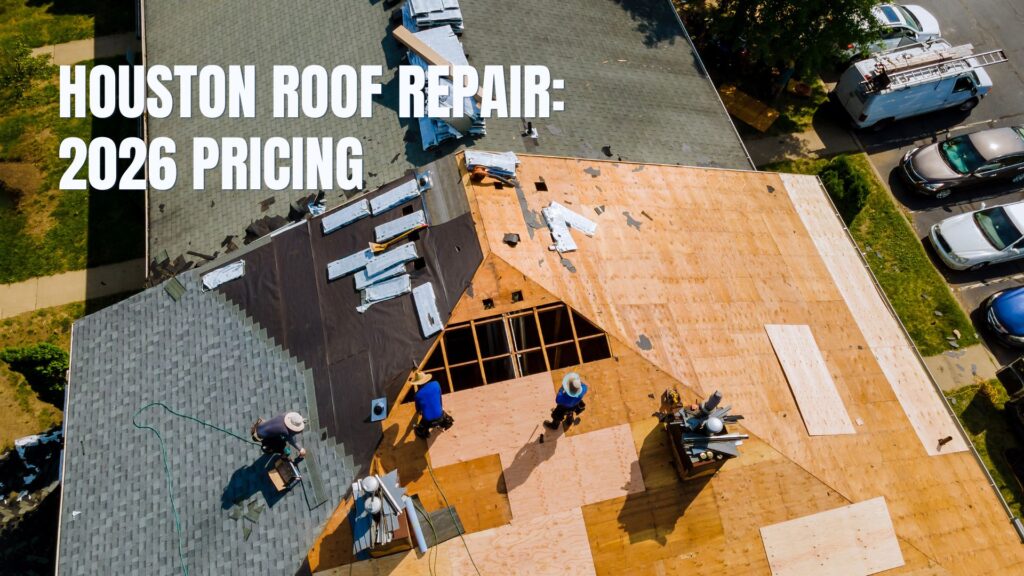
Average Pricing: In 2026, the average roof repair cost for Houston homeowners is $1,002, with typical projects ranging from $485 to $1,535.
The Houston Factor: Local costs are driven by extreme UV heat, high hail frequency, and nearly 50 inches of annual rainfall, which accelerate hidden wood rot.
Major vs. Minor: While minor flashing fixes start around $200, major structural repairs involving decking or framing can climb to $8,500+.
The “Silent” Risk: Delaying repairs in the Gulf Coast climate is costly; a small leak can escalate into a $15,000 structural disaster within a year due to persistent humidity.
Hiring Smart: To ensure a fair roof repair cost, insist on itemized estimates, verify GAF certification, and avoid “storm chasers” who skip pre-job decking inspections.
What Does Roof Repair Cost in Houston in 2026?
Roof repair pricing in Houston is driven by three local realities that no national cost guide fully captures: near-50-inch annual rainfall that accelerates hidden water damage, intense UV heat loads that degrade shingles faster than in northern climates, and a post-storm contractor surge that inflates labor rates during hail seasons. Understanding what’s actually behind these numbers is the difference between a fair invoice and an overpriced one.
$1,002
Average roof repair cost for a Houston homeowner in 2026, with most projects falling between $485 and $1535 depending on the damage scope, square footage of roofing, and material type.
Source: Angi
Repair Cost Breakdown by Damage Type
| Type of Repair | Cost Range |
|---|---|
| Flashing repair | $200–$500 |
| Wind damage | $100–$1,000 |
| Roof leak | $360–$1,550 |
| Roof vent repair | $75–$250 |
| Skylight leak | $300–$800 |
Source: Angi
Why Houston Roofs Need Repair More Often Than the National Average
What makes Houston uniquely damaging isn’t any single weather event—it’s the compound effect. A roof is weakened by UV exposure in the summer, then hit by a hail event in spring, then subjected to weeks of sustained moisture through autumn. Each stressor compounds the last.
“In Houston, we find water infiltration in places the homeowner never expected, not just the obvious leak spot, but three feet laterally through wicking along the decking. This is what 49 inches of annual rain does over time.”
— Senior Inspector, Achilles Roofing & Exterior
#1
Texas ranked first nationally for hail events in 2023, with hail at least one inch in diameter striking an estimated 2 million Texas homes in a single year.Source: Cotality
The “Silent Damage” Problem Specific to Gulf Coast Roofs
The most expensive roof damage in Houston isn’t what you can see. It’s what forms quietly underneath. Three failure modes are endemic to the Gulf Coast climate:
- Wicking rot in the decking: Water enters through a small breach (improperly sealed nail, cracked flashing) and travels laterally under the shingles, rotting plywood or OSB over months before a visible ceiling stain appears.
- Flashing creep at penetrations: Thermal expansion and contraction through Houston’s temperature swings causes flashing around chimneys, pipe boots, and skylights to gradually separate, even when it was properly installed.
- Heat-driven shingle degradation: Attic temperatures in Houston can reach 140°F+ in summer. Without adequate ridge and soffit ventilation, this heat cooks shingles from the underside, accelerating granule loss and brittleness.
All three are identifiable during a thorough pre-inspection but are routinely missed by contractors who skip it in favor of a quick visual quote from the curb.
How to Evaluate a Roof Repair Estimate in Houston
What a Proper Estimate Must Include
- Written, itemized scope of work — Not roof repair, but specifically: which materials, which areas, how many squares or linear feet, and what techniques.
- Decking condition assessment — Has the contractor looked at or probed for soft spots? Is the decking line item pre-disclosed with a per-sheet allowance if replacement is needed?
- Permit line item — Houston repair permits typically run $67–$100 for smaller jobs. Omitting this doesn’t mean the work is permit-free; it means the cost is hidden elsewhere or the work is being done without one.
- Disposal / haul-away fee — This is a real cost. Ethical contractors list it. Unethical ones hide it or add it post-signature.
- Workmanship warranty in writing — Minimum 1 year for repairs; ideally 2–5 years. “We stand behind our work” is not a warranty.
- Timeline and crew details — Who specifically is doing the work? Is the job being subcontracted?
Pressure to sign the estimate within 24–48 hours of an initial quote, especially after a storm event, is a documented sales tactic used by storm-chasing contractors. The Texas Department of Licensing and Regulation (TDLR) requires contractors to provide a written contract before work begins. Insist on time to review it.
The Change Order Trap: Houston’s Most Common Roofing Complaint
The most frequent complaint Houston homeowners file against roofing contractors involves unexpected change orders—additional charges added after work begins, typically for “discovered” decking damage. This pattern is predictable and, in most cases, preventable.
$2,600–$9,000
The cost range for full roof deck replacement on a standard Houston home—a charge that routinely appears mid-project when contractors skip pre-job decking inspections.Source: Angi
The fix is structural: require a fixed-contract estimate supported by a pre-job inspection that physically assesses decking condition before you sign. If a contractor won’t inspect the decking before quoting, they’re either planning to charge you for it later or hoping to avoid the conversation entirely.
Houston Roof Repair vs. Full Replacement: How to Decide
This isn’t a rule contractors invented to sell more work. It’s straightforward financial math. A $2,500 repair on a roof that will need full replacement in three years is money poorly spent. Conversely, a $400 flashing repair on a 7-year-old roof that was properly installed is worth every dollar.
Decision Framework
| Scenario | Lean Toward | Reason |
|---|---|---|
| Roof under 10 years old, isolated damage | Repair | Strong remaining lifespan |
| Roof 10–15 years, localized leak | Repair (with inspection) | Inspect for wider wear first |
| Roof 15–20 years, multiple leaks | Likely replacement | Systemic failure beginning |
| Repair cost >30% of replacement value | Replacement | Poor repair ROI |
| Storm damage affecting >30% of surface | Replacement | Insurance typically covers full replacement |
| Hail damage (Class 4 IR shingles qualify) | Replacement | Insurance premium savings offset cost |
60%
Estimated resale value return on a roof replacement at point of home sale, per Zillow research. A documented warranty from a certified contractor likely exceeds this average.Source: Zillow
Manufacturer Certifications: What They Mean for Repair Quality
Most homeowners focus on material warranties—the coverage on the shingles themselves. But for repairs, workmanship coverage is more consequential. A repaired flashing joint that fails in two years due to poor technique isn’t a material failure; it’s a workmanship failure. Without a workmanship warranty in writing, you’re back to paying for the same fix.
The GAF Certification Hierarchy (Simplified)
- GAF Authorized: Entry level. Minimum requirements met. Standard manufacturer warranty access.
- GAF Certified™: Higher experience standard. Access to enhanced warranties on qualifying systems.
- GAF Master Elite®: Fewer than 2% of contractors nationally. Full access to GAF’s Golden Pledge® warranty—up to 25 years on workmanship, 50 years on materials. Requires ongoing training, insurance verification, and customer satisfaction review by GAF.
- GAF President’s Club: Sub-1% of contractors. Reserved for long-tenured Master Elite members with exceptional business metrics.
Before hiring any contractor for repairs, verify their GAF status independently at gaf.com—certifications can lapse, and some contractors misrepresent their tier.
<2%
The proportion of U.S. roofing contractors who hold GAF Master Elite® certification—the minimum tier required to offer Golden Pledge® warranty coverage on repairs and replacements.Source: GAF

Insurance Claims for Roof Repair in Houston: What Homeowners Get Wrong
Texas saw average homeowner’s insurance premiums increase by over 55% between 2019 and 2024, driven largely by hail claim frequency and rising material costs. This cost pressure has made insurers stricter about documentation, which in turn means the quality of your contractor’s damage assessment directly affects what your claim pays out.
What to Do Immediately After Storm Damage
- Document before anything is touched. Photograph every visible impact point—shingles, gutters, flashing, vents, HVAC units—from multiple angles, with a ruler for scale if possible.
- Do not sign a contractor’s Assignment of Benefits (AOB) form without understanding what rights you’re transferring. In Texas, AOB arrangements can limit your control over the claims process.
- Request a certified contractor inspection before the adjuster’s visit. A GAF Master Elite® contractor’s written assessment carries more weight in a supplement negotiation than an unsigned field note.
- Know your deductible structure. Texas wind and hail deductibles are often percentage-based (1–2% of dwelling value), not flat dollar amounts. On a $400,000 home, a 2% hail deductible means $8,000 out of pocket before insurance pays.
- File promptly. Texas has a 2-year statute of limitations on insurance claims from the date of loss. Waiting reduces your negotiating position.
55.4%
Rise in average Texas homeowner’s insurance premiums between 2019 and 2024, driven by increasing hail claim severity and soaring material and labor costs.Source: S&P Global via Texas2036
The True Cost of Delaying Roof Repairs in Houston
This isn’t a contractor’s sales argument. It’s moisture physics. When water penetrates a roofing system through a compromised flashing joint or cracked shingle, it doesn’t stay at the entry point. It follows the path of least resistance along the decking, into insulation, and eventually into framing members. Houston’s humidity means that wood exposed to this moisture never fully dries out between rain events, creating ideal conditions for mold and rot.
Cost Escalation Timeline: A Typical Houston Scenario
| Time Since First Leak | Typical Damage State | Repair Cost Estimate |
|---|---|---|
| 0–4 weeks | Isolated shingle or flashing failure | $300 – $700 |
| 1–3 months | Decking moisture saturation begins | $800 – $2,500 |
| 3–6 months | Soft decking, insulation saturation | $2,500 – $6,000 |
| 6–12 months | Structural framing involvement, mold likely | $6,000 – $15,000+ |
| 12+ months | Potential full replacement + remediation | $15,000+ |
How Achilles Roofing Approaches Repairs Differently
The craft-first model means fewer jobs run concurrently, which means a senior inspector is personally overseeing each repair rather than relying on a crew foreman’s judgment call on-site. For Houston homeowners, the practical result is a more accurate initial quote and fewer surprises at invoice time.
Standard Installation Practices at Achilles Roofing
- 6-nail fastening patterns in high-wind zones, increasing wind resistance approximately 20% versus standard 4-nail patterns
- Self-adhering (peel-and-stick) underlayment as a secondary water barrier for all penetration areas
- Ring-shank nails requiring approximately 60% more withdrawal force than smooth-shank alternatives
- Mechanically fastened and counter-flashed penetration work, not caulk-sealed
- Attic ventilation verification before any roofing work begins
These aren’t premium upgrades. They’re standard protocol on every Achilles project.
Get a Fixed-Price Repair Estimate—No Surprises
Achilles Roofing’s pre-job inspection identifies decking damage, flashing issues, and ventilation problems before a contract is signed. What you’re quoted is what you pay.
Schedule Your Fixed-Price Inspection.
Visit achillesroofinghouston.com
Or call (832) 346-8021 to get started.
Frequently Asked Questions
Sources & References:
- Angi. (2024, May 22). How much do roof repairs cost in Houston, TX? https://www.angi.com/articles/how-much-do-roof-repairs-cost/tx/houston
- Cotality. (2024, February 15). Texas hail 2023: Record insured losses and what they mean for 2024. https://www.cotality.com/insights/articles/texas-hail-2023-record-insured-losses
- GAF. (n.d.). Residential roofing warranties. https://www.gaf.com/en-us/resources/warranties/residential
- Texas 2036. (2024, February 13). Voter poll: Texans feel the pinch of rising insurance premiums. https://texas2036.org/posts/voter-poll-texans-feel-the-pinch-of-rising-insurance-premiums/
- Witters, C. (2024, February 15). What is the cost of roof sheathing? Angi. https://www.angi.com/articles/roof-sheathing-cost.htm
- Zillow. (2024, February 21). Should I replace my roof before selling? https://www.zillow.com/learn/should-i-replace-my-roof-before-selling/