Bottom line upfront: Most standing seam metal roofs need repair, not replacement. The panels usually outlast everything around them, so most leaks start at flashing, sealant, pipe boots or fasteners — all repairable. Replacement makes sense when corrosion has perforated panels across the roof, leaks keep returning in different places, or the deck underneath has failed.
You have a standing seam roof, you have found water where it should not be, and someone has already used the word “replace.” Before you price out a new roof, it is worth knowing that a standing seam panel is usually the most durable part of the system it sits in. When it leaks, the panel is rarely the reason.
This guide walks through the signs that point to repair, the signs that point to replacement, and a middle option most homeowners are never offered. It also covers three Houston problems that look like a failing metal roof and are not. We would rather you spend a few hundred dollars on the right repair than tens of thousands on a roof you did not need.
First: Is It Actually a Standing Seam Roof?
A standing seam roof has raised vertical seams running from ridge to eave and no screw heads visible on the flat of the panels. If you can see rows of screws through the panel face, you have an exposed-fastener roof such as R-panel or corrugated, and it fails in different ways.
The Quick Decision Framework
| What you are seeing | Most likely answer |
|---|---|
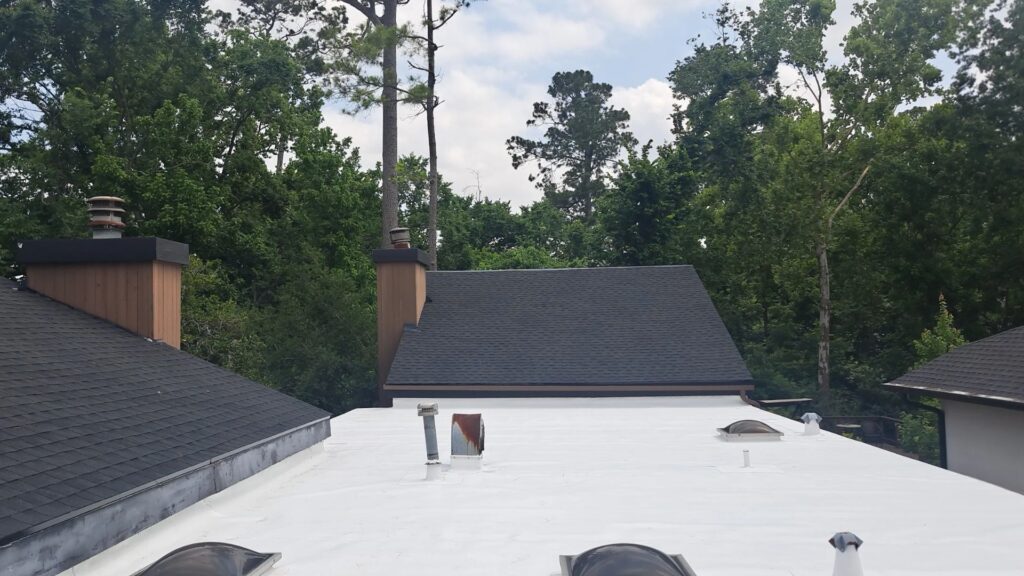
| One leak at a vent, boot, skylight or wall flashing | Repair the detail |
| Cracked or dried-out sealant at trim or penetrations | Repair / reseal |
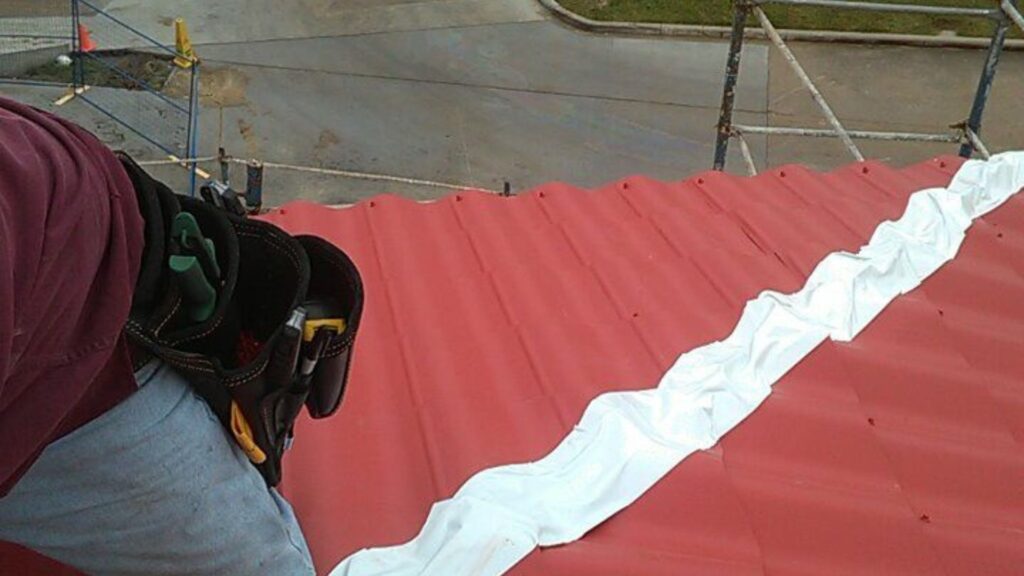
| A dented, punctured or creased panel in one area | Repair or replace that panel |
| Surface rust or scratched coating, metal still solid | Treat and touch up |
| Rust at panel laps, deck still sound | Assess for recover |
| Leaks returning in several unrelated places | Full inspection first |
| Rust holes through panels across the field | Replacement likely |
| Soft, rotted or deflecting deck under the panels | Replacement likely |
Age is deliberately missing from that table. A thirty-year-old standing seam roof with sound panels and one failed boot needs a boot.
Signs Your Standing Seam Roof Only Needs Repair
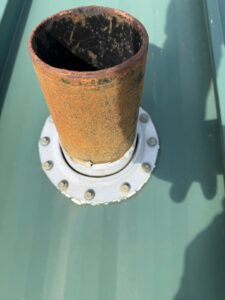
Repair is usually enough when
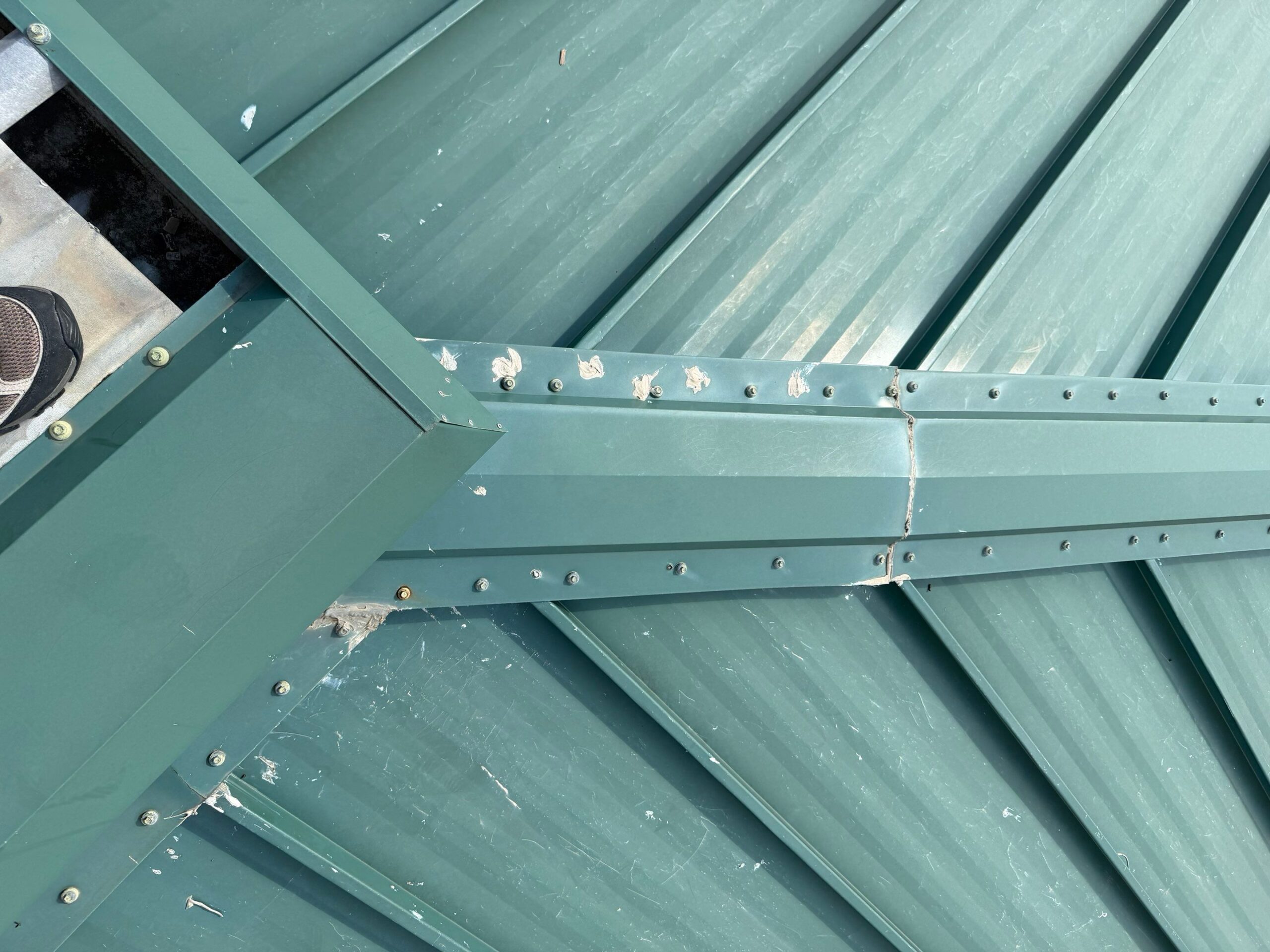
- The leak traces to one penetration, flashing detail, or trim piece
- Sealant around vents, boots or skylights has cracked, shrunk or pulled away
- One panel is punctured, creased or badly dented, and the rest are intact
- Rust is on the surface only — the metal underneath is still solid
- The seams are closed and the clips are holding
- This is the first time this spot has failed
The industry’s own research backs this up. When the Metal Construction Association studied how long standing seam roofs last, it found the panels can outlast the building, and the components most likely to need replacing during that time — fasteners and similar parts — make up a small fraction of what a new roof costs.
If your situation sounds like this list, targeted roof repair is the proportionate answer. If you are chasing water and do not yet know where it starts, leak tracing and repair comes first.
The Middle Option: Metal-Over-Metal Recover
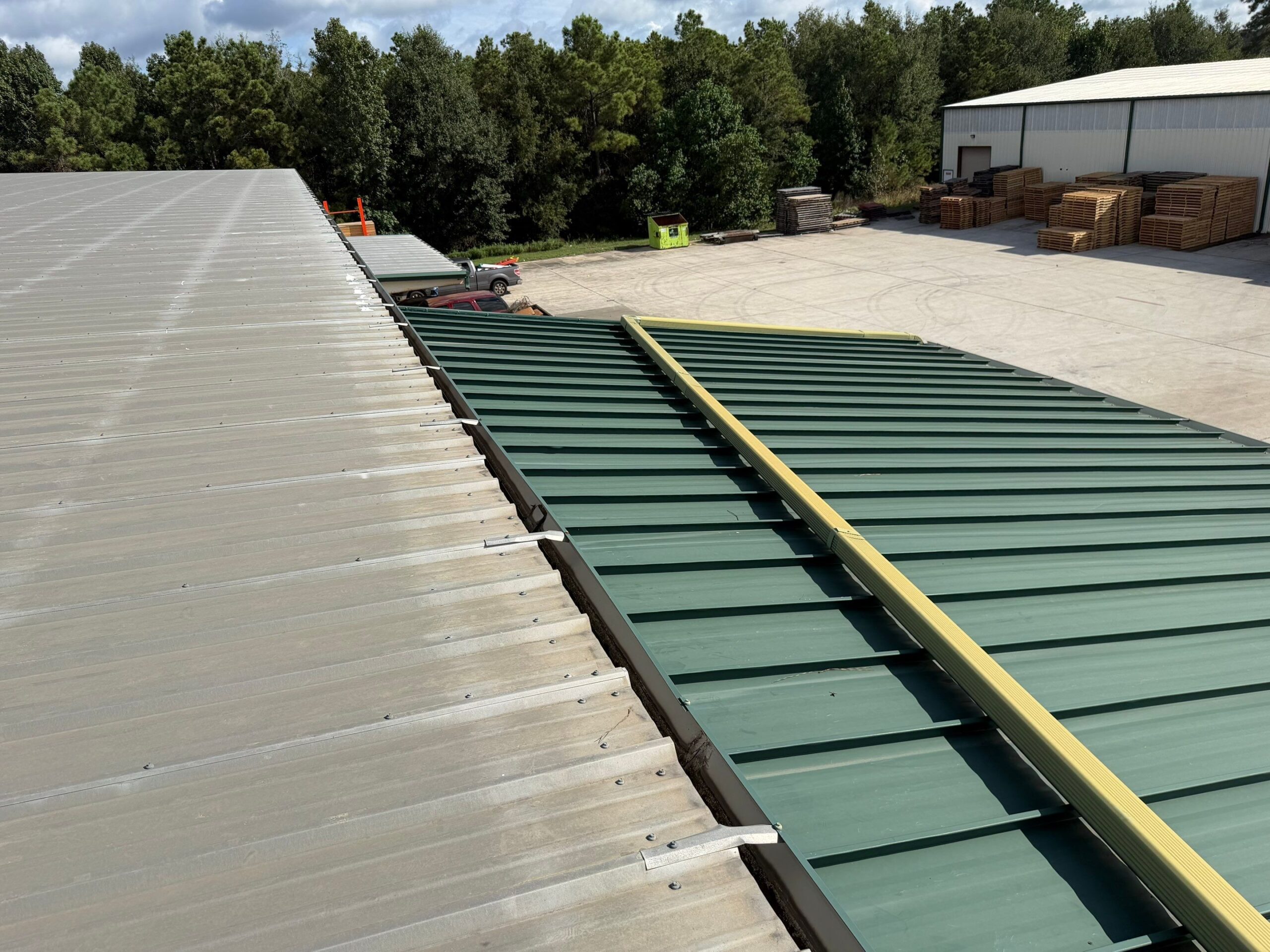
When panels are rusting at the laps, but the deck and framing underneath are still sound, a new standing seam roof can be built over the old metal on new framing. The old roof stays in place as a substrate, so there is no tear-off, and the new system carries the load.
Most repair-or-replace advice skips this, because it does not fit either box. A recover system runs light framing across the existing roof and fastens it into the structure below, not into the old sheeting. New insulation can go into the cavity that framing creates, and a new concealed-clip panel goes on top. The old, corroded metal ends up carrying nothing.
It is not for every roof. Three findings usually rule it out:
Recover is off the table when
- Rust has perforated the panel field broadly, not just at the laps
- Purlins or decking have lost enough material that they no longer hold a fastener
- Existing insulation is saturated across large areas
If none of those apply, ask whether a metal-over-metal recover fits your roof before accepting a full tear-off quote.
Warning Signs That Point Toward Replacement
Replacement is likely when
- Rust has gone through the metal in multiple panels, not just stained the surface
- Seams are open, distorted, or failing along their length rather than at one spot
- The roof deck is soft, rotted, or deflecting when walked
- Leaks keep appearing in different, unrelated places after proper repairs
- The original installation was wrong throughout — slope too low for the panel, incompatible metals in contact, flashing designed badly
- Matching panels, clips or trim are no longer available for the existing profile
That last-but-one item deserves a word. Some roofs leak not because anything wore out but because they were built wrong. Patching a design problem one leak at a time never ends. When that is the finding, a standing seam roof replacement done properly is the cheaper path over the next decade, and you can see what a replacement typically costs before you talk to anyone.
Houston Problems That Look Like Roof Failure but Aren’t
Three common Houston findings get mistaken for a failing metal roof: condensation that drips on dry mornings, oil canning that makes panels look wavy, and cosmetic hail dents that do not affect watertightness. None of them, on its own, is a reason to replace the roof.
Water on a clear morning is usually condensation
If you find damp insulation or ceiling stains on days with no rain, the water is probably forming on the underside of the metal, not coming through it. Warm, humid indoor air meets a panel that has cooled overnight and gives up its moisture. Houston humidity makes this common, and it is one of the most misdiagnosed metal roof problems in this climate. Patching the roof does nothing, because the water was never coming from above. The fix is insulation and ventilation — which is one reason a recover with new insulation sometimes beats a repair. If this sounds familiar, see why a roof can appear to be leaking when it isn’t raining.
Wavy panels are oil canning, not damage
Visible rippling in the flat of a panel is called oil canning. It is an appearance issue, not a structural one, and it does not mean the roof is leaking. More on what oil canning is and why it happens.
Hail dents are often cosmetic
Hail can dent metal without opening it. A dented panel that still sheds water is a cosmetic problem, and insurance may treat it very differently from functional damage. We cover how to tell the two apart in hail dents on a standing seam roof.
Why Houston Weather Finds the Weak Details
About 50 inches of rain a year — Houston’s normal annual precipitation at Bush Intercontinental was 49.77 inches under NOAA’s 1981–2010 climate normals, and the newer 1991–2020 normals run about 2 inches wetter. CONFIRM current NWS figure. Source: NOAA / National Weather Service Houston–Galveston climate normals
Heat adds a second kind of stress. Metal panels expand and contract every day, and on a standing seam roof the clips let them slide to absorb that movement. Where a detail was installed without room to move — a trim piece pinned too tightly, sealant bridging a joint that flexes — the daily cycle eventually breaks it open. That is a detail repair, not a sign the roof is finished. The climate is context; what the inspection finds should decide the recommendation.
What a Proper Metal Roof Inspection Should Cover
Ask for each of these before you accept a recommendation
- The source of the water, identified — not “the roof is leaking”
- Seams and clips checked along the affected runs
- Every penetration— vents, boots, skylights, wall and chimney flashing
- Panel condition— surface rust versus metal that has gone through
- Deck and insulation from the attic side, including signs of condensation
- Photos of each failure point and a written explanation of why it failed
- Two scopes where it is close: a repair scope and a recover or replacement scope, so you can compare
On larger or harder-to-reach roofs, a drone inspection can map the whole panel field without anyone walking on it. If a repair is done, ask how it will be tested before the crew leaves.
If the inspection says replacement and you want to know which standing seam system to choose next, start with snap-lock vs. mechanical seam. And if you are ready to find out which situation you are in, have the roof assessed before anyone quotes you a new one.
Related Services from Achilles Roofing & Exterior
Roof Repair
For a failed boot, flashing, sealant joint or single damaged panel.
Metal Roof Retrofit & Recover
A new standing seam roof over the old metal, when the structure is still sound.
Standing Seam Replacement
When the metal or the deck has failed across the roof.
Hail Damage Repair
For storm damage that has gone beyond cosmetic dents.
Frequently Asked Questions
Properly installed standing seam roofs are commonly associated with service lives of roughly 40 to 60 years, depending on the metal, coating, exposure and maintenance. A Metal Construction Association study projected more than 60 years for unpainted Galvalume low-slope roofs with regular maintenance. Parts around the panels, such as fasteners and sealants, usually need attention long before the panels themselves wear out.
Often, yes. A single punctured, creased or badly dented panel can sometimes be removed and replaced without disturbing the rest of the roof, provided a matching profile and color are available and the surrounding clips and seams are sound. If the profile has been discontinued or several neighbouring panels are damaged, a larger section repair or a recover may be more practical.
Usually because of condensation, not a leak. Warm, humid indoor air reaches the underside of a metal panel that has cooled overnight and leaves moisture behind, which shows up as damp insulation or stains on dry mornings. It is common in Houston’s humidity. Sealing the roof will not fix it; insulation and ventilation will. Rule it out before paying for roof repairs.
Often, yes. A metal-over-metal recover builds new framing across the existing roof, fastens it into the structure below, and installs a new standing seam panel on top, so there is no tear-off. It is ruled out when rust has perforated the panel field broadly, when the purlins or deck can no longer hold a fastener, or when existing insulation is saturated across large areas.
Usually, if the panels are still sound. Age alone is not a reason to replace standing seam, because the panels typically outlast the flashing, sealants and fasteners around them. Repairing those components costs a small fraction of a new roof. The calculation changes when the metal has rusted through across the roof, the deck has failed, or you are paying for repeat repairs in different places.
No. Visible waviness in the flat part of a metal panel is called oil canning. It comes from manufacturing stress, thermal movement, panel width or an uneven substrate, and it is an appearance characteristic rather than a structural defect. It does not mean the roof is leaking or needs replacement.
It should identify where the water is actually coming from, check seams and clips along the affected runs, inspect every vent, boot, skylight and flashing detail, distinguish surface rust from metal that has rusted through, and look at the deck and insulation from the attic side for rot or condensation. Ask for photos of each failure point and a written explanation before accepting any recommendation.
Sources & References
- Achilles Roofing & Construction. (2026a). Metal roofing sheets: Types and benefits. Achilles Roofing Houston Blog.
- Achilles Roofing & Construction. (2026b). The ultimate guide to metal roof components. Achilles Roofing Houston Knowledge Base.
- Metal Construction Association. (2018, October). Service life assessment of low-slope unpainted 55% Al-Zn alloy-coated steel standing seam metal roof systems. MCA Online Education Portal.
- U.S. National Weather Service. (2026). Houston/Galveston, TX Weather Forecast Office home page. National Oceanic and Atmospheric Administration.
- Houston field observations reflect Achilles Roofing & Exterior’s own project records
Most of the Time, the Answer Is Repair It
We find where the water starts, show you what failed, and tell you whether it is a repair, a recover or a replacement. Written scope before any work begins.
Serving Houston, Cypress, The Woodlands, Sugar Land, Katy, Spring and surrounding areas.