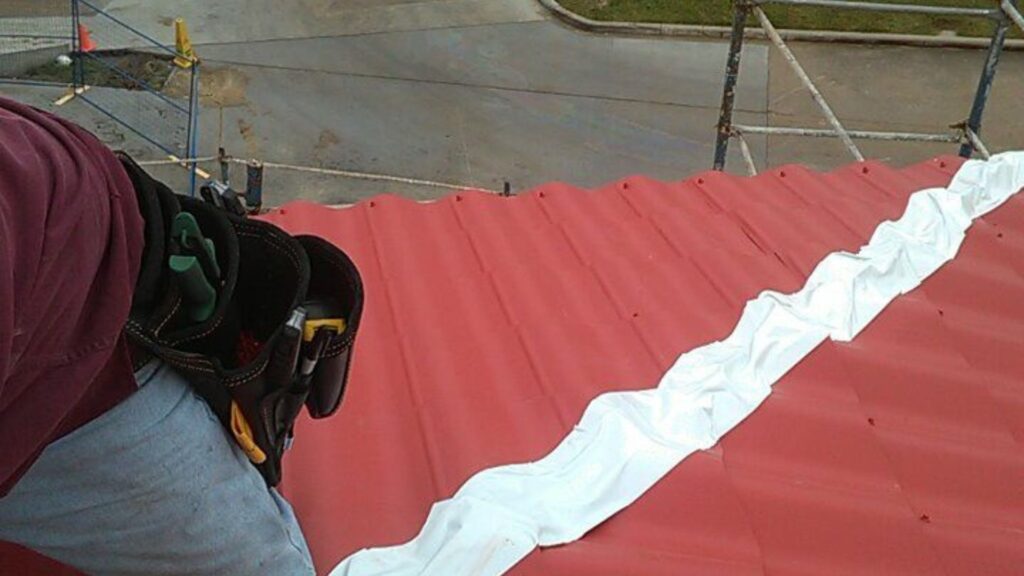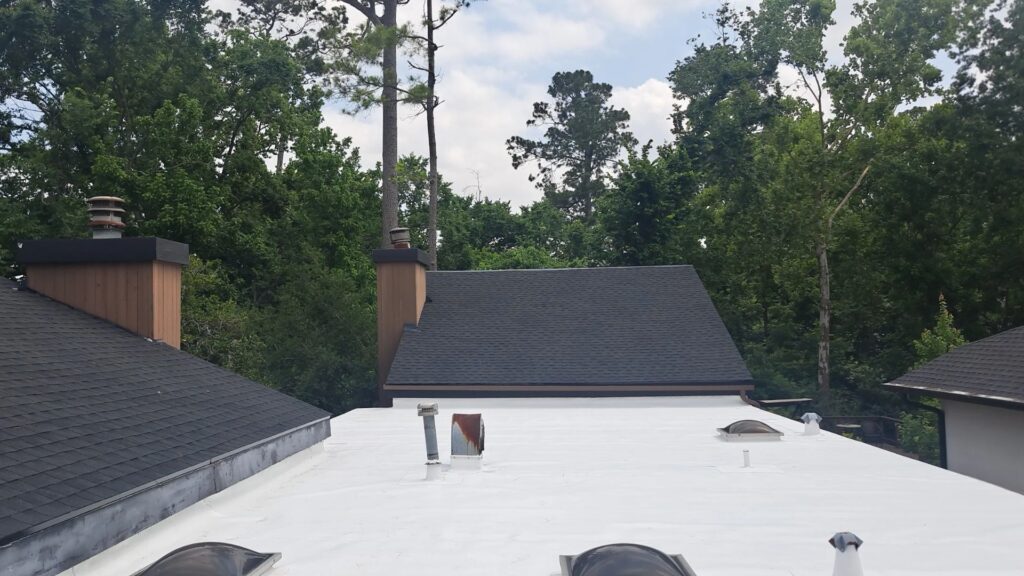
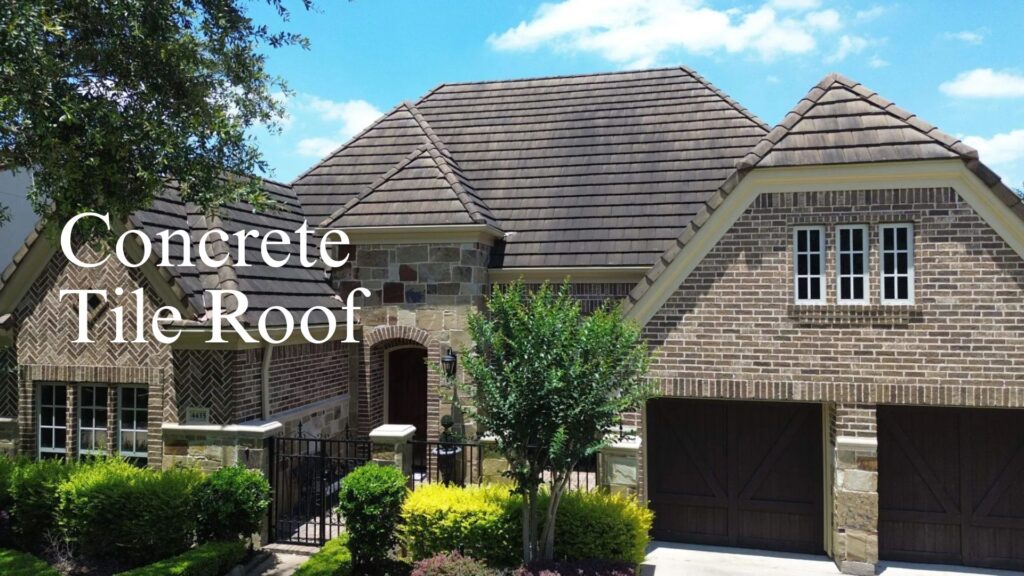
Quick Answer: What Is Concrete Tile Roofing?
Concrete tile roofing consists of molded cement-and-aggregate tiles installed in overlapping courses across a sloped roof. It is one of the most durable residential roofing materials available, rated for 40–50+ year lifespans, and is popular in Houston for its resistance to heat, wind, and UV degradation.
Concrete tile roofing in Houston costs $14–$28 per square foot installed in 2026, or $28,000–$75,000+ for a full replacement on a typical Houston home. Material alone runs $3–$6 per square foot. Labor, underlayment, and structural reinforcement account for the rest.
That’s a wide range and for good reason. Concrete tile pricing shifts based on tile profile (flat, low-slope, high-barrel), roof complexity, deck condition, and whether the existing structure needs reinforcement to handle the added weight. This guide breaks every cost layer down so you know exactly what you’re paying for before you sign anything.
📊 Stat: According to data from the U.S. Census Bureau’s American Housing Survery, the median size of a single-family home in the Houston metro area is about 2,100 square feet. Accounting for typical eaves and roof pitches, this translates to a roof surface area of roughly 2,300 to 2,600 square feet. At a mid-range concrete tile installation price of $10 to $15 per square foot, homeowners can expect a total project cost ranging from $23,000 to $39,000.
Sources: U.S. Census Bureau AHS Table Creator, Modernize’s Roof Replacement Cost Guide, Angi’s Concrete Tile Cost Breakdown
What Makes Concrete Tile Roofing Different From Every Other Material
Unlike asphalt shingles, concrete tiles are not petroleum-based and do not degrade from UV exposure the same way. Unlike clay tile, they are significantly heavier (9–12 lbs per square foot vs. 6–8 lbs for clay) but cost 30–50% less at the material level, making them the dominant premium tile option in Houston’s residential market.

Concrete Tile Roof Cost in Houston — 2026 Full Breakdown
Installed concrete tile roofs in Houston cost $14–$28 per square foot in 2026, depending on tile profile and project complexity. Below is a line-item cost breakdown pulled from actual Houston project data.
Cost by Component (Per Square Foot, Installed)
| Cost Component | Low Estimate | High Estimate | Notes |
|---|---|---|---|
| Concrete Tile Material | $3.00/sq ft | $6.00/sq ft | Flat to high-barrel profile |
| Underlayment (ASTM D226 or synthetic) | $0.50/sq ft | $1.25/sq ft | Synthetic strongly recommended in Houston |
| Deck Inspection & Repair | $0.25/sq ft | $1.50/sq ft | Higher if rot or storm damage present |
| Structural Reinforcement | $0.00/sq ft | $4.00/sq ft | Required if replacing asphalt; concrete tile is 3–4x heavier |
| Labor (installation) | $6.00/sq ft | $10.00/sq ft | Complex roof geometry increases labor significantly |
| Flashing, Ridge Caps, Accessories | $0.75/sq ft | $2.00/sq ft | Hip and ridge caps add cost on complex roofs |
| Old Roof Tear-Off & Disposal | $1.00/sq ft | $2.50/sq ft | Concrete tile removal is labor-intensive |
| Total Installed (estimated) | $14.00/sq ft | $28.00+/sq ft |
Total Project Cost by Houston Home Size
| Home Size (Conditioned) | Approx. Roof Area | Low Estimate | High Estimate |
|---|---|---|---|
| 1,500 sq ft | ~1,700 sq ft | $23,800 | $47,600 |
| 2,000 sq ft | ~2,200 sq ft | $30,800 | $61,600 |
| 2,500 sq ft | ~2,800 sq ft | $39,200 | $78,400 |
| 3,000 sq ft | ~3,400 sq ft | $47,600 | $95,200+ |
📊 Industry Note: According to construction cost data, labor for a tile roofing project typically accounts for 30–40% of the total installed price. While tile installation requires significantly more skill, time, and structural reinforcing than standard asphalt shingles, the premium cost of clay or concrete tile materials means that materials, rather than labor, represent the largest share of the overall project invoice.
Sources: National Roofing Contractors Association (NRCA) Technical Manuals, HomeAdvisor’s National Tile Roofing Cost Index
The Hidden Cost Most Houston Homeowners Miss: Structural Reinforcement
Concrete tile weighs 9–12 pounds per square foot, roughly 3–4 times heavier than standard architectural asphalt shingles. If your home was originally built for asphalt, your roof structure may need reinforcement before concrete tile can be safely installed. This adds $2,000–$8,000+ to the project cost and is non-negotiable.
This is the line item that most online cost calculators ignore entirely. In Houston, where a significant portion of the housing stock was built post-Hurricane Ike (2008) using prescriptive asphalt-rated framing, structural upgrades are more common than homeowners expect.
Before any concrete tile installation, a qualified contractor must assess:
- Rafter size, spacing, and span
- Ridge board and purlin condition
- Existing dead load capacity
- Whether the current deck (typically 7/16″ OSB or 1/2″ plywood) requires upgrading to 5/8″
If you’re replacing an existing concrete or clay tile roof, structural reinforcement is typically not required—the structure was already built to handle the weight.
📊 Stat: Concrete tile roofing systems typically exceed the prescriptive dead load limits of 15 pounds per square foot outlined for conventional light-frame wood construction in Section R802 of the International Residential Code (IRC). Consequently, switching from a lighter material (like asphalt shingles) to heavy tile during a re-roofing project generally triggers code requirements for an engineering review to verify that the existing structural framing can safely support the increased dead load.
Sources: International Residential Code (IRC) Section R802, International Existing Building Code (IEBC)
Concrete Tile vs. Other Roofing Materials — Is It Worth the Cost?
Compared to asphalt shingles, concrete tile costs 3–5x more upfront but lasts 2–3x longer. Over a 50-year horizon, concrete tile often costs less in total than asphalt when you factor in replacement cycles, labor escalation, and avoided storm damage claims.
Cost & Performance Comparison (Houston Market, 2026)
| Material | Installed Cost ($/sq ft) | Expected Lifespan | Maintenance Level | Wind Rating | Houston Suitability |
|---|---|---|---|---|---|
| Architectural Asphalt | $4.50–$7.00 | 20–25 years | Moderate | 130 mph (Class H) | Good |
| Concrete Tile | $14–$28 | 40–50+ years | Low | 125–150 mph | Excellent |
| Clay Tile | $20–$35 | 50–100 years | Very Low | 125–150 mph | Excellent |
| Standing Seam Metal | $9–$15 | 40–70 years | Low | 140–160 mph | Excellent |
| Stone-Coated Steel | $7.50–$11 | 40–50 years | Low | 120–140 mph | Very Good |
Here’s the math most roofing companies won’t show you:
- Asphalt over 50 years (2 full replacements + maintenance): $28,000–$58,000 initial + $35,000–$75,000 in future replacements (accounting for 3–4% annual labor inflation) = $63,000–$133,000 total
- Concrete tile over 50 years (zero replacements if properly installed): $30,000–$78,000 initial + minimal maintenance = $30,000–$82,000 total
On a large Houston home, concrete tile can deliver equivalent or lower 50-year total cost while eliminating the disruption of two full roof replacements.
📊 Stat: Driven by a persistent shortage of skilled labor across the construction sector, wages for roofing contractors have seen sharp, compounding increases over the last decade, with annual construction wage growth surging by 5% to 6% in peak recent years according to the Bureau of Labor Statistics (BLS). Because labor costs continue to march upward alongside inflation, tackling a necessary roof replacement now effectively locks in today’s rates before future labor premiums push prices even higher.
Sources: Bureau of Labor Statistics (BLS)
Why Houston’s Climate Makes Concrete Tile a Strong Long-Term Choice
Houston’s combination of intense UV radiation, high humidity (averaging 75%+ annually), frequent tropical storms, and extreme heat cycles creates one of the most demanding roofing environments in the continental U.S. Concrete tile performs well in every one of these conditions.
Heat Performance
Concrete tile’s mass creates a thermal buffer that slows heat transfer into the attic. The air gap created by the tile profile (especially barrel profiles) adds additional ventilation that reduces radiant heat load. Studies from the Florida Solar Energy Center, whose climate mirrors Houston’s in many respects, found that concrete tile roofs reduced attic temperatures by up to 16°F compared to directly-nailed asphalt shingle systems.
Source: Florida Solar Energy Center
Wind Performance
Modern concrete tile systems are engineered to meet HVHZ (High Velocity Hurricane Zone) wind standards when installed with approved fastening systems. Houston falls under Texas Department of Insurance windstorm territory (Tier 1 coastal counties require enhanced installation), and concrete tile with foam adhesive or mechanical fastening meets those requirements when installed correctly.
UV & Aging
Unlike asphalt shingles that lose granule protection under prolonged UV exposure, concrete tile’s performance characteristics are baked into the cementitious body—UV does not degrade structural integrity. Color fade is the primary cosmetic concern over decades, and modern acrylic slurry coatings extend color retention significantly.
📊 Stat: Houston receives an average of over 200 sunny days per year paired with a substantial 51.8 inches of annual rainfall—nearly 1.7 times the national average. According to local climate summaries and NOAA precipitation data, this intense combination of prolonged UV exposure and constant moisture cycling subjects roofs to severe thermal shock, accelerating the degradation of traditional asphalt and organic roofing materials far faster than in milder U.S. climates.
Concrete Tile Roof Drawbacks — The Honest Assessment
Concrete tile is not the right choice for every Houston home. Three factors disqualify it from consideration in a meaningful percentage of projects: weight load limitations, walkability during maintenance, and upfront cost relative to budget.
- Weight: At 9–12 lbs/sq ft, concrete tile is not suitable for homes with lightweight framing without structural upgrades. Ranch-style homes built pre-1990 are particularly at risk of requiring costly reinforcement.
- Brittleness: Concrete tile will crack under direct foot traffic. Maintenance (HVAC service, satellite dish installation, chimney inspection) must be performed by workers trained in tile-walking technique. Hiring untrained contractors causes premature tile failure.
- Upfront cost: The $30,000–$78,000 entry point is a hard stop for many homeowners. Financing options exist (GreenSky and similar programs offer 0% promotional periods), but the payment commitment is real.
- Algae and moss in Houston: Houston’s humidity creates conditions favorable to algae growth on concrete tile, particularly on north-facing slopes. Algae is capable of growing on any roof type, including tile, when moisture and sunlight are present, and treatments must be repeated whenever conditions are right. Copper-infused tiles or soft-wash cleaning every 3–5 years mitigates the issue.
- Not suitable for low-slope roofs: Concrete tile requires a minimum pitch of 4:12 for most profiles (some flat-tile systems allow 3:12 with enhanced underlayment). Flat or very low-slope sections must be handled with a different material.
What Affects the Final Quote on Your Concrete Tile Roof
Five variables drive the spread between a $14/sq ft and $28/sq ft concrete tile installation in Houston: tile profile, roof complexity, structural condition, tear-off scope, and contractor tier.
1. Tile Profile
High-barrel Spanish tile costs 40–60% more in material than flat-profile tile. More importantly, high-barrel installation is slower—a skilled crew installs fewer squares per day, which directly increases labor cost per square foot.
2. Roof Complexity
Hips, valleys, dormers, and irregular geometry all require custom cutting and fitting. A simple gable roof can run 20–30% less in labor than a complex hip-and-valley roof of identical square footage. The number of penetrations (skylights, vents, chimneys) also scales labor cost.
3. Deck and Structural Condition
Decking rot, soft spots from prior leaks, or undersized rafters all add to project cost. In Houston’s humidity, deck damage is common under older tile systems where improper underlayment allowed moisture infiltration. Budget 10–15% contingency for unknown deck repairs on any re-roofing project.
4. Underlayment Specification
Texas requires a minimum of ASTM D226 #30 felt underlayment under tile systems, but most experienced Houston contractors now specify synthetic underlayment (such as CertainTeed DiamondDeck or GAF Tiger Paw) for superior moisture resistance, UV stability during installation delays, and longer service life. Synthetic adds $0.50–$0.75/sq ft but is worth it in Houston’s climate.
5. Contractor Tier
Concrete tile installation is a specialized skill. Not every roofing contractor in Houston is equipped to do it correctly. Manufacturers offer certified installer programs—choosing a certified contractor typically adds 10–15% to labor cost but substantially reduces the risk of premature failure at seams and penetrations.
📊 Stat: According to the National Roof Certification and Inspection Association (NRCIA), improper installation is one of the leading causes of premature roof failure, capable of negating “the benefits of even the most high-end, top-quality materials.” The NRCA separately documents that 28% of roofing defects stem specifically from improper flashing installation alone.
Does Concrete Tile Roofing Qualify for Insurance Discounts in Texas?
Yes. In Texas, concrete tile roofs can qualify for homeowner’s insurance premium discounts of 20–35% when they carry a Class 4 impact rating (UL 2218) and are installed per manufacturer wind-resistance specifications. This is a meaningful and often overlooked financial benefit of concrete tile over asphalt.
Texas is the most hail-active state in the country, ranking #1 for total hail events annually. Insurance carriers price that risk into premiums, and Class 4-rated materials are rewarded with lower rates.
Not all concrete tiles carry Class 4 impact ratings—confirm with the manufacturer’s product data sheet before purchasing.
Action item: Contact your insurance carrier before choosing a tile product. Request their approved product list for premium discounts. A $500–$900 annual premium reduction on a $40,000 roof pays back the cost premium over concrete tile within 10–15 years in many scenarios.
📊 Stat: With average homeowners insurance premiums in Texas climbing to roughly $3,900 per year, ranking it among the top six most expensive states in the country, homeowners face heavy financial pressure driven largely by severe wind and hail risks. Securing a 25% discount on a typical policy through protective upgrades or bundling can put nearly $1,000 back into a homeowner’s pocket annually.
Source: Texas Department of Insurance
How to Get an Accurate Concrete Tile Roof Quote in Houston
To get a reliable quote, you need three bids from tile-certified contractors, a physical roof inspection (not a “drive-by” estimate), a written line-item breakdown, and clarity on what’s included in the structural assessment. Any quote that skips the inspection is a guess, not an estimate.
What to Ask Every Contractor
- Are you a certified installer with the tile manufacturer you’re recommending?
- Does this quote include a structural load assessment, and if so, what does it cover?
- What underlayment system are you specifying, and why?
- How are penetrations (plumbing boots, vents, flashing) handled—metal flashing or foam sealant only?
- What is the manufacturer warranty, and is there a separate workmanship warranty? How long?
- Do you carry General Liability and Workers’ Comp coverage? Can I see the certificates?
For concrete tile roof work in Houston, Achilles Roofing provides full on-site assessments that include structural load review, deck condition reporting, and line-item written estimates, not ballpark ranges delivered over the phone.
Concrete Tile Roof Maintenance Costs Over Time
Once installed, concrete tile roofs require minimal maintenance, typically $300–$800 every 3–5 years for inspection, cleaning, and minor repairs. This is significantly lower than asphalt’s maintenance burden, which includes granule loss monitoring, sealant reapplication, and more frequent storm-damage inspections.
Typical Maintenance Tasks & Costs
- Annual visual inspection (professional): $150–$350. Covers cracked tiles, displaced ridge caps, flashing integrity.
- Algae/moss cleaning (Houston-specific): $400–$800 every 3–5 years. Soft-wash preferred; pressure washing cracks tile.
- Individual tile replacement: $75–$200 per tile, including labor. Common after hail or foot traffic damage.
- Flashing resealing: $200–$600 every 10–15 years at penetrations and valleys.
- Ridge cap repointing (mortar): $500–$1,500 for a standard home, typically needed at 20–25 years.
Total estimated 50-year maintenance cost on a concrete tile roof: $8,000–$18,000. Compare this to asphalt’s ongoing maintenance costs, which escalate sharply in years 15–20 as granule loss accelerates and shingles begin to cup and crack.

Frequently Asked Questions
How much does a concrete tile roof cost in Houston in 2026?
A concrete tile roof in Houston costs $14–$28 per square foot installed in 2026. For a typical 2,000 sq ft Houston home (approximately 2,200 sq ft of roof area), the total installed cost ranges from $30,800 to $61,600. Complex roofs, premium tile profiles, or homes requiring structural reinforcement can push costs above $75,000.
How long does a concrete tile roof last in Houston?
Concrete tile roofs last 40–50+ years when properly installed and maintained. In Houston’s climate, the primary longevity factors are underlayment quality (synthetic outperforms felt significantly in high-humidity environments) and fastening method. The tiles themselves rarely fail—underlayment and flashing are the first components to require attention after 20–25 years.
What is the difference between concrete tile and clay tile?
Clay tile is fired ceramic — it is lighter (6–8 lbs/sq ft vs. 9–12 lbs/sq ft for concrete), lasts longer (50–100 years vs. 40–50 years for concrete), and costs 30–50% more. Concrete tile is an engineered cement-and-aggregate product. Both perform well in Houston’s climate. The choice typically comes down to budget and architectural style—clay tile suits traditional Mediterranean homes; concrete tile suits a wider range of profiles at lower cost.
Can you walk on a concrete tile roof?
Concrete tile can be walked on, but only using proper technique—stepping on the lower third of each tile directly above the batten, never on the high point of a barrel tile. Improper foot traffic is one of the leading causes of premature concrete tile failure. Any rooftop work (HVAC service, satellite installation, chimney repair) should be performed by workers trained in tile-roof access. Hire contractors who explicitly confirm tile-walking competency.
Is concrete tile good for Houston’s weather?
Yes. Concrete tile performs well across Houston’s primary weather challenges: UV radiation (tile is UV-stable unlike asphalt), heat (the air gap under tile profiles reduces attic heat load), wind (when fastened per manufacturer specs, most systems are rated for 125–150 mph), and humidity (concrete itself does not rot or corrode). The primary Houston-specific concern is algae growth on north-facing slopes in shaded areas, which is managed with periodic soft-wash cleaning or copper-treated tile products.
How does concrete tile compare to metal roofing in Houston?
Standing seam metal roofing costs $9–$15/sq ft installed, significantly less than concrete tile, while delivering comparable or superior wind resistance and a 40–70 year lifespan. Metal reflects more radiant heat than concrete tile and weighs far less (1.5–2.5 lbs/sq ft). Concrete tile wins on traditional aesthetics, particularly for Spanish, Mediterranean, and Southwestern architectural styles. The choice is primarily aesthetic and budget-driven for most Houston homeowners; both materials are sound long-term investments.
Does Achilles Roofing install concrete tile roofs in Houston?
Yes. Achilles Roofing installs concrete tile roofing systems throughout the Greater Houston area, including Harris, Fort Bend, Montgomery, and Brazoria counties. Assessments include structural load review, deck inspection, and written line-item estimates. You can reach the team through achillesroofinghouston.com or by calling directly to schedule an on-site evaluation.
What is the minimum roof pitch for concrete tile in Houston?
Most concrete tile profiles require a minimum roof pitch of 4:12 (4 inches of rise for every 12 inches of horizontal run). Some flat-profile concrete tiles are approved for 3:12 pitches with enhanced underlayment systems and specific installation methods. Anything below 3:12 is not suitable for concrete tile under any profile—low-slope sections must use TPO, modified bitumen, or another flat-roof system.
Interested in Concrete Tile Roofing for Your Houston Home?
Achilles Roofing installs concrete tile roof—full replacements, dome turrets, and accent integrations.
Written fixed-price estimate · GAF Certified Plus · Financing from $199/mo · 800+ Houston projects
 Ahmad Faiz
About Achilles Roofing & Exterior
Houston’s specialist in full roof replacements, Spanish tile, clay tile, copper, and high-end exterior systems. Founded 2017. 800+ completed projects · 4.90-star Google · 5.0 Thumbtack · Founded by Ahmad Faiz.
 GAF Certified Plus Owens Corning Authorized Mule-Hide Authorized VELUX Authorized Malarkey Authorized GHBA Member BBB A+ Rated Thumbtack Top Pro — 7 Years Nextdoor Fave 2023 & 2024 RCAT Member #208834 Fully Licensed & Insured · Texas
 (832) 346-8021
Call or text
 achillesroofinghouston.com
Free estimate & booking
 Financing — $199/mo
GreenSky — all services
 Mailing Address: 1919 W Sam Houston Pkwy N Unit #110, Houston, TX 77043
Sources & References
-
Angi. (2024, February 21). How much does a concrete tile roof cost?
-
HomeAdvisor. (2024). How much does it cost to install or replace a tile roof?
-
International Code Council. (2021a). Chapter 5: Prescriptive compliance method. In 2021 International Existing Building Code (IEBC 2021).
-
International Code Council. (2021b). Chapter 8: Roof-ceiling construction. In 2021 International Residential Code (IRC 2021).
-
Modernize. (2024). Roofing cost calculator.
-
National Roofing Certification and Inspection Association. (n.d.). What causes roof material failure?
-
National Roofing Contractors Association. (2024). NRCA market survey software and data tools.
-
National Weather Service. (n.d.). Houston Area (IAH) climate normals summary. National Oceanic and Atmospheric Administration.
-
Texas Department of Insurance. (n.d.). Texas homeowners insurance market overview.
-
U.S. Bureau of Labor Statistics. (2025). Occupational Employment and Wage Statistics (OEWS) program data. U.S. Department of Labor.
-
U.S. Census Bureau. (2023). American Housing Survey (AHS) table creator. U.S. Department of Housing and Urban Development.
-
University of Central Florida. (n.d.). Roof assembly and finish performance evaluations. Florida Solar Energy Center.