


































How often should a roof in Deer Park be inspected?
Twice a year is a workable baseline for a Deer Park home, plus a check after any storm that brought high wind or hail. The point of a roof inspection is catching a lifted shingle or open flashing joint while it is still a repair, which is the same condition-first approach the NRCA treats as the basis for any repair-or-replace decision.
What should I do before hurricane season starts?
Clear gutters and downspouts, have loose flashing and lifted tabs repaired, and trim limbs overhanging the roof while conditions are calm — FEMA’s preparedness guidance covers the rest of the household list. Photograph each slope and keep the dated images, and know who to call for emergency tarping before you actually need it.
Does airborne dust and grit shorten a roof’s life here?
Fine particulate settles on any roof surface and washes into valleys and gutters, forming a damp layer that holds moisture against the roof edge and rots fascia and soffit — the water-intrusion signs the Department of Energy lists first. Clearing those low points on a set schedule, which is what a maintenance plan exists for, protects the edge detail that fails long before the field of the roof.
How much does attic ventilation matter in a Deer Park summer?
A poorly vented attic traps heat against the underside of the deck, aging the shingle from below while raising the cooling load at the same time. Ventilation only works as a balanced pair, so intake at the soffits has to match exhaust near the ridge, a principle ENERGY STAR sets out and our vent systems are sized against.
Will a reflective roof lower my cooling costs?
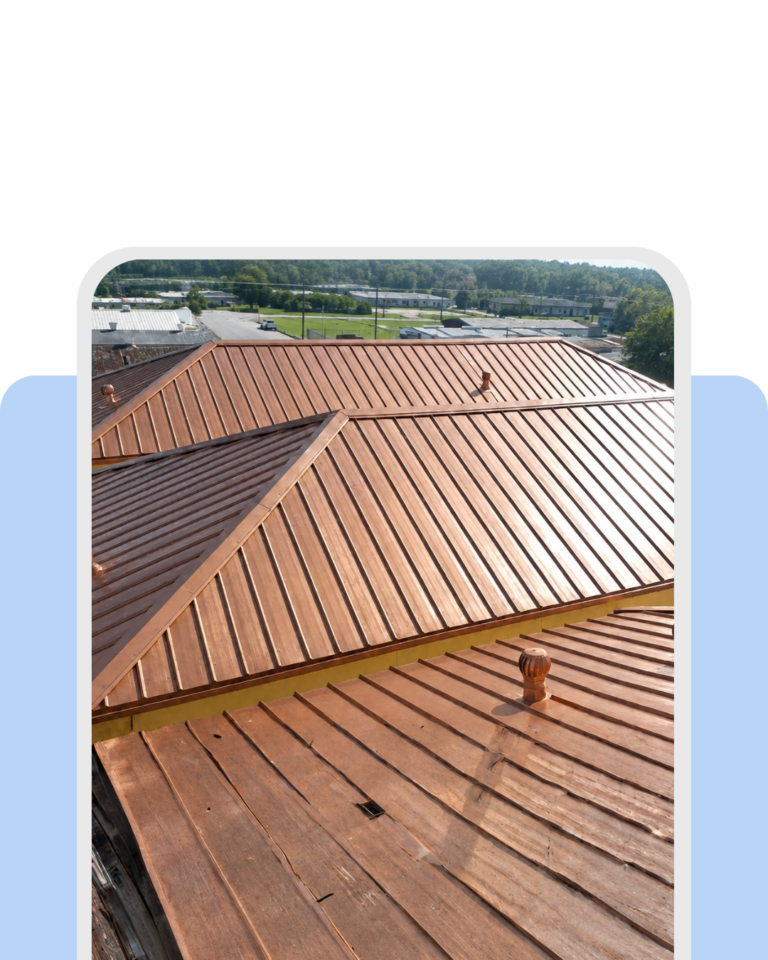
A reflective surface stays cooler in direct sun and pushes less heat into the space below, though insulation levels and duct placement decide how much reaches your bill — the Department of Energy explains how reflectance is measured. Light-colored aluminum panels help on a pitched roof, while an acrylic coating covers a low-slope surface all at once.
What happens if rotted decking turns up during tear-off?
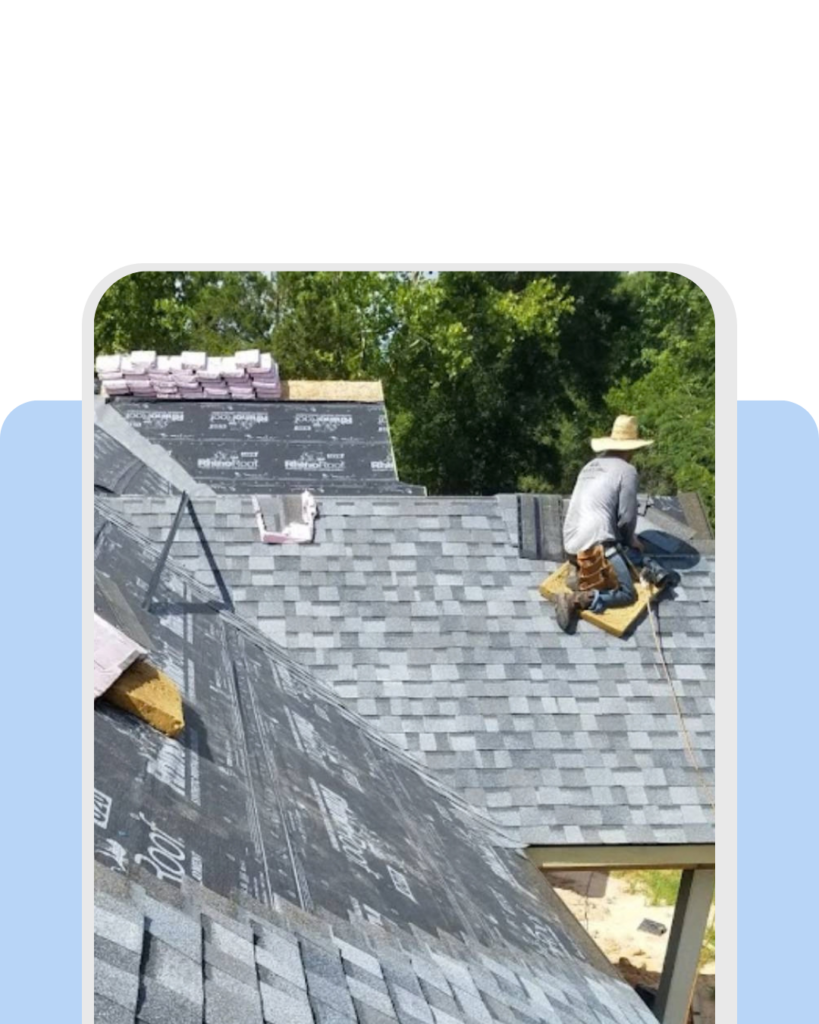
Decking cannot be judged until the covering comes off, so replacement is quoted as a per-sheet price rather than folded into the base bid — and the new roof has to land on a sound, nailable substrate under the model codes published by the International Code Council. Ask for that number in writing before work starts, as our oof replacement estimates list it up front.
Should hail or wind damage go through insurance?
Compare the documented repair cost against the deductible that actually applies, since many policies carry a separate wind and hail deductible set as a percentage of dwelling coverage rather than a flat amount. Damage confined to one slope is often simpler to pay directly, while damage across several usually warrants a claim — either way, start with a documented assessment and the safety guidance from FEMA before going up on a wet roof.