When investing in a new roof, many Houston homeowners are surprised to learn that the metal panels are only one small part of the equation. In fact, a high-performance roof is a complex ecosystem. At Achilles Roofing & Exteriors, we believe that understanding metal roof components is the best way to ensure your home remains protected for decades.
In Texas, more homeowners are choosing metal as a permanent defense against our extreme weather. However, a “metal roof” is a sophisticated, multi-layered system where every part must work in harmony to prevent leaks and withstand the brutal summer heat.
Below, we break down every essential part of the system so you know exactly what goes into a professional installation.
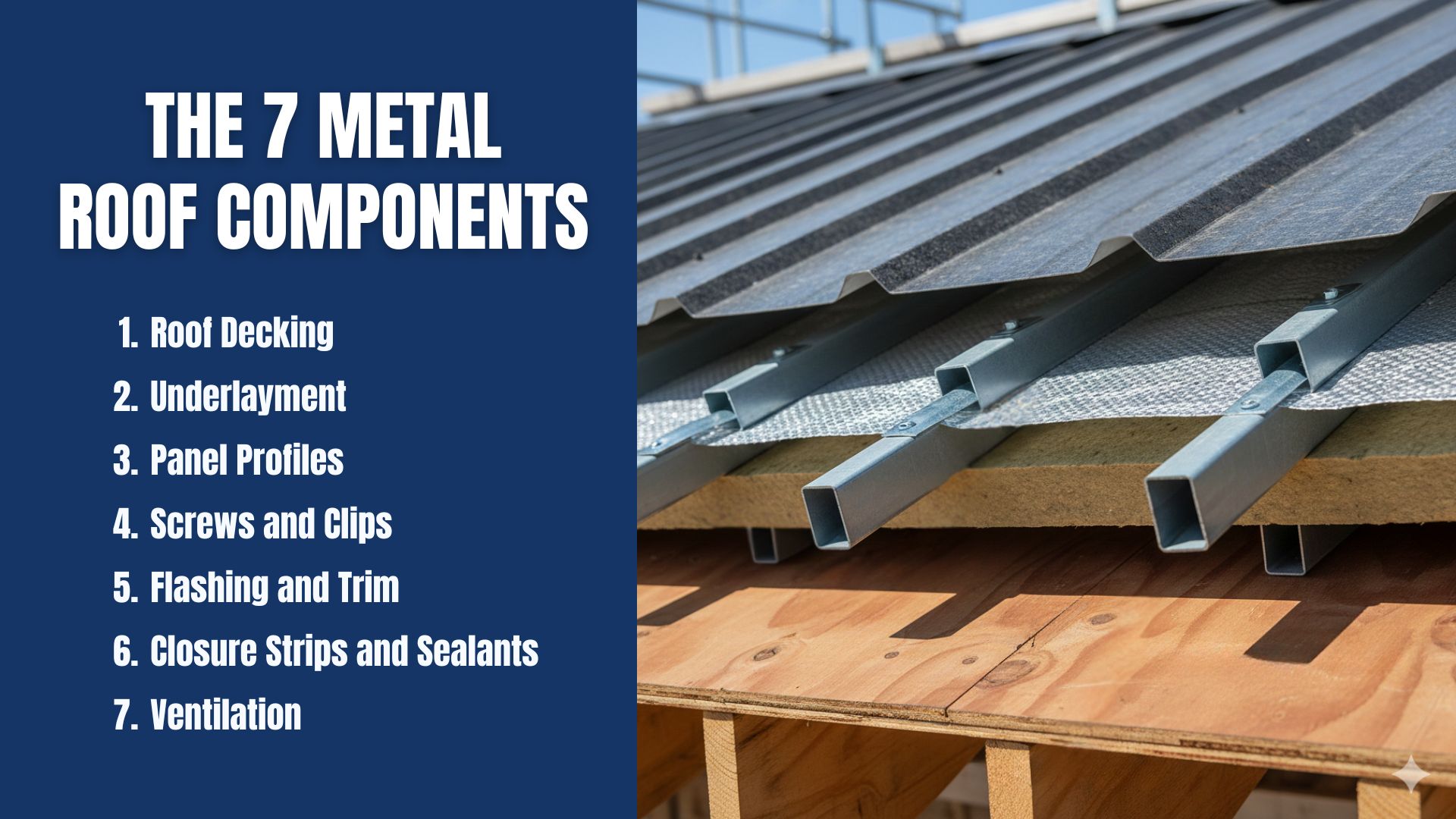
The Anatomy of Metal Roof Components: A Layer-by-Layer Guide
Think of your roof like a high-performance weather suit. Each layer has a specific job, from providing structural support to letting the house “breathe.”
1. The Foundation: Roof Decking (Sheathing)
Before any metal is laid, the structure begins with the roof deck. Typically made of plywood or Oriented Strand Board (OSB), the decking provides the flat surface that supports the weight of the entire roofing system.
When discussing metal roof components, the deck is the most critical starting point. For metal installations, the decking must be in pristine condition; any rot or warping in the wood can prevent the metal panels from laying flat or securing properly.
2. The Protective Barrier: Underlayment
The underlayment is arguably the most critical of all hidden metal roof components. It sits directly on top of the wood decking and acts as a secondary water-resistant barrier.
-
Synthetic Underlayment: Most modern installations use high-performance synthetic underlayment rather than traditional felt paper. Synthetics are more durable and can withstand the extreme heat that metal generates.
-
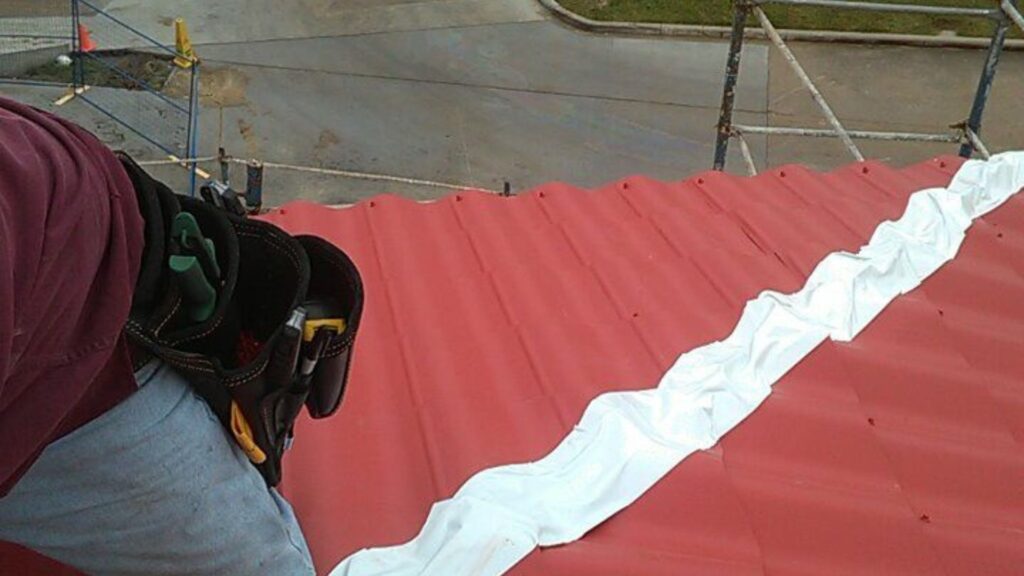
High-Temp Ice and Water Shield: In vulnerable areas like valleys and eaves, we use a self-adhering shield that seals around fastener penetrations.
As noted by GAF, a high-quality roof deck protection layer is critical to provide a secondary layer of wind-driven rain protection between your roofing material and the roof deck.
| Component | What it is | Why it matters |
| Roof Decking | Plywood or OSB sheets. | The structural foundation that supports the entire system. |
| Underlayment | A water-resistant barrier. | Acts as your second line of defense if water gets under the panels. |
| Ice & Water Shield | A rubberized membrane. | Self-seals around screws; essential for Houston’s heavy rain. |
3. The Main Event: Panel Profiles
The panels are the visible “skin” of your roof. While there are many metal roof components, the choice of panel style often dictates the cost and longevity of the project.
| Feature | Standing Seam | Exposed Fastener (R-Panel) |
| Fastener Style | Concealed: Screws are hidden under the metal ribs. | Visible: Screws are driven through the face of the metal. |
| Thermal Expansion | Panels “glide” as they heat/cool. | Metal is pinned down; can stress the screw holes. |
| Leak Risk | Lowest (no holes in the flat surface). | Moderate (washers can wear out over 10-15 years). |
| Best For | Residential homes and maximum value. | Agricultural buildings, sheds, or commercial use. |
4. Fasteners: Screws and Clips
Fasteners are the “glue” of the metal roof components family.
-
Screws with Neoprene Washers: Used for exposed systems, these screws feature rubber washers that compress to create a watertight seal.
-
Concealed Clips: In standing seam systems, metal clips are screwed into the deck, and the panels are snapped over them. This allows for thermal expansion, the process by which metal expands and contracts in the Texas sun without stressing the hardware.
5. Flashing and Trim: The Finishing Touches
Flashing refers to thin pieces of metal used to direct water away from critical areas. Most roof leaks happen at transitions, where the roof meets a wall or a chimney. Specialized metal roof components like trim are designed to seal these areas.
-
Drip Edge (Eave Trim): Prevents water from curling back under the roof and rotting your fascia boards.
-
Ridge Cap: Covers the peak of the roof where two slopes meet.
-
Valley Flashing: A “W” shaped channel placed where two roof planes meet to handle heavy water runoff.
-
Z-Closure: A small, Z-shaped strip that plugs the “ribs” of the panels to keep out pests and wind-driven rain.
6. Closure Strips and Sealants
Since metal panels have “ribs,” there are naturally small gaps where the panel meets a flat surface.
-
Closure strips: These are foam inserts shaped to fit your panel profile exactly. They act as a gasket to block out rain and debris.
-
Butyl Tape: A heavy-duty sealant used where metal overlaps metal. Unlike standard caulk, it won’t crack during the extreme temperature shifts we see in Houston.
7. Ventilation: Letting Your House Breathe
A metal roof needs to breathe to prevent your attic from becoming an oven. Proper ventilation involves two key metal roof components:
-
Ridge Vents: Integrated into the peak to let hot air escape.
-
Soffit Vents: Located under the eaves to pull cool air into the attic.
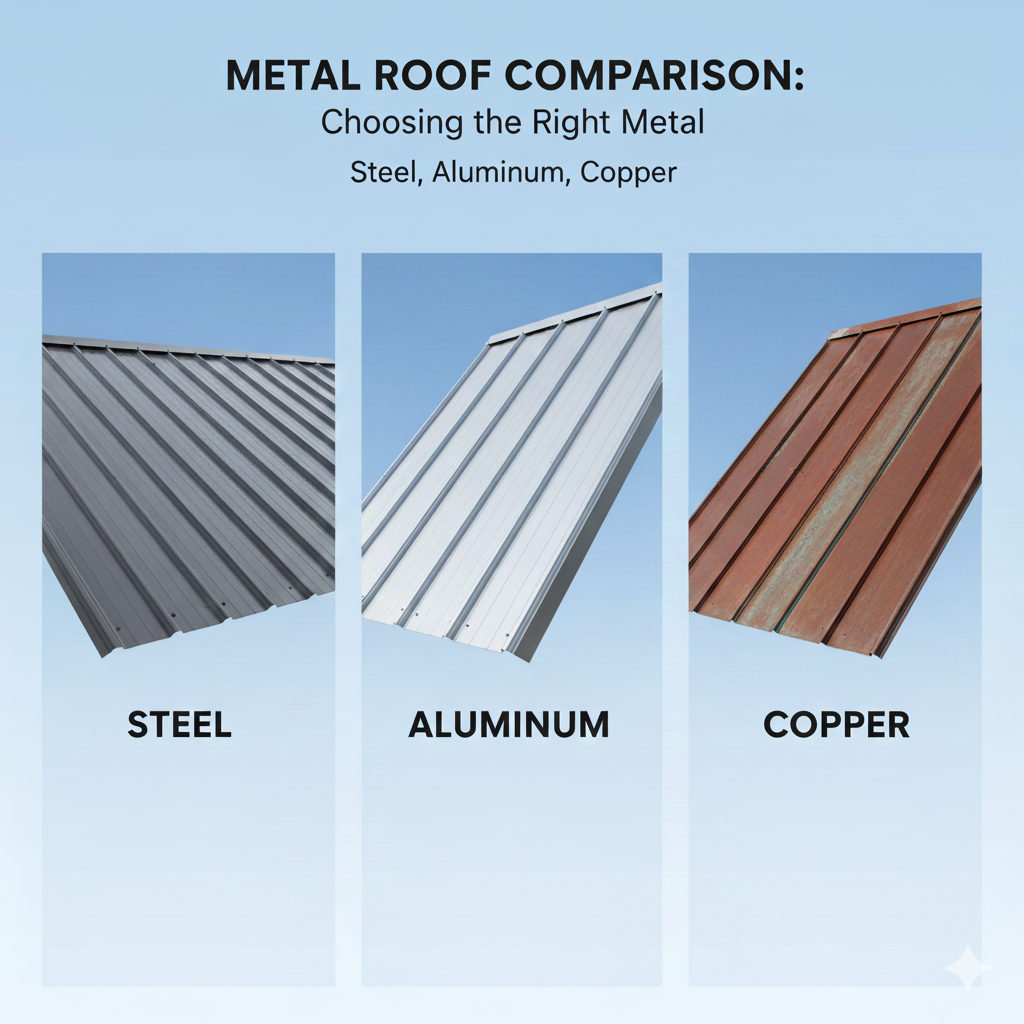
Material Comparison: Steel, Aluminum, and Copper Metal Roofing
While steel is the most common, different materials offer unique benefits for our Gulf Coast climate. For instance, if you want unmatched longevity and a striking architectural look, copper metal roofing is a premium upgrade that only gets better with age.
| Material | Pros | Best For |
| Galvalume Steel | Very strong, rust-resistant, and affordable. | Most Houston residential homes. |
| Aluminum | 100% rust-proof (essential near salt air). | Homes right on the coast or Galveston bay. |
| Copper Metal Roofing | Lifetime durability and beautiful patina. | Historic homes and luxury accents. |
Frequently Asked Questions
Q: Can I install a metal roof over my old shingles?
A: While possible, we usually recommend a full tear-off. This allows us to inspect the roof decking for hidden rot and ensure the new underlayment is perfectly sealed.
Q: Will a metal roof be louder when it rains?
A: This is a common myth! When installed with solid decking and proper insulation, a metal roof is no louder than a traditional shingle roof.
Q: How long do these components last?
A: Is copper metal roofing a good choice for Houston homes? A: Absolutely. While it comes with a higher initial investment, copper metal roofing offers lifetime durability, stands up perfectly to severe Gulf Coast weather, and develops a beautiful, natural patina that protects your home for generations.
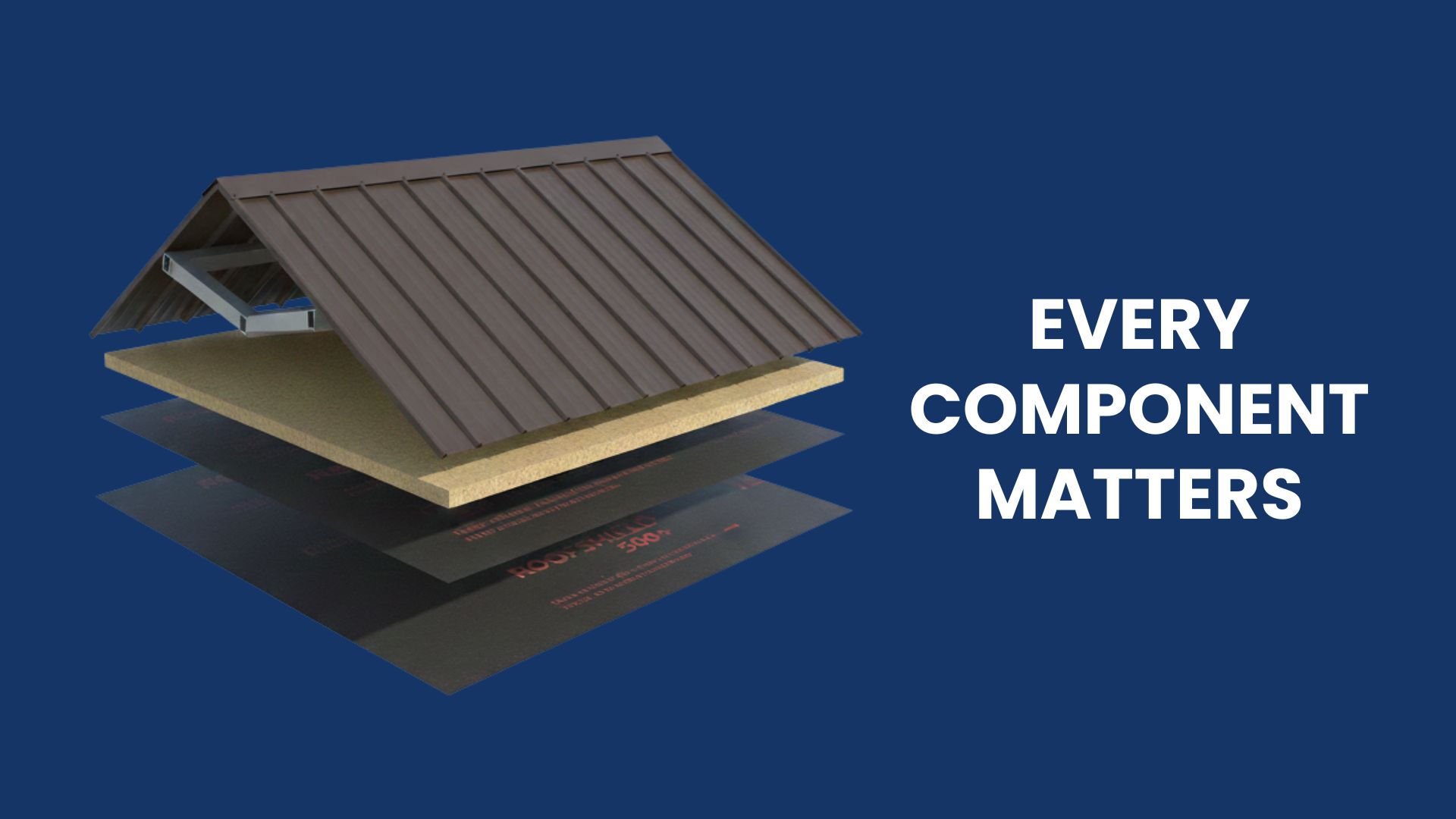
Why Every Component Matters
When you see a “budget” quote for a metal roof, it is often because a contractor is cutting corners on the hidden metal roof components. Using a low-grade underlayment or cheap fasteners might save money today, but it leads to leaks within a decade.
At Achilles Roofing & Exteriors, we source premium-grade panels and industrial-strength sealants specifically designed for the Houston climate. We don’t just install a roof. We engineer a protection system for your home.
Ready to secure your home with a lifetime roofing system? Contact Achilles Roofing & Exteriors today for a free inspection and see how our premium metal roof components can protect your Houston home for decades!